roseau et lin

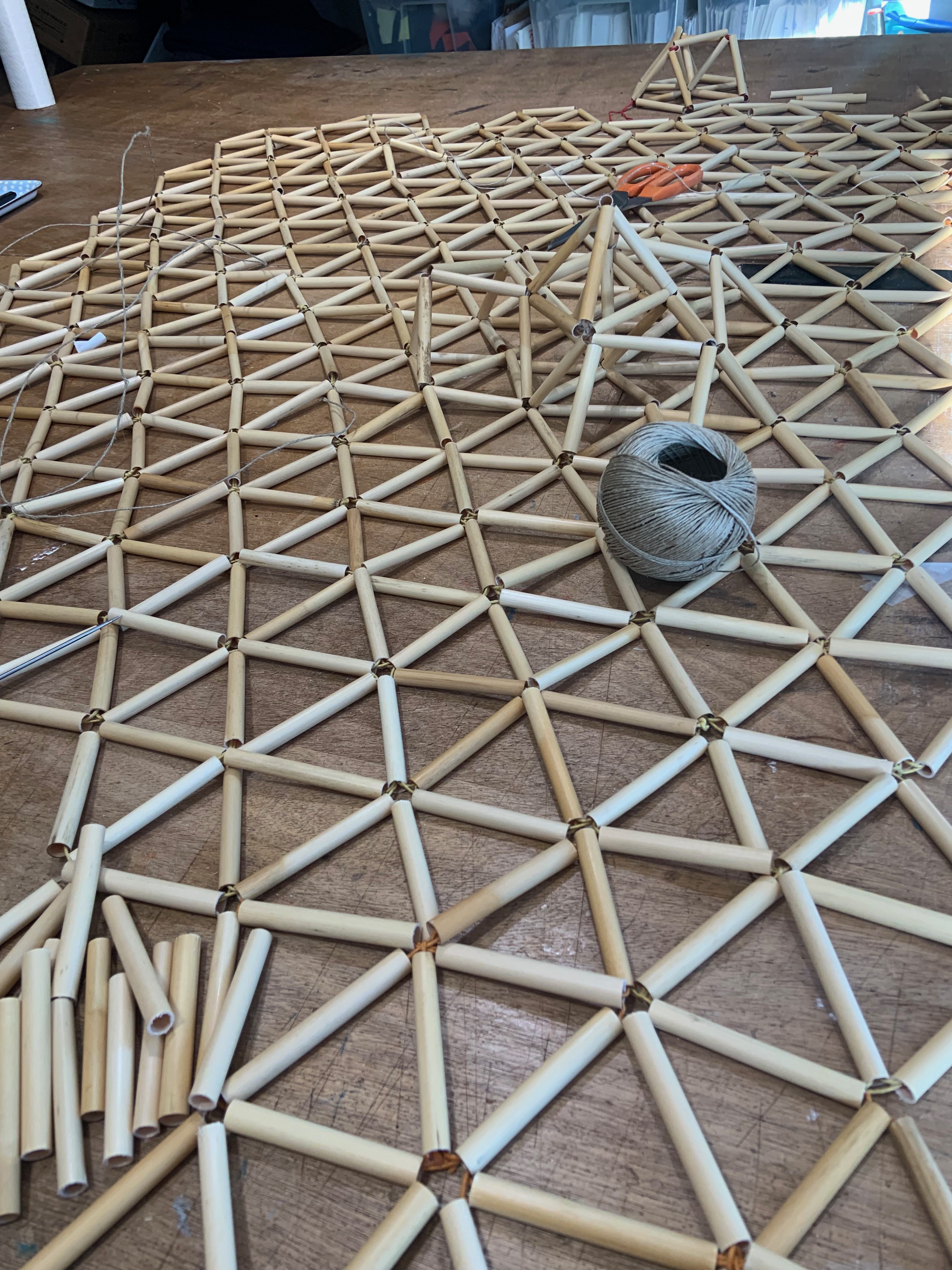
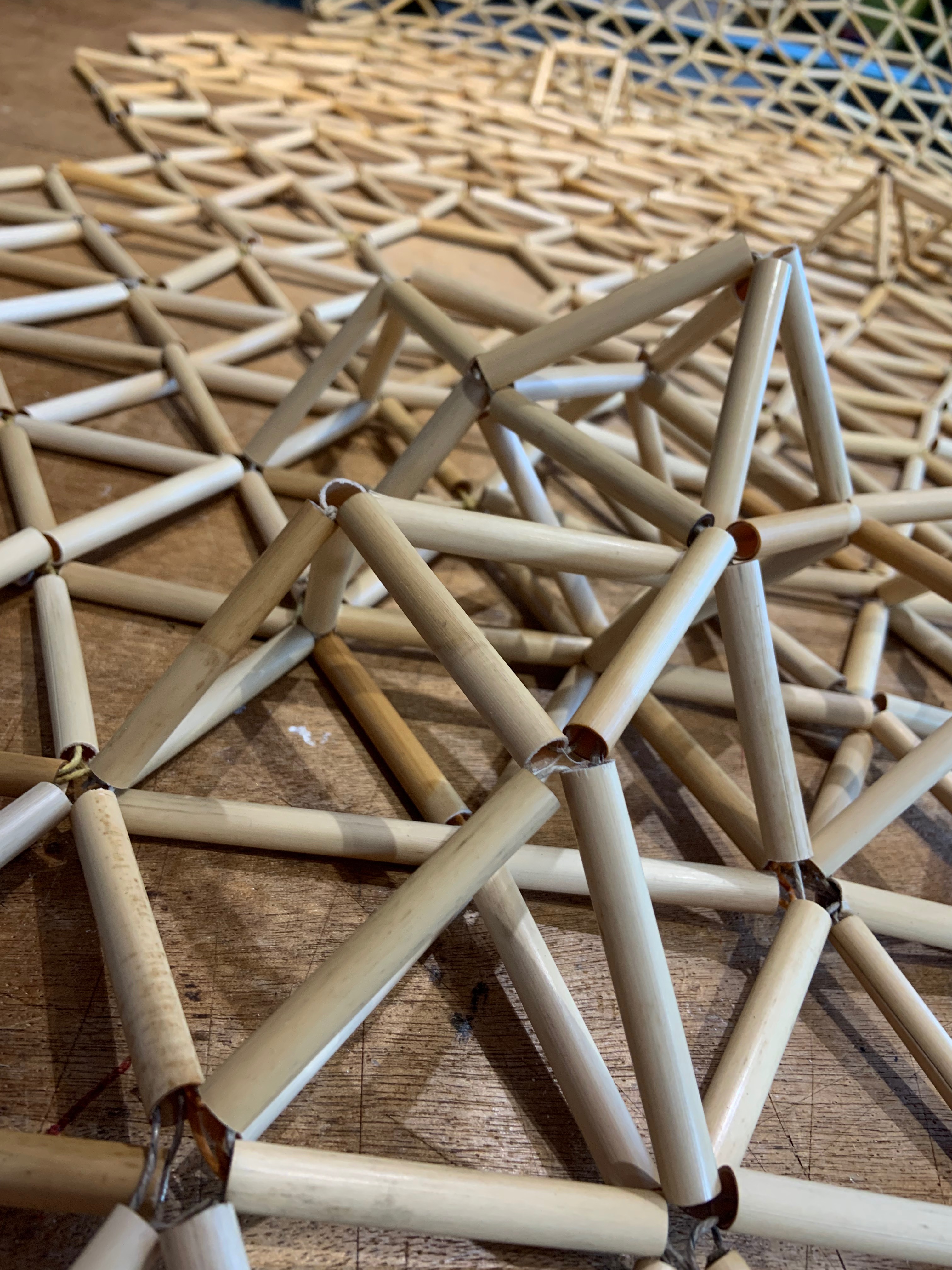
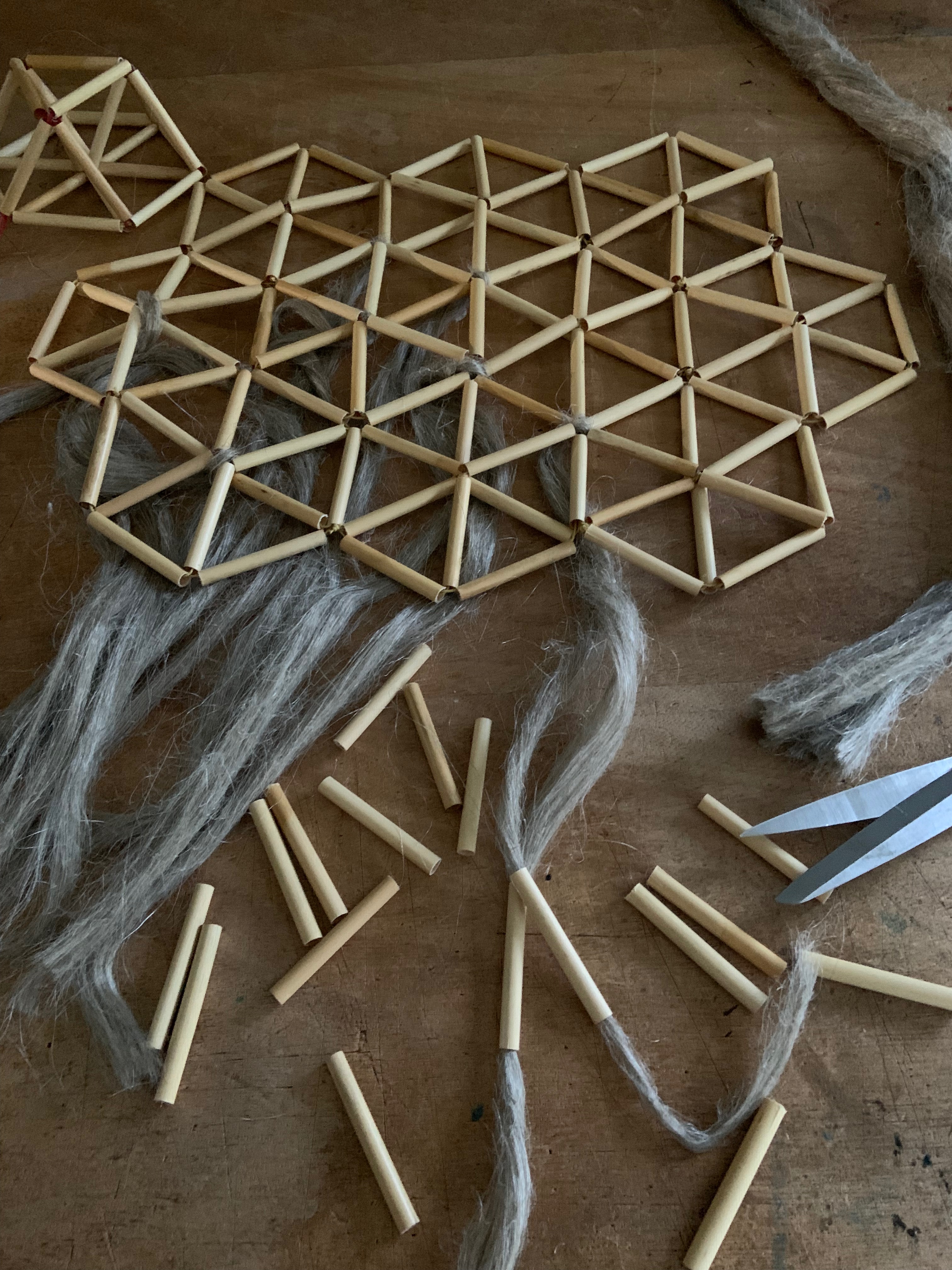
Pailles de roseaux et fil de lin brut

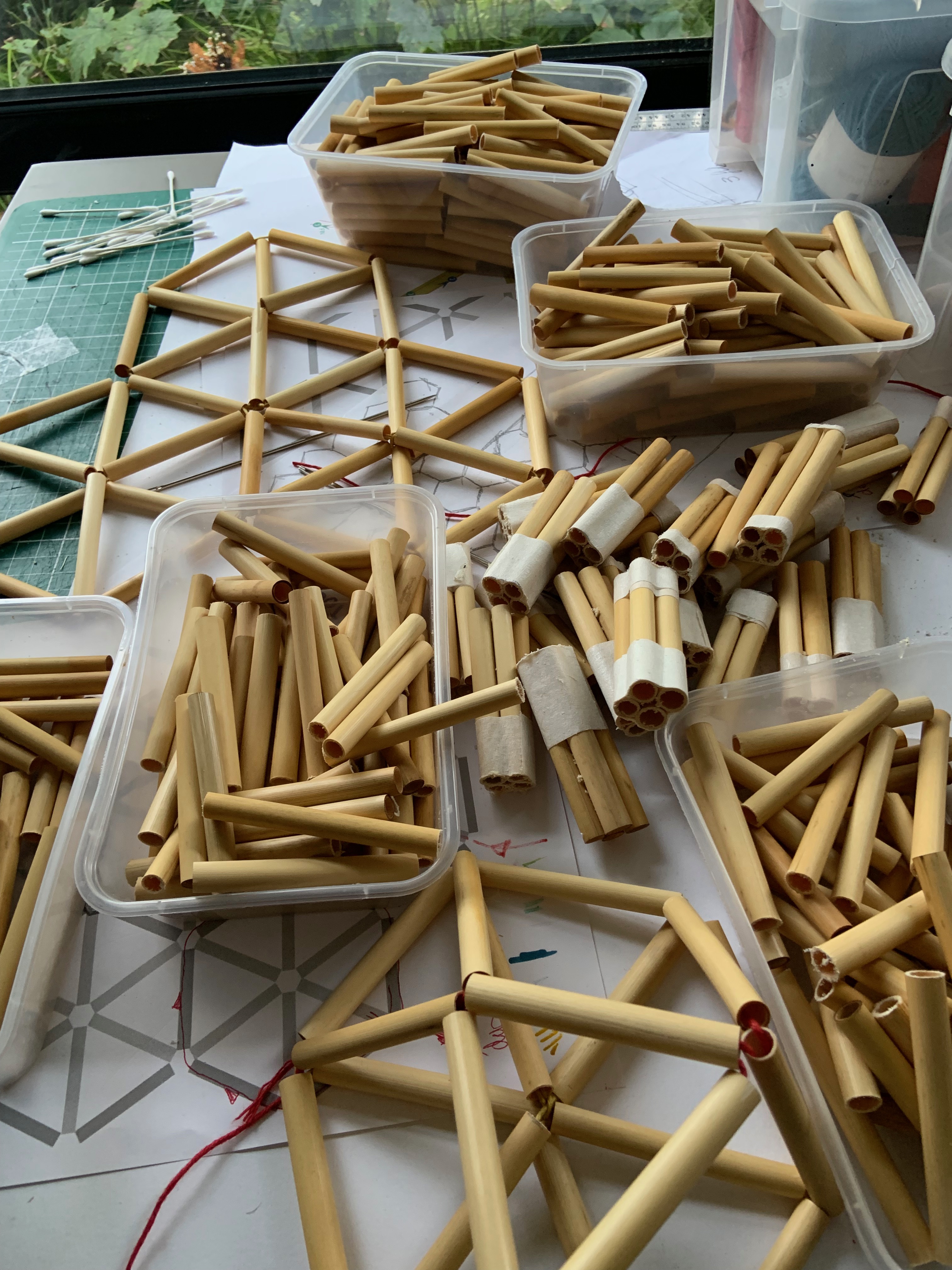
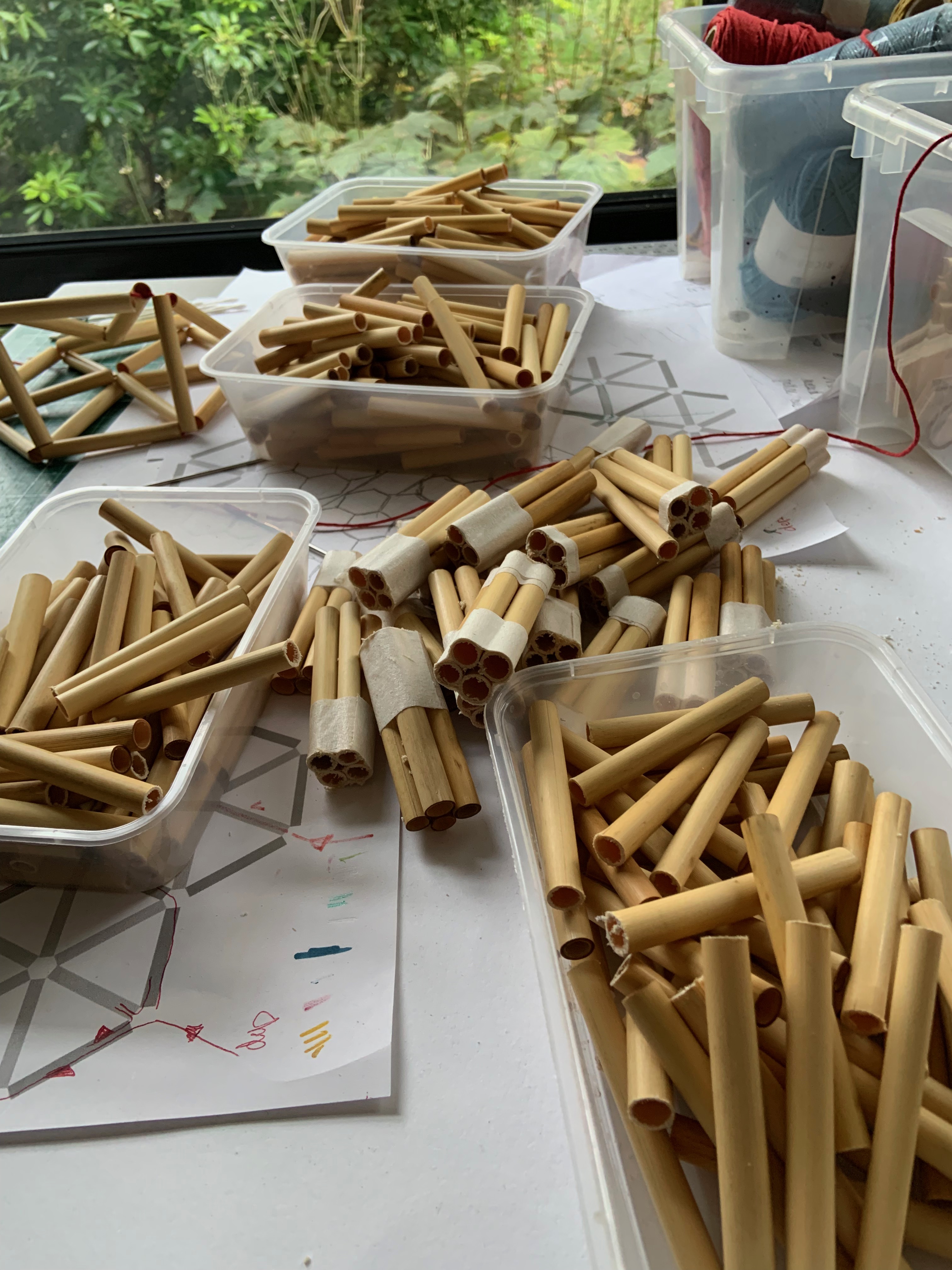
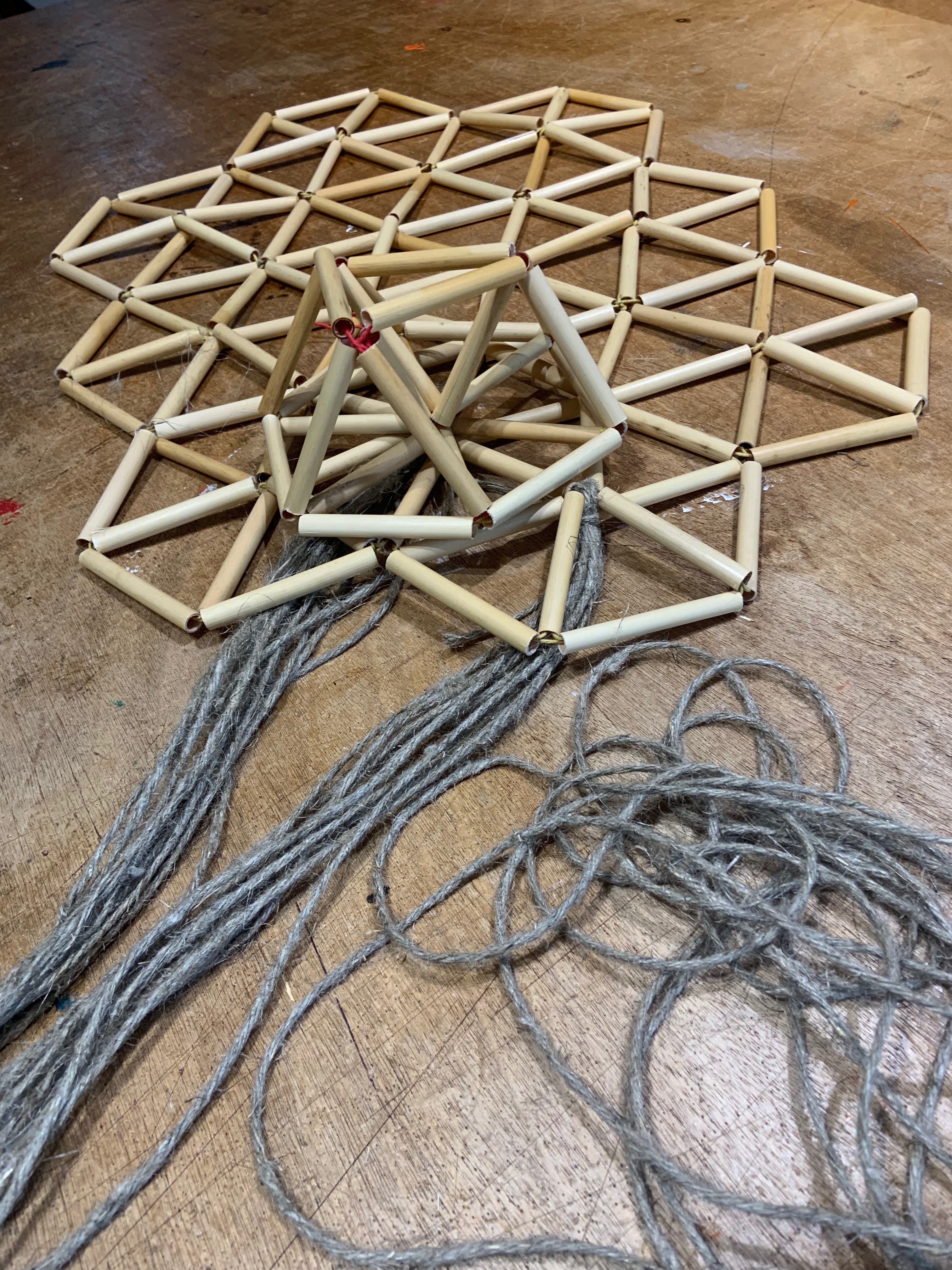
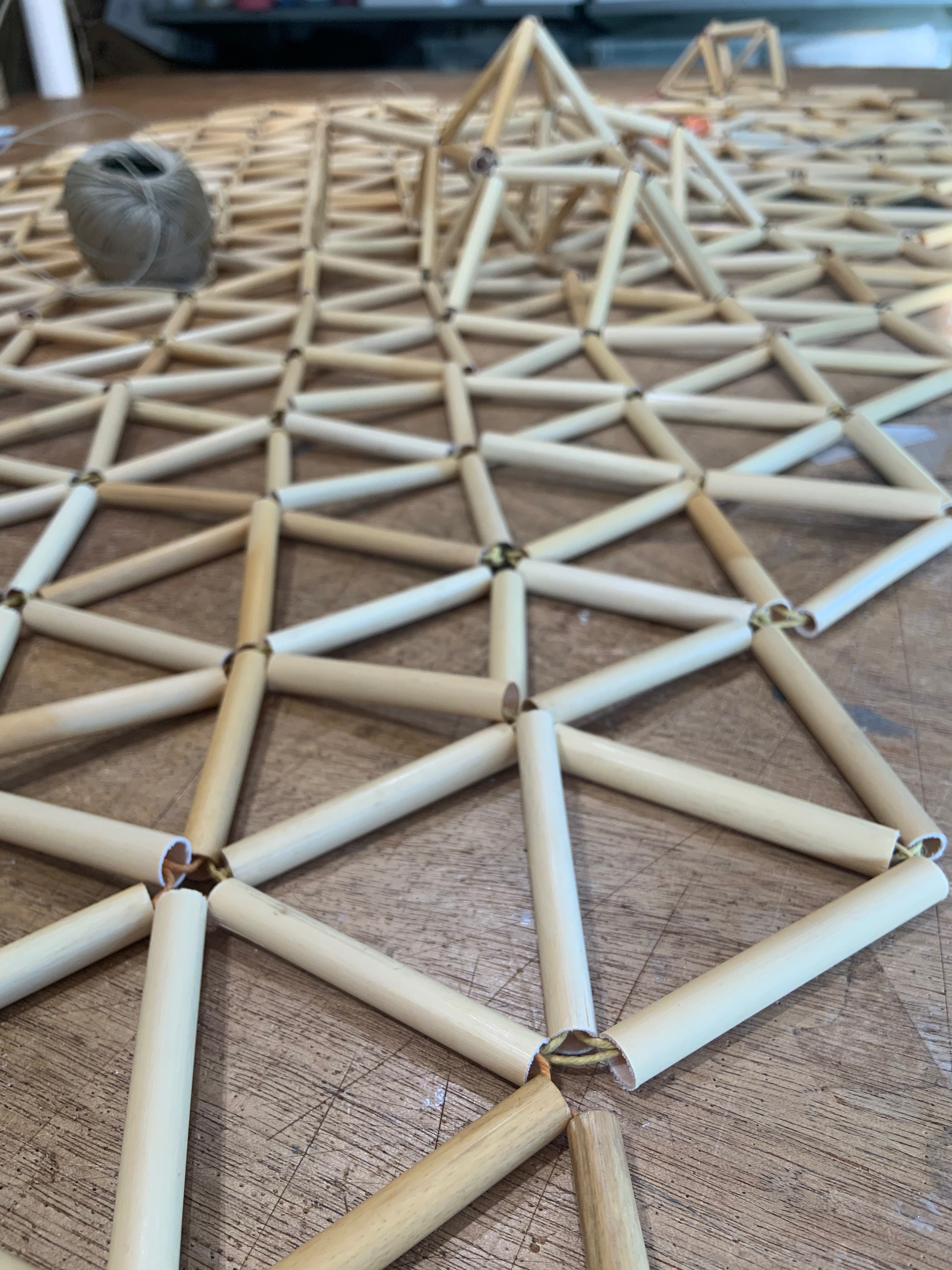
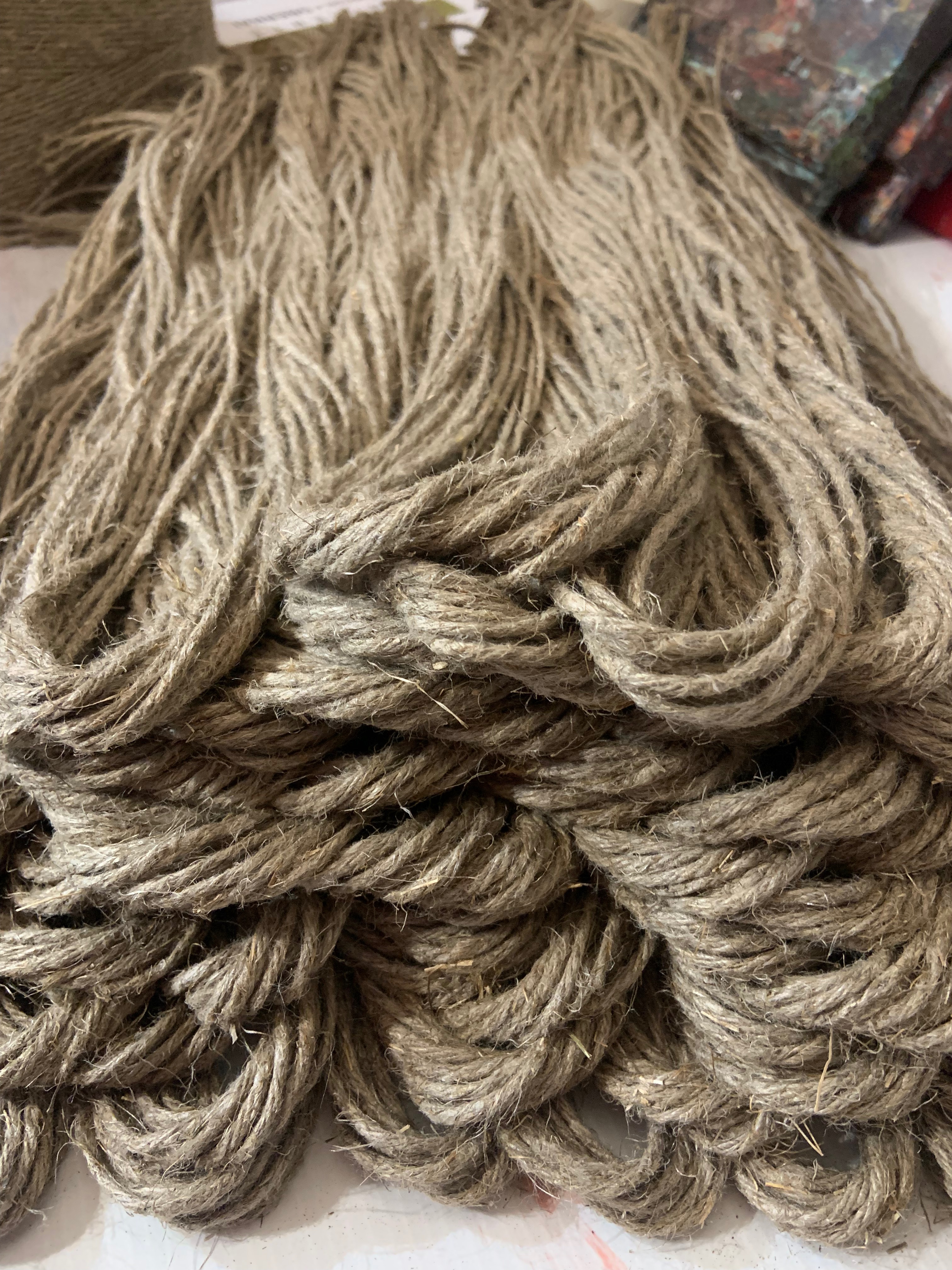
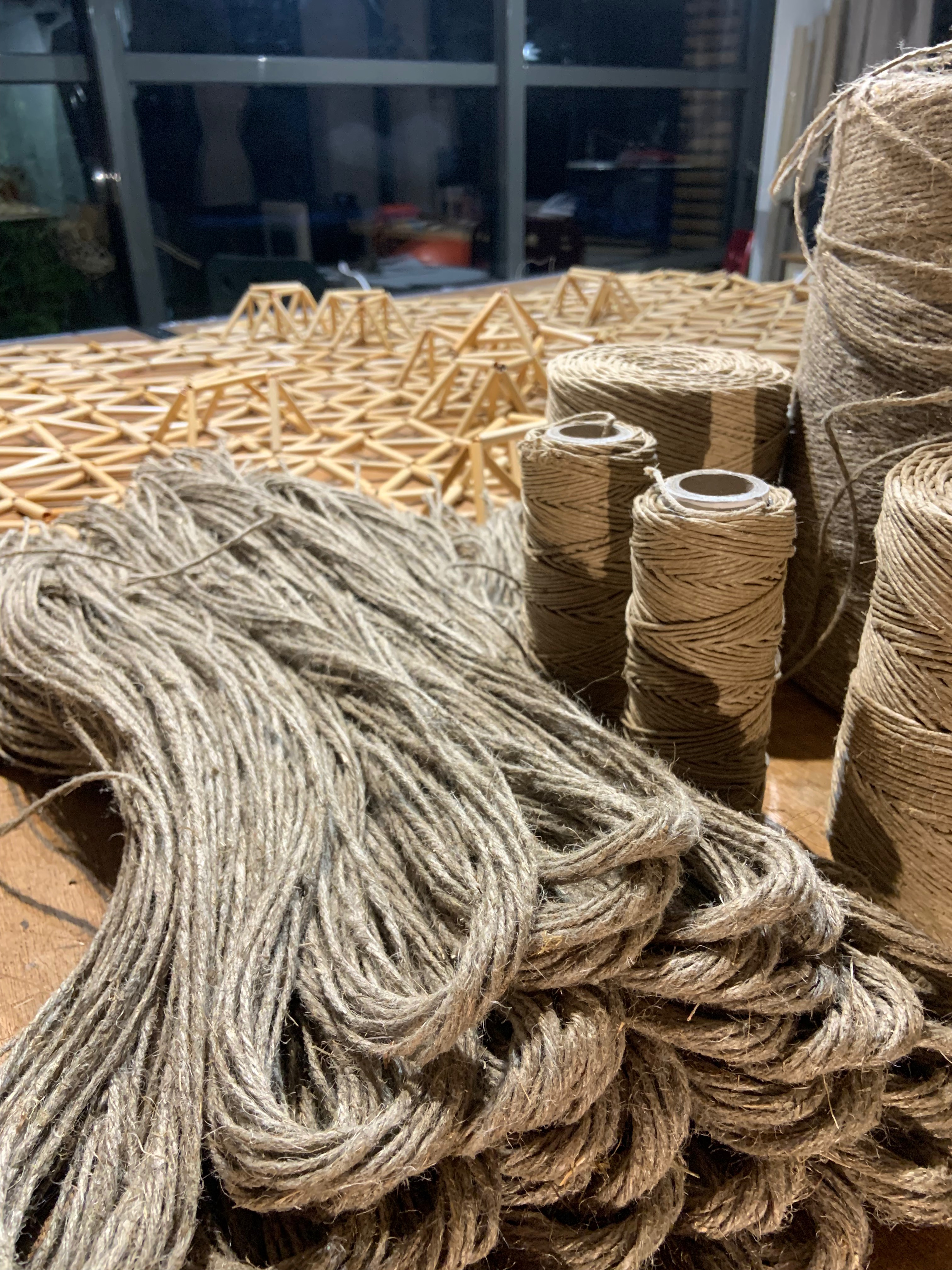
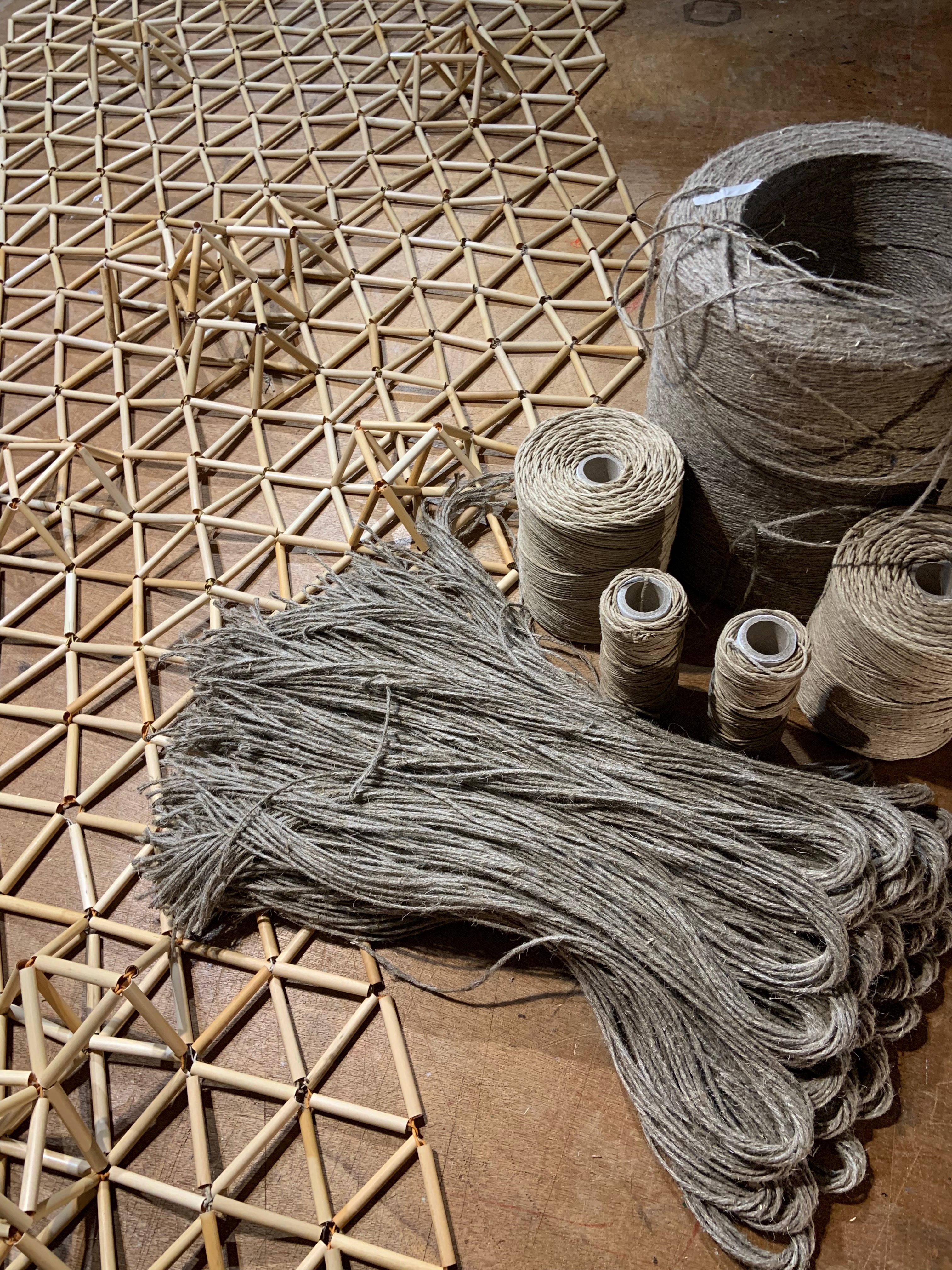
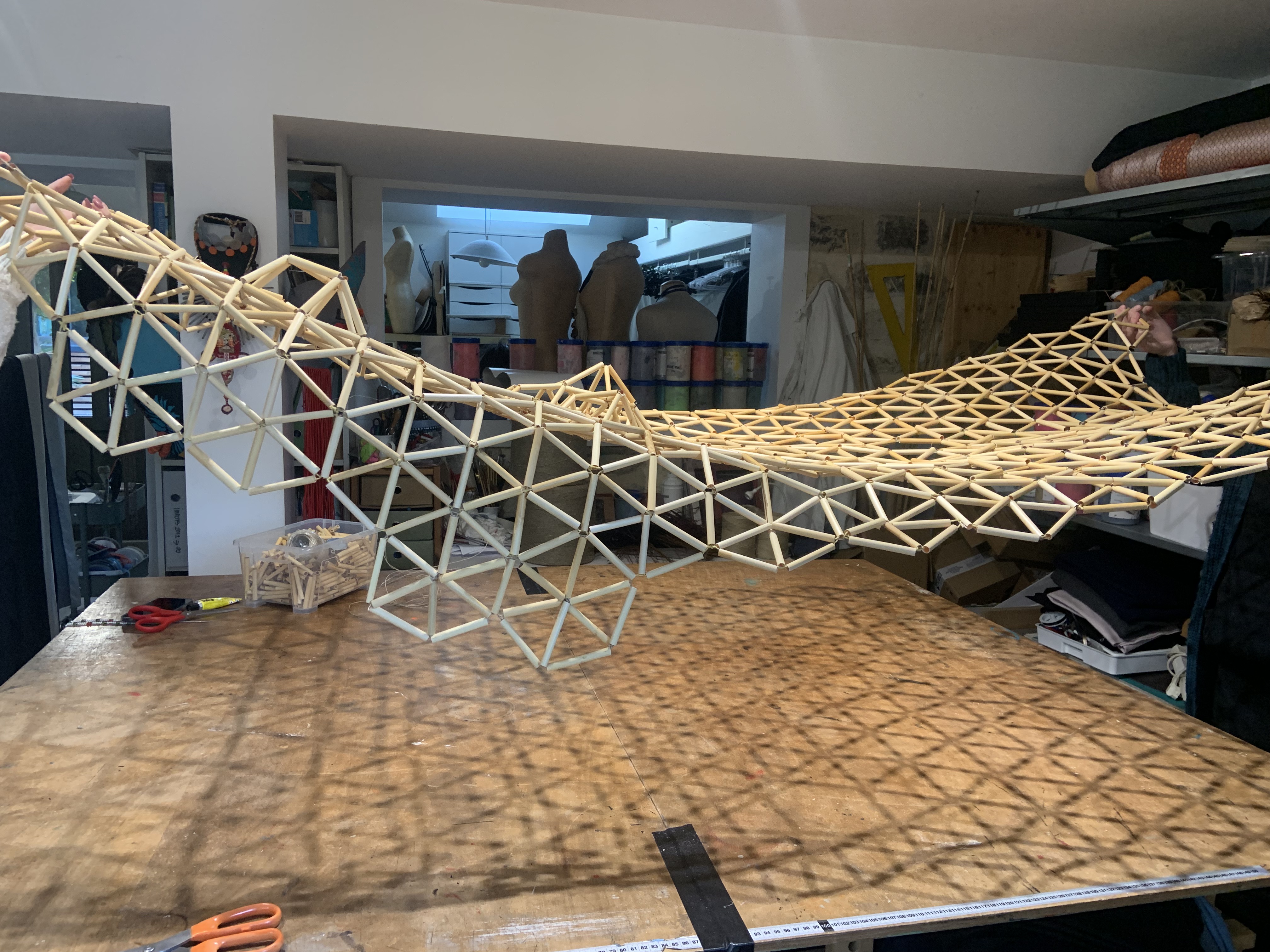
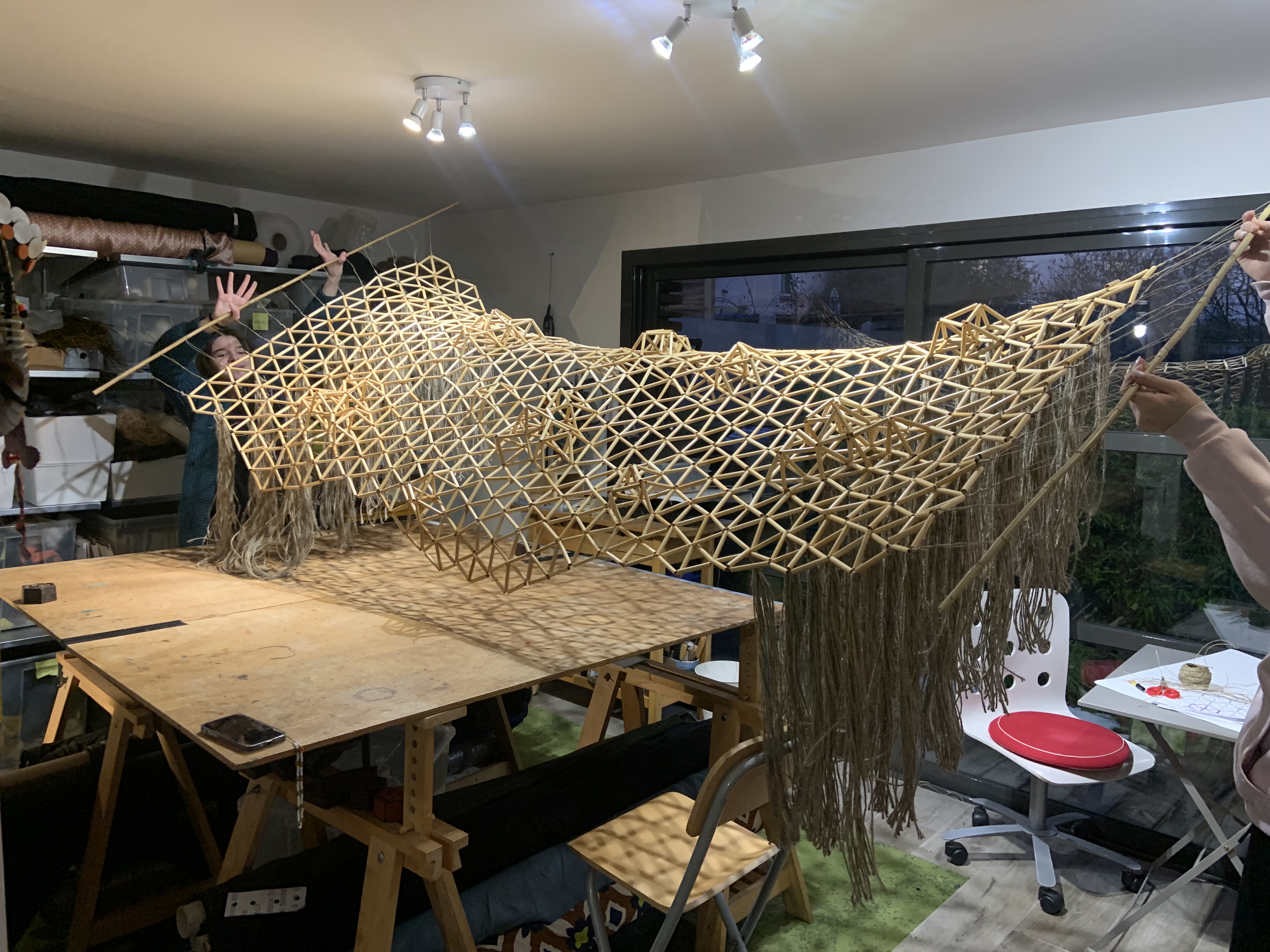
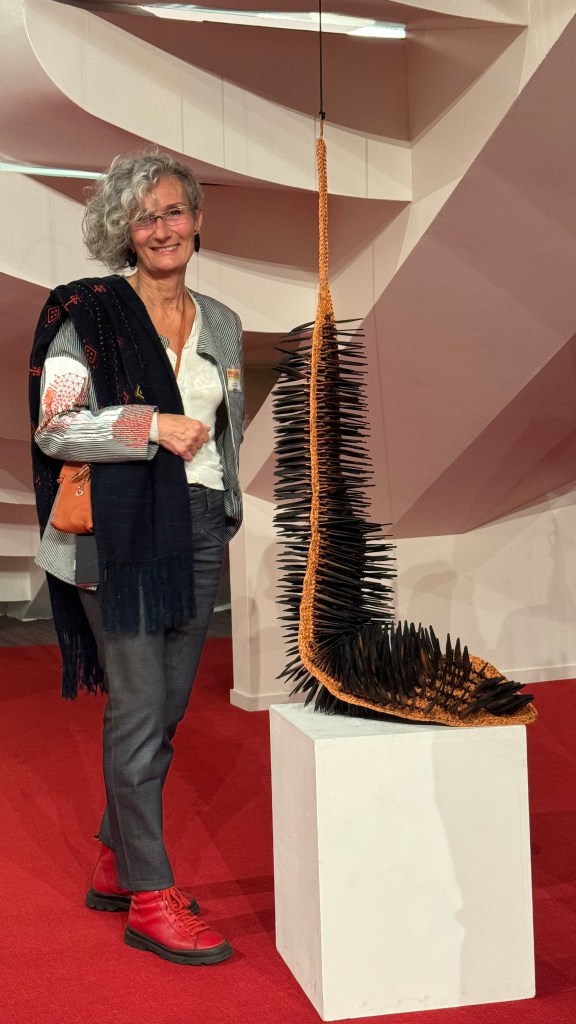
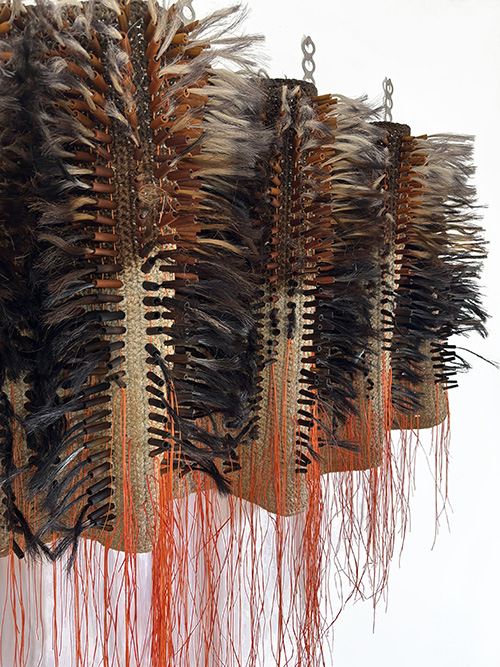
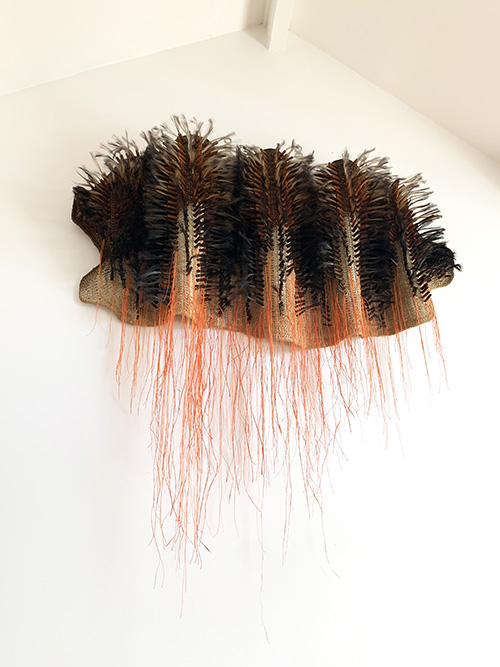
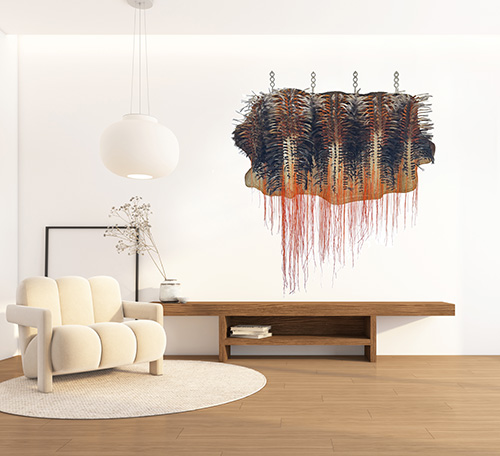
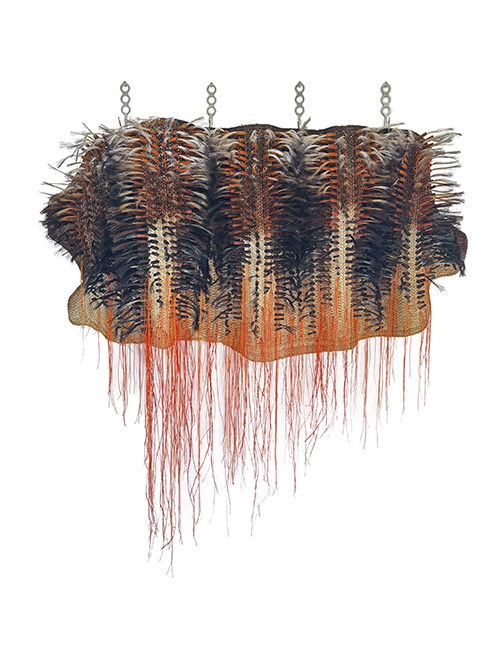
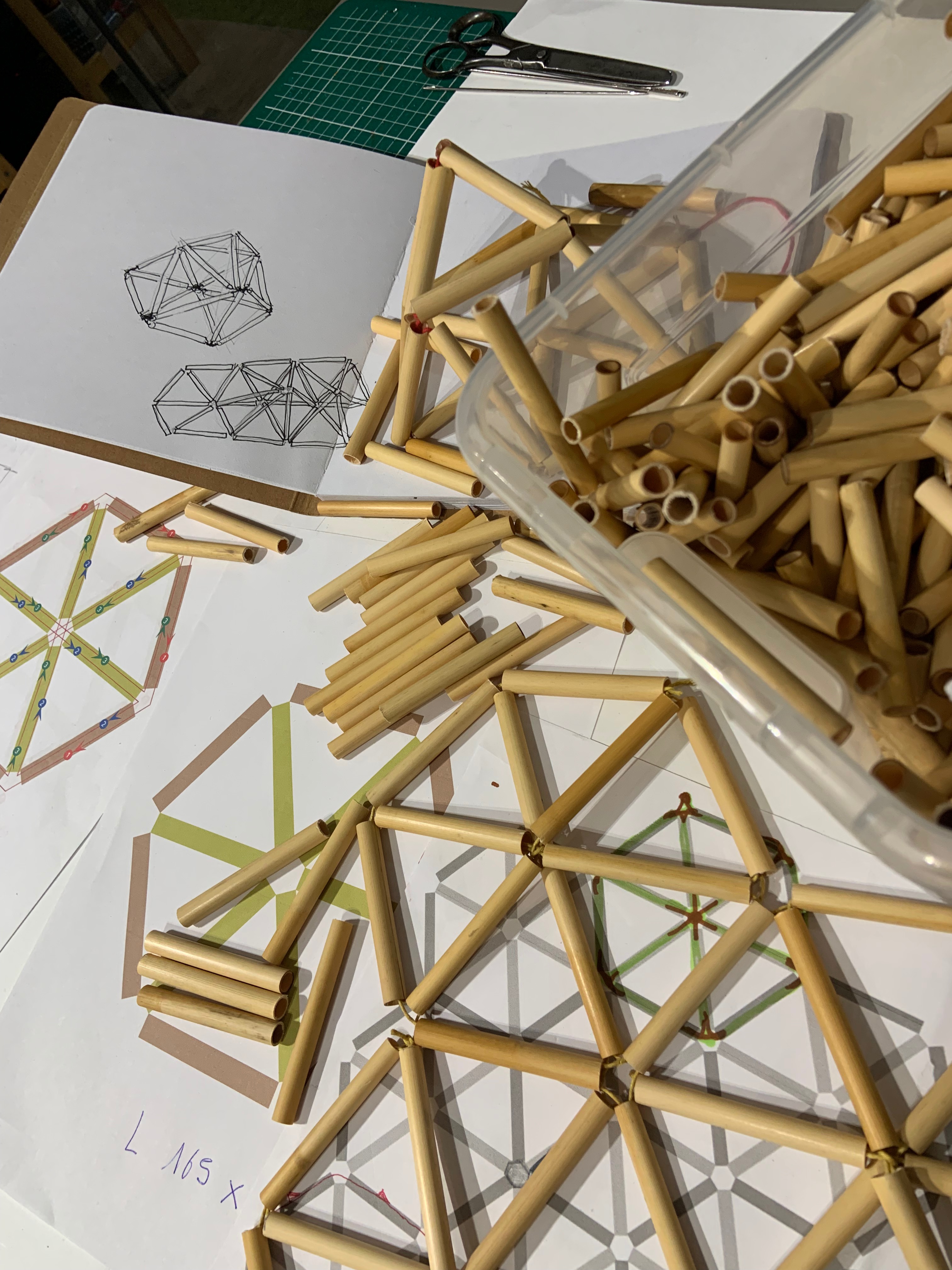
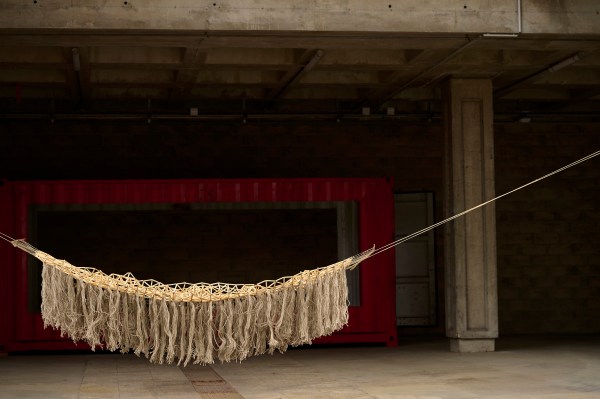
Invitée sur le Festival du lin et de la fibre artistique il m’a été proposé d’exposer dans le cœur de l’église de la Gaillarde. Pour faire honneur à ce lieu, j’ai réalisé une œuvre comme un tapis volant en créant une architecture de pailles de roseaux soutenant les racines en fil de lin brut (utilisé pour assembler les bottes de lin).
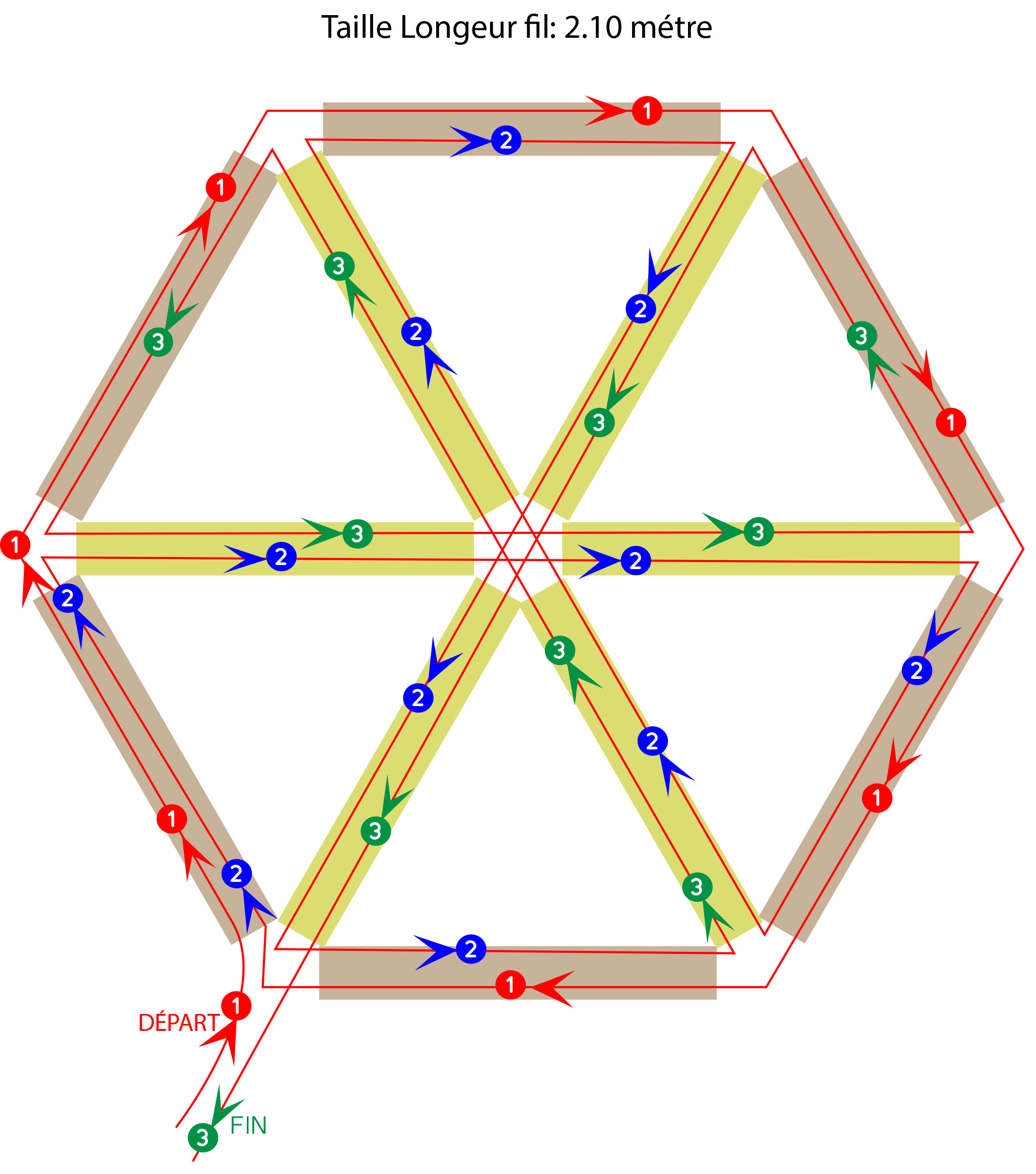
Le travail initial de recherche nous a amenées ma stagiaire et moi a créer un motif simple pouvant créer en volume des reliefs. Ici pas de teinture, juste les éléments naturels bruts pour entrer en résonances avec ce lieu chargé d’histoire.
Pailles de roseaux et fil de lin brut

Invited to the Linen and Artistic Fiber Festival, I was asked to exhibit in the heart of the Gaillarde church. To honor this place, I created a work resembling a flying carpet, using an architecture of reed straws supporting roots made of raw linen thread (used to assemble flax bundles).
The initial research work led my intern and me to create a simple pattern that could create volume and relief. Here, there is no dye, just raw natural elements to resonate with this place steeped in history.
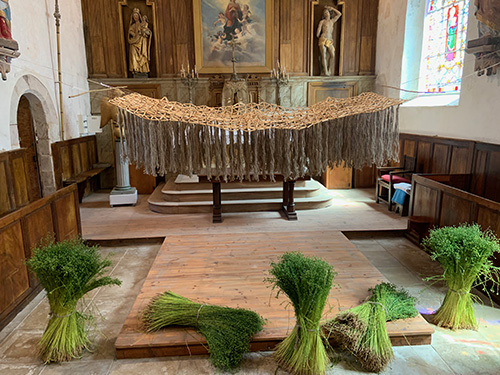
A flying carpet-like installation made of reed straws and raw linen thread, displayed in the interior of a church, with bundles of flax arranged on the floor.
Une œuvre d'art suspendue ressemblant à un tapis volant, faite de pailles de roseaux et de fil de lin brut, exposée dans un espace intérieur avec un fond rouge.

photo Philippe Denis
miam-miam

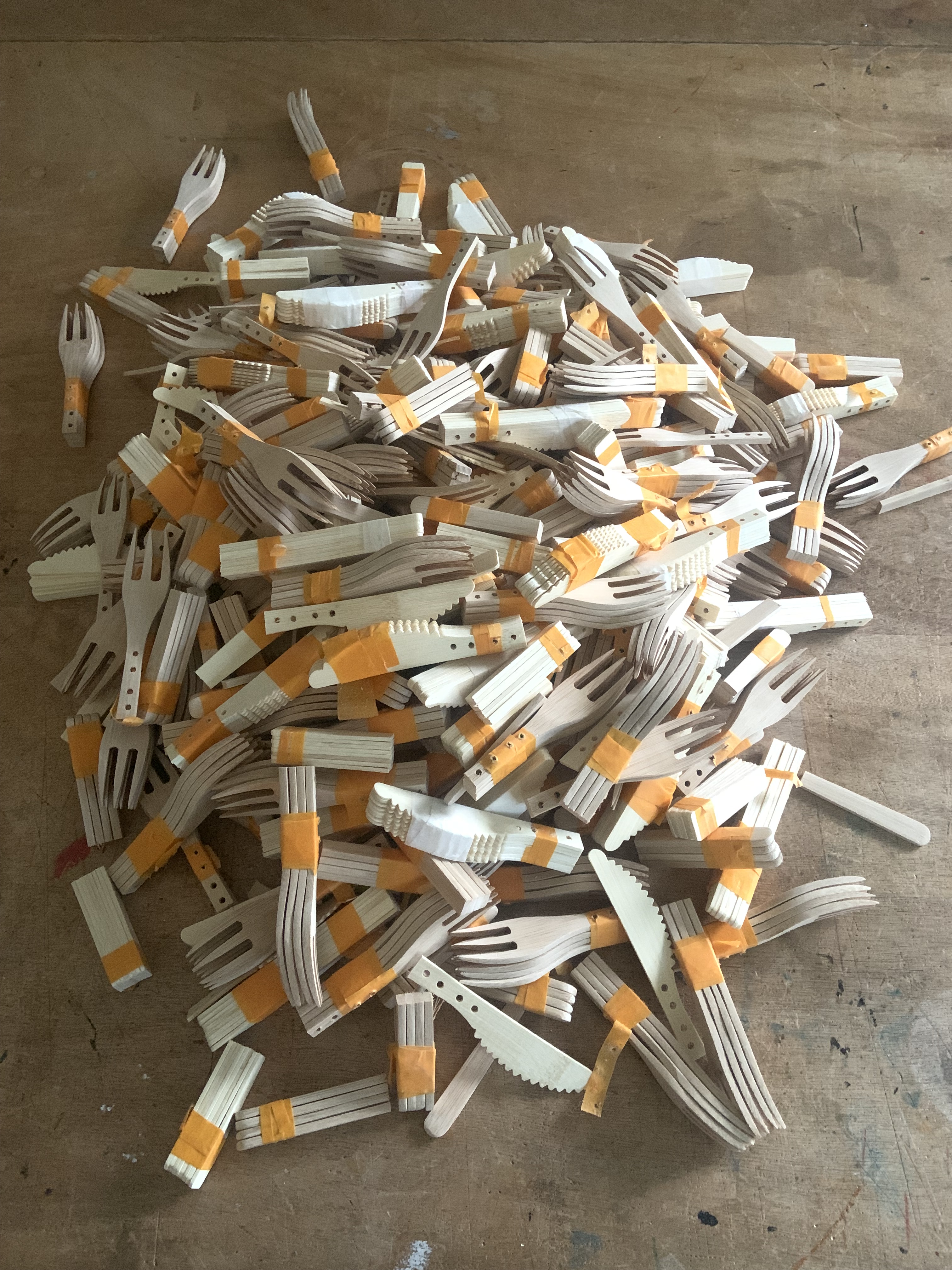
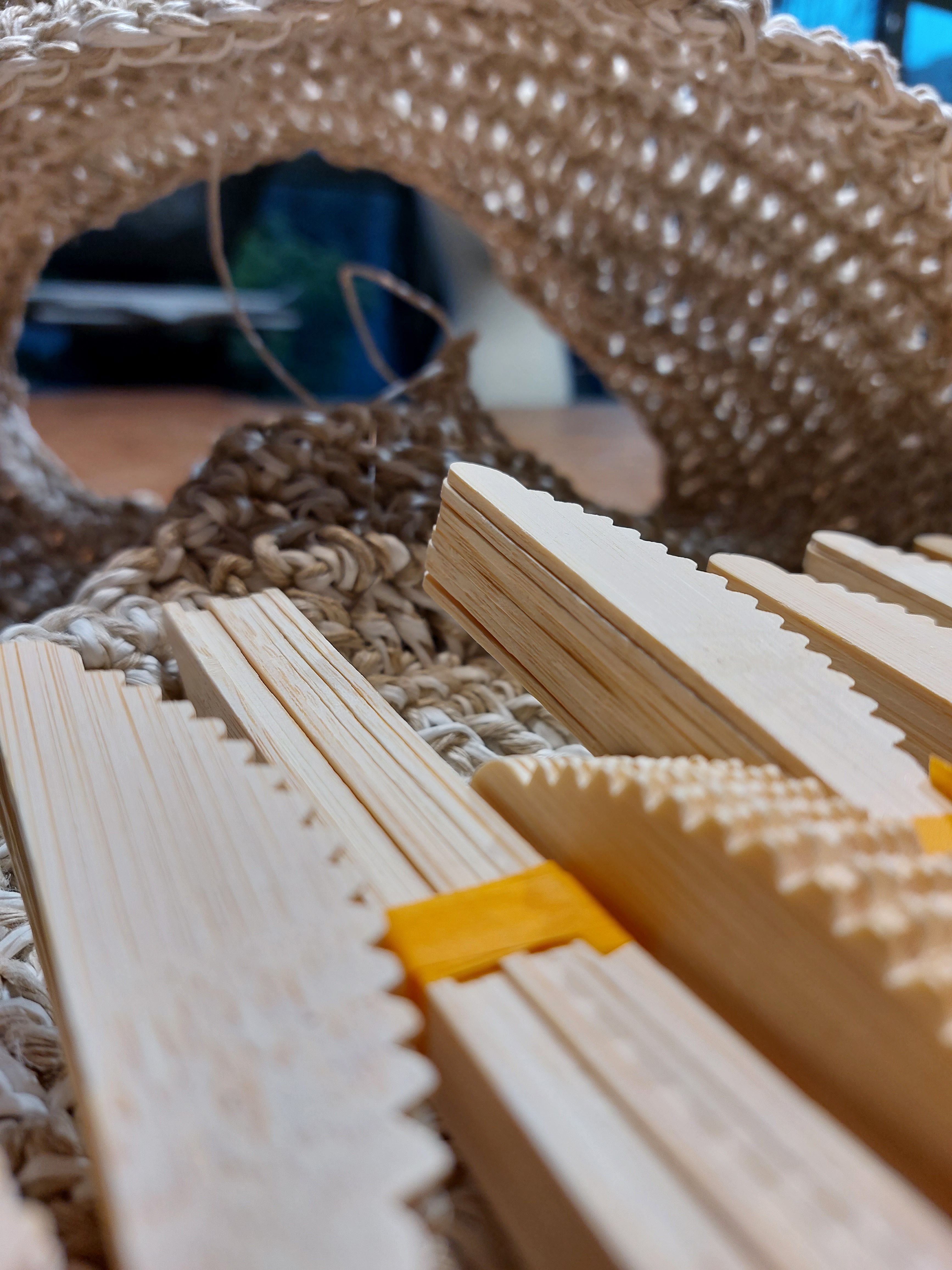
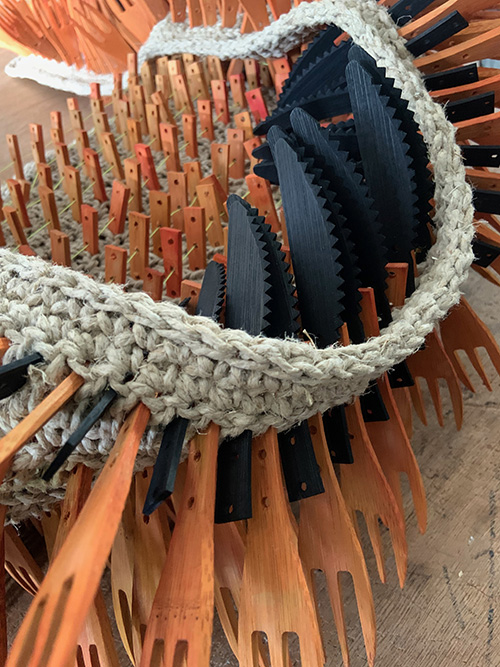
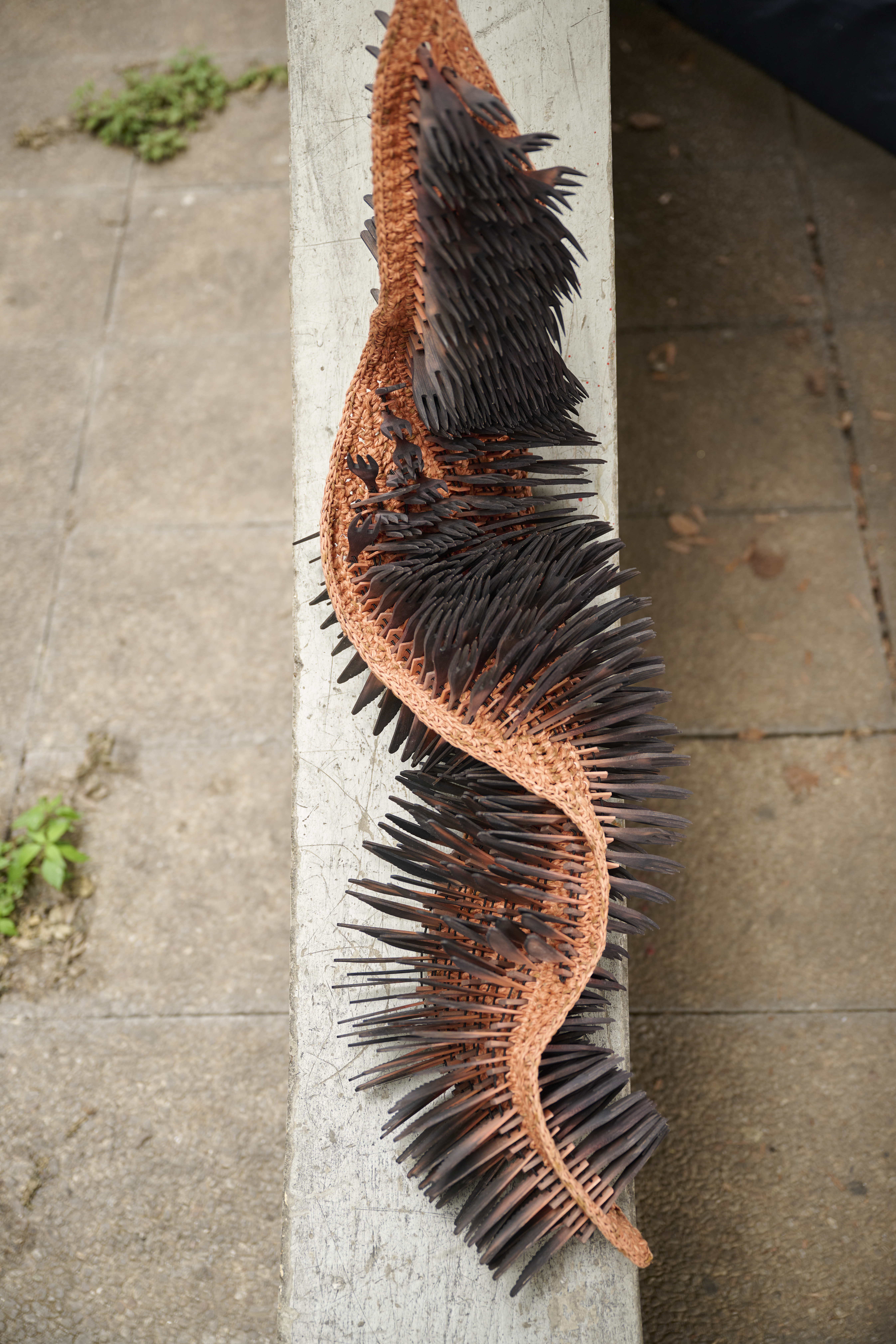
Couverts de bambou, lin et papier armé crochetés.

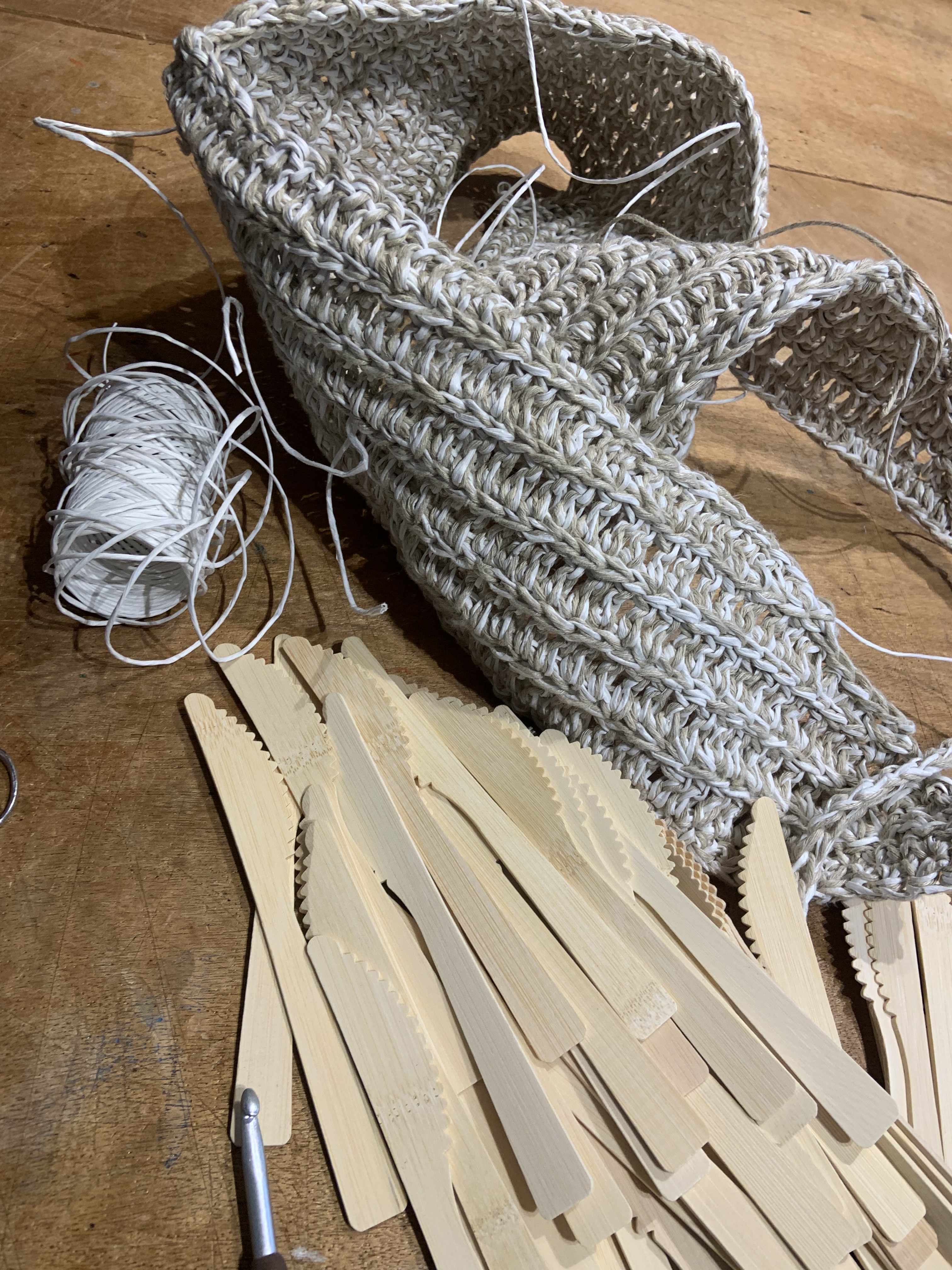
Pour commencer c’est toujours le travail de la forme en crochet qui prévaut.
C’est elle qui va donner l’aspect de la pièce en calculant la taille des mailles pour la future place des couverts.
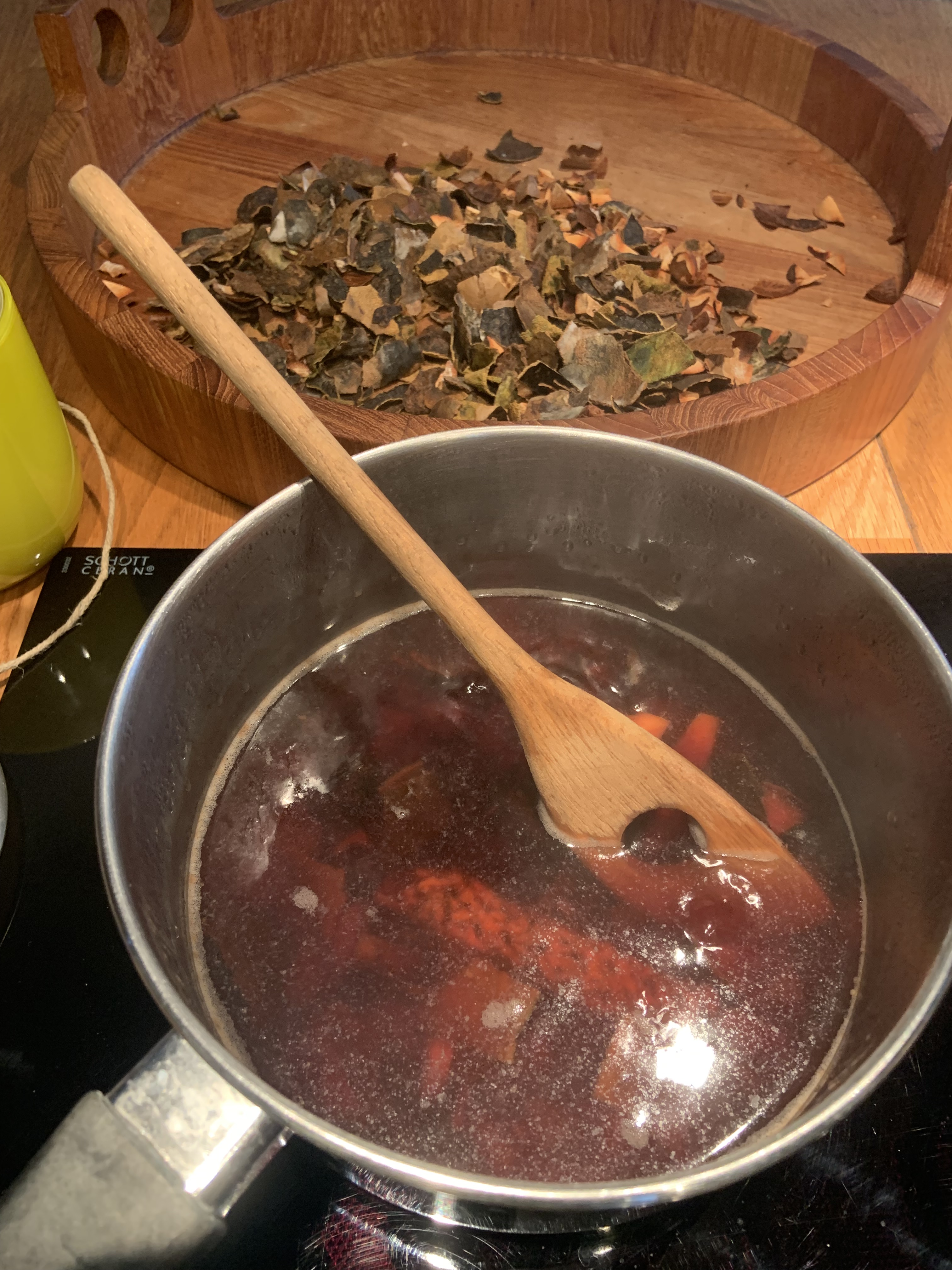
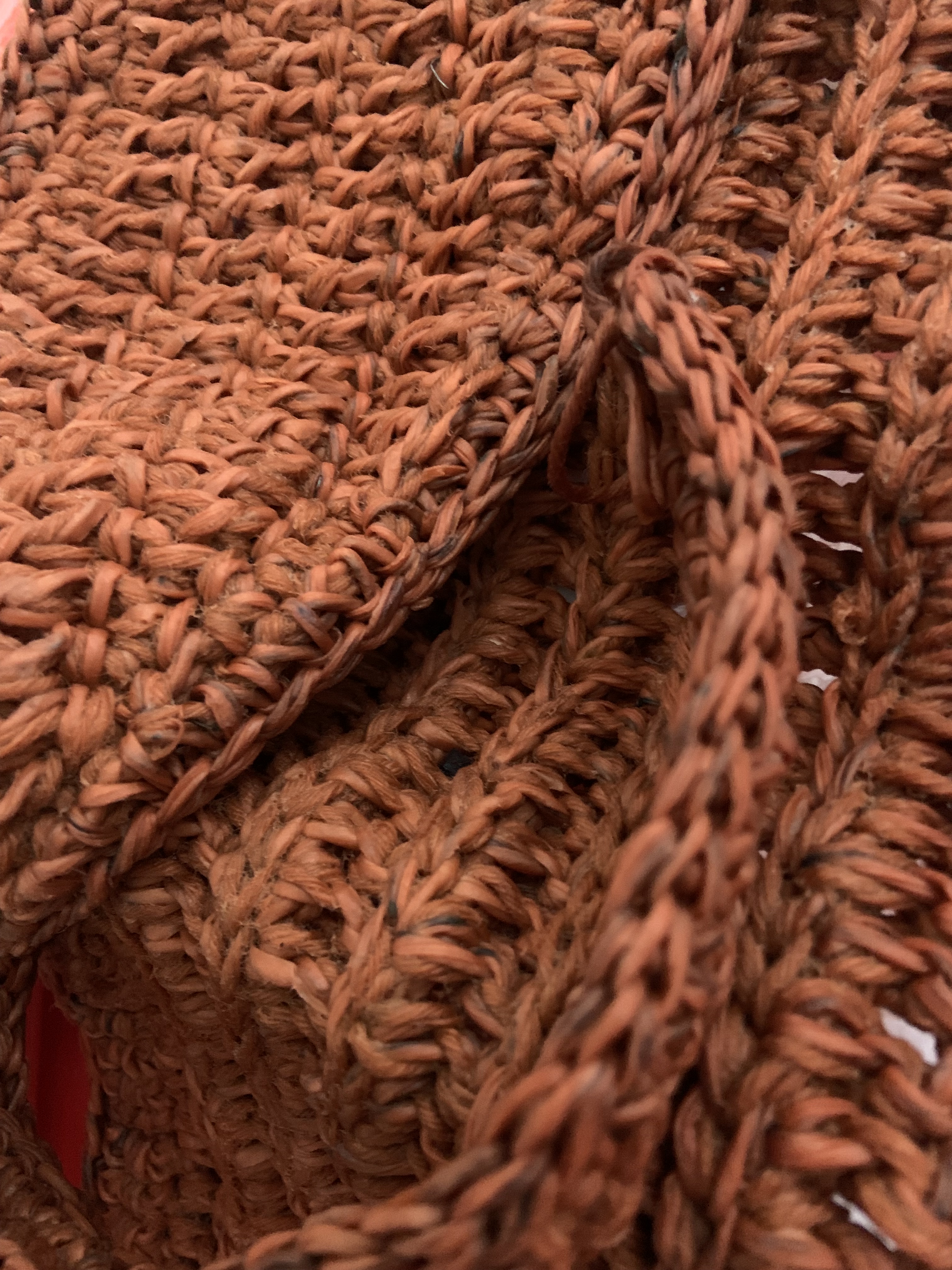
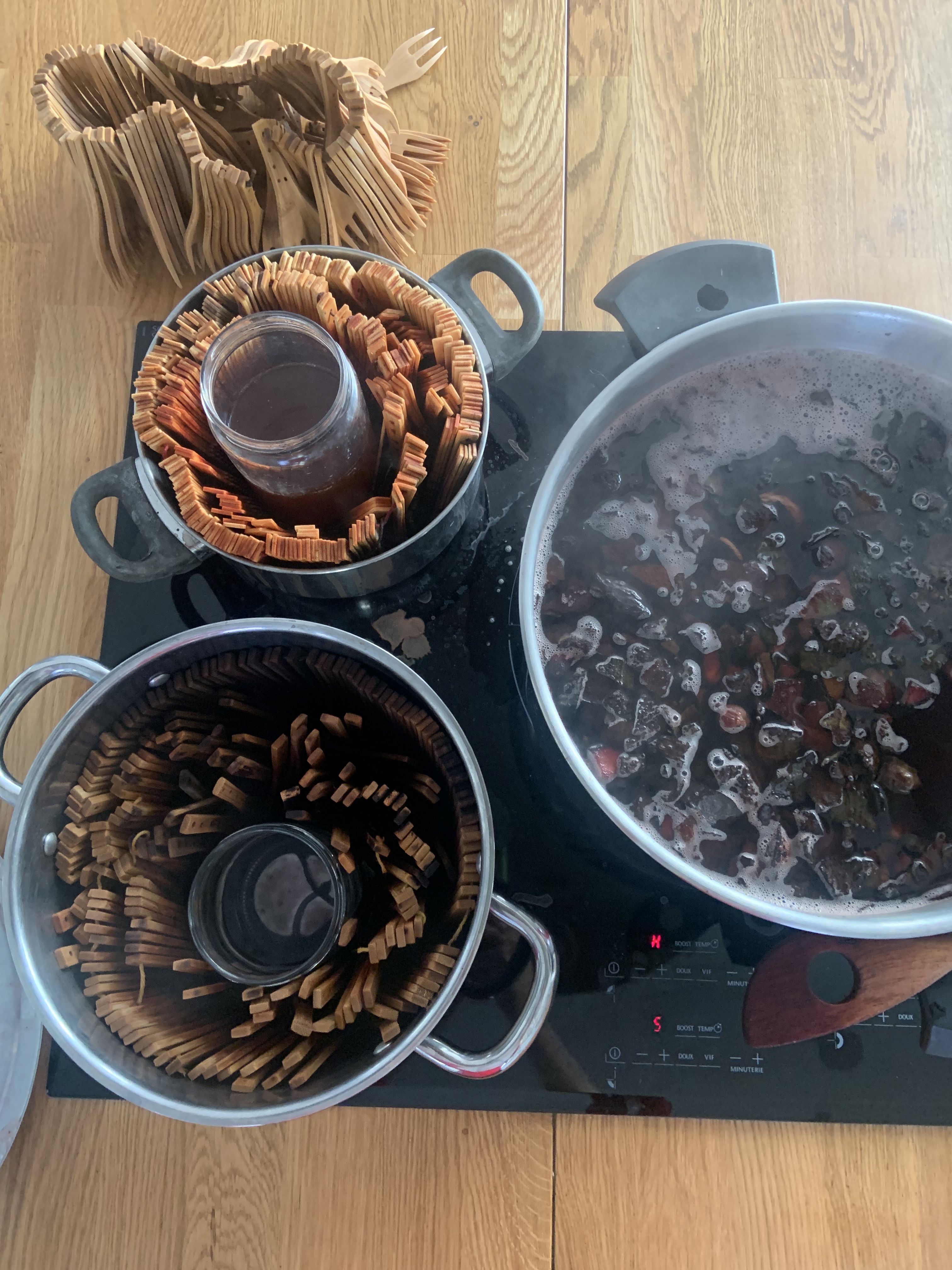
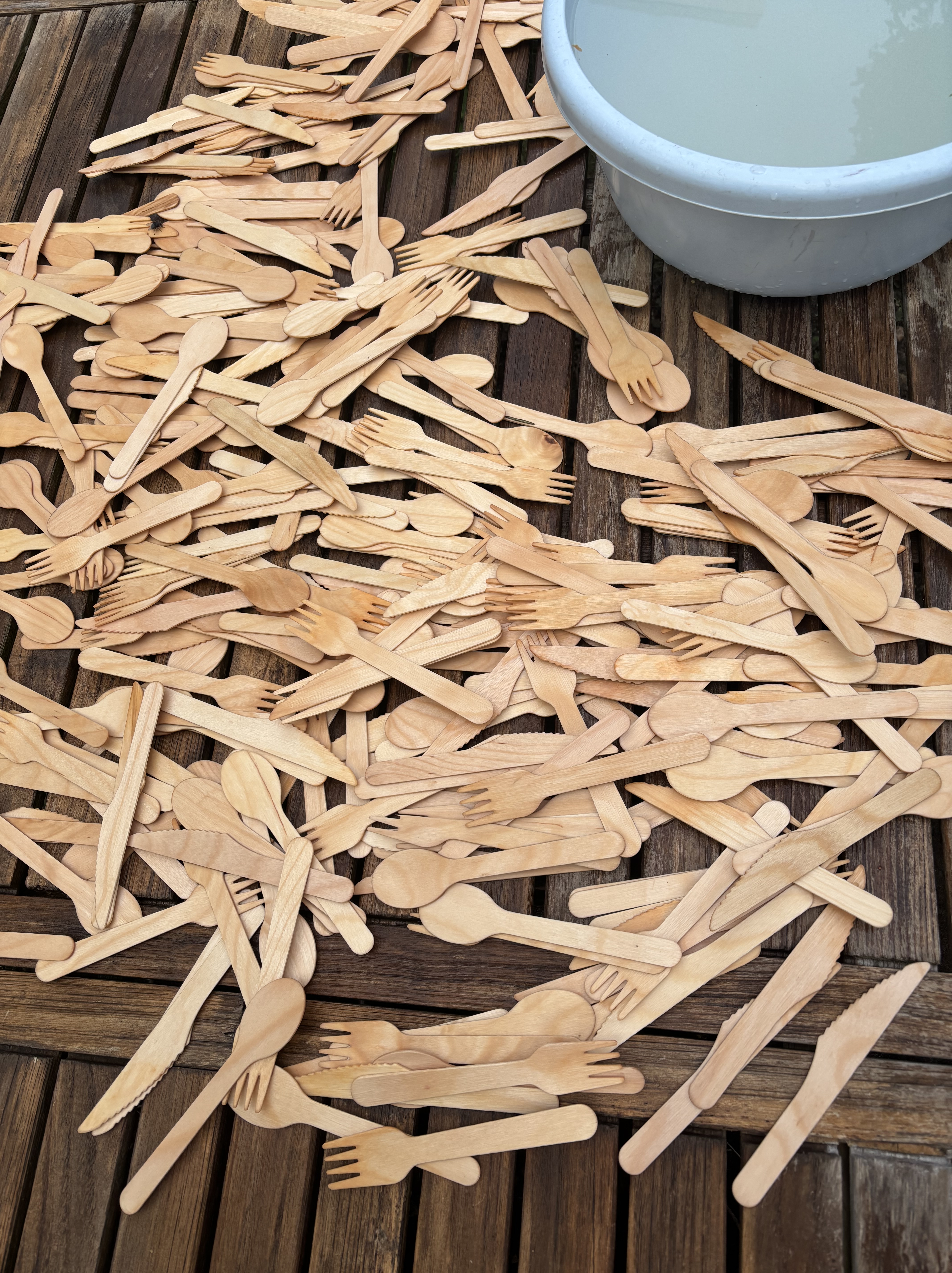
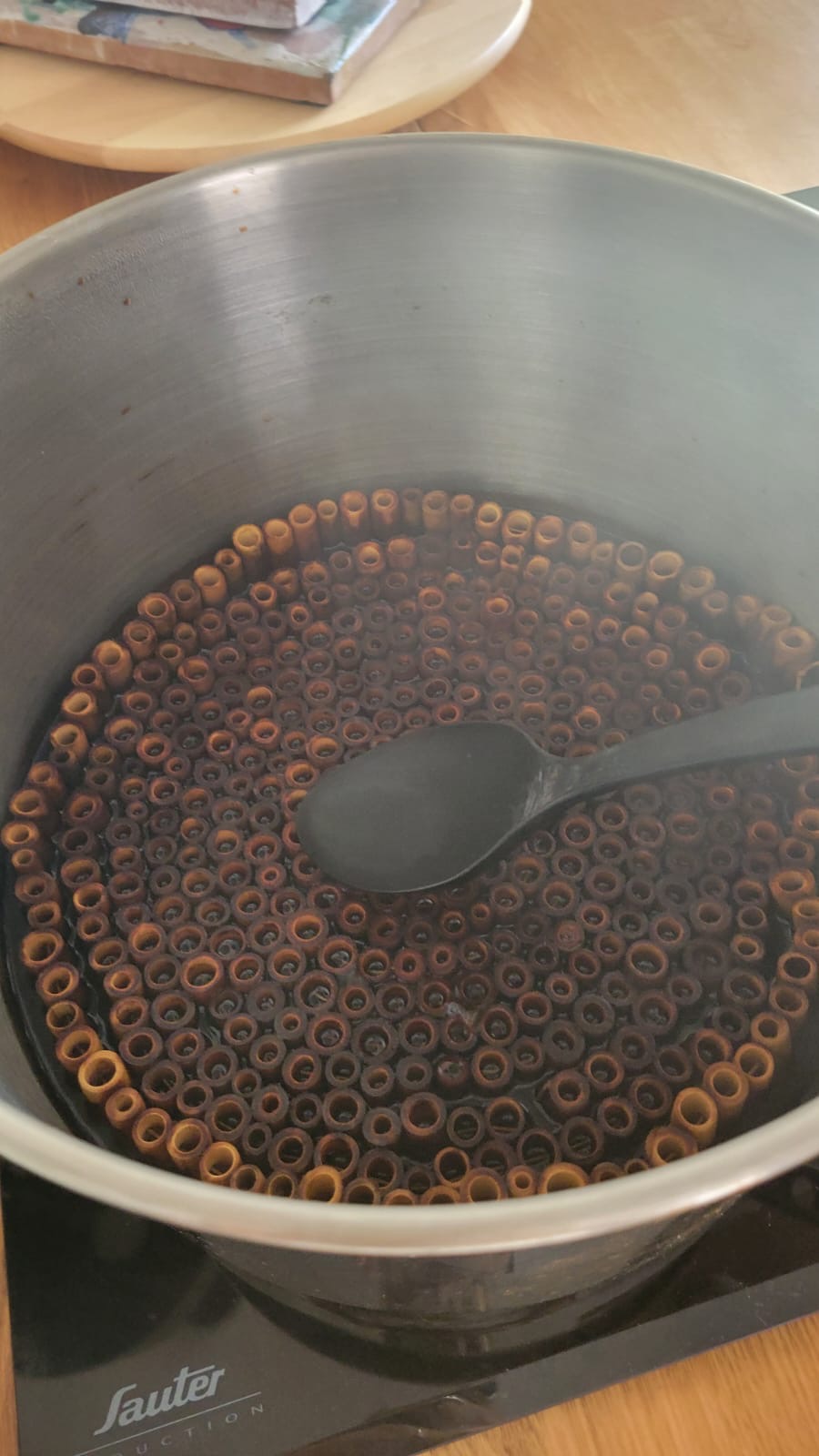
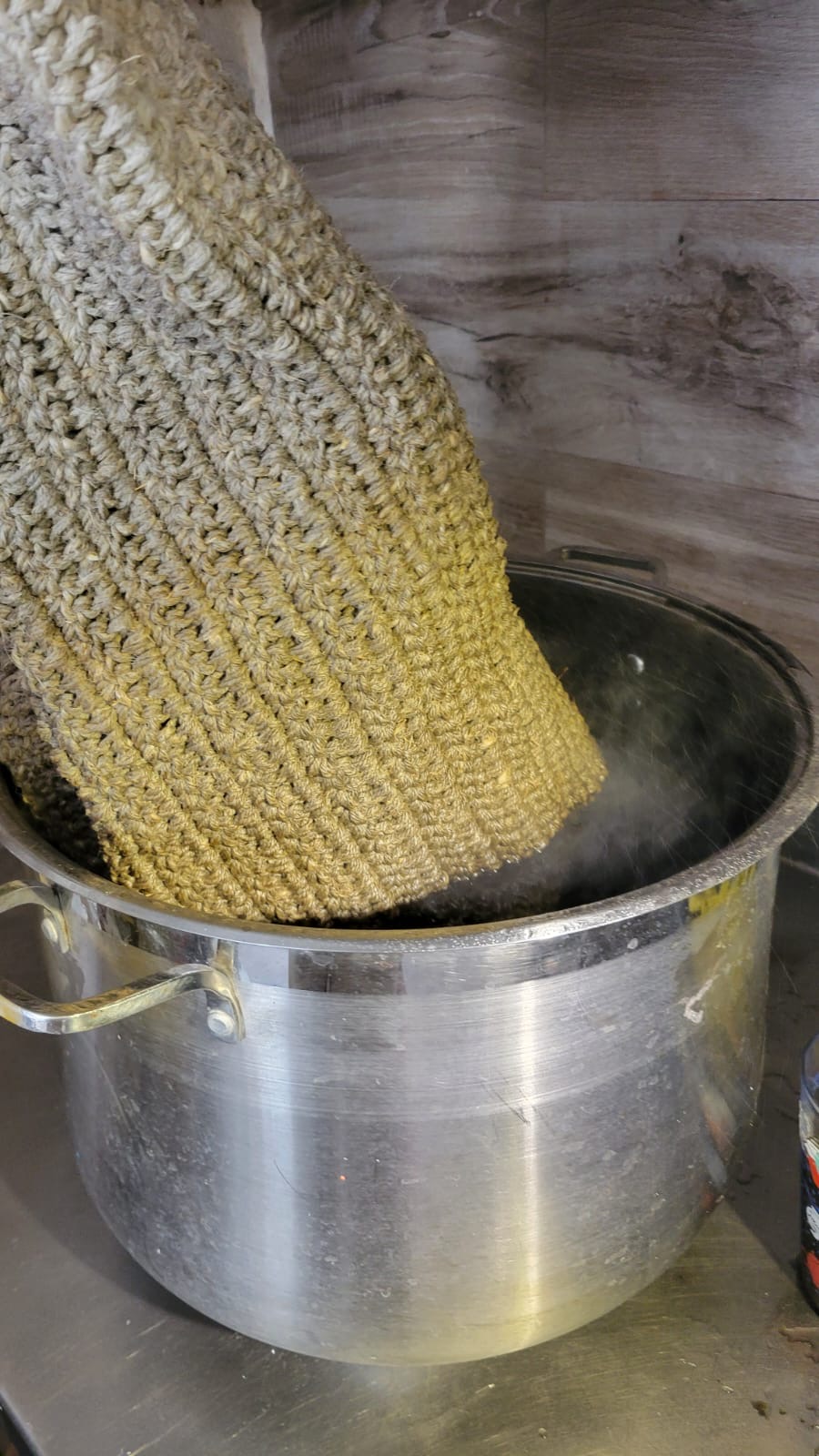
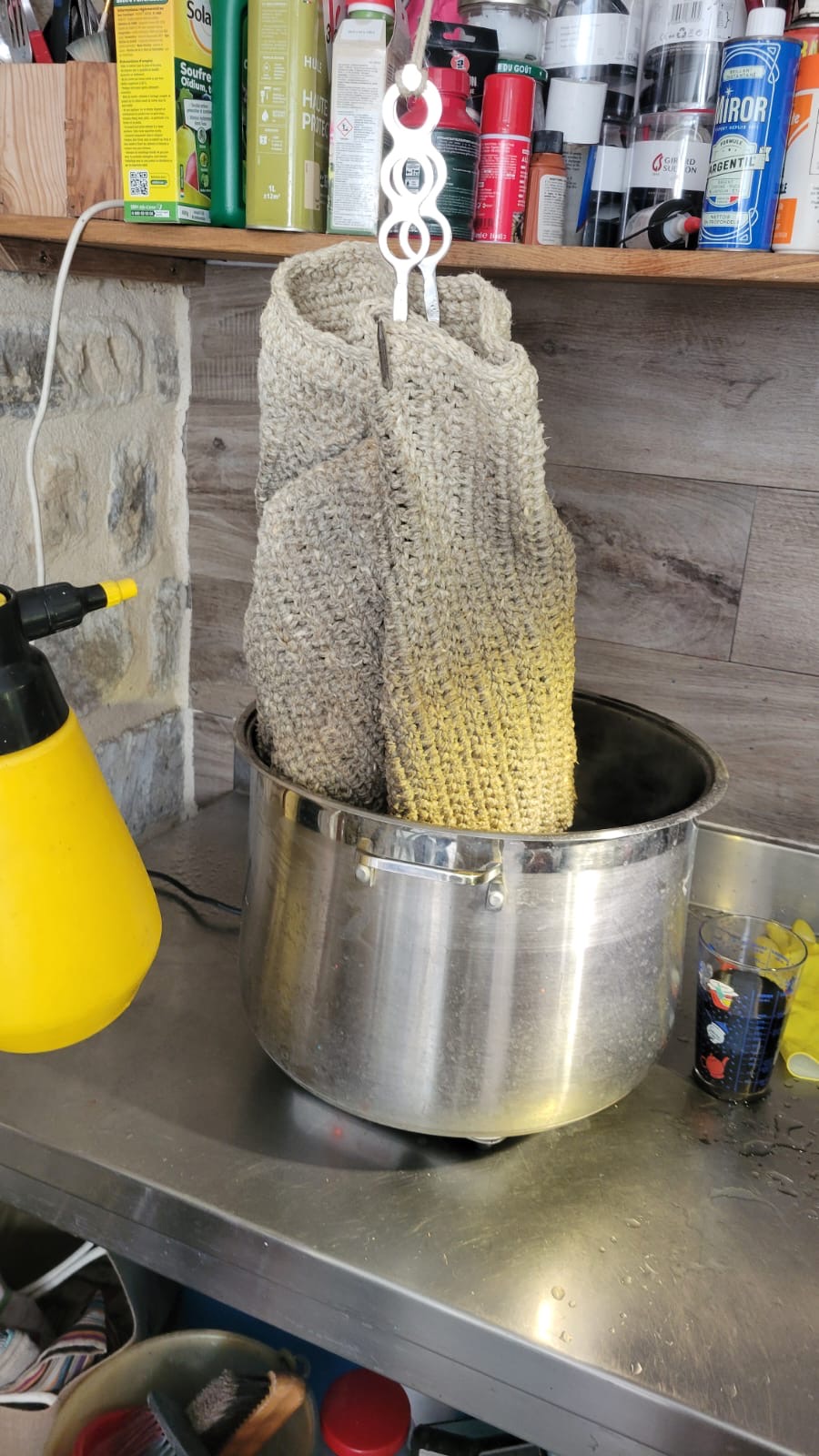
La pièce crochetée est alors teinte en bassine.
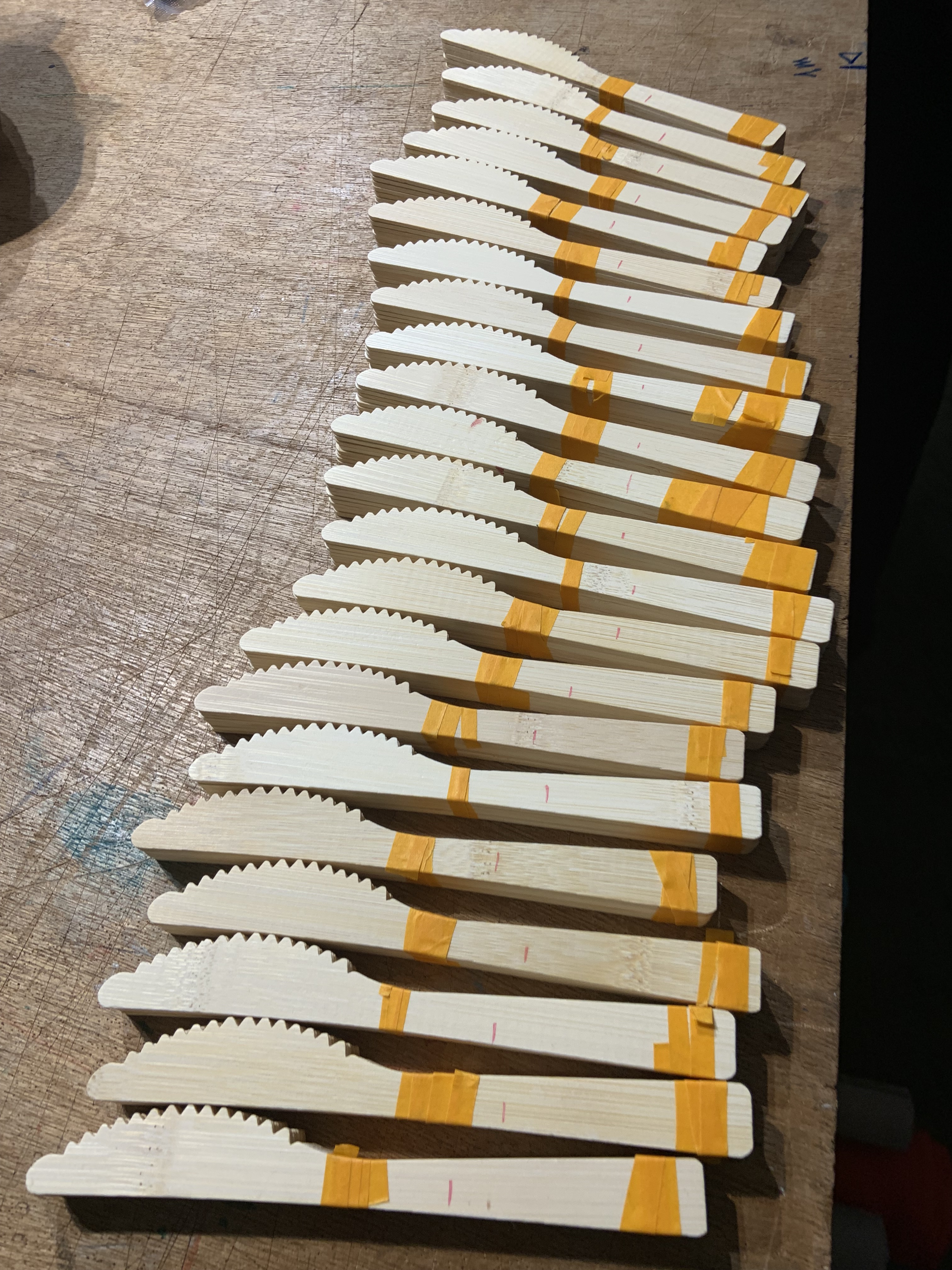
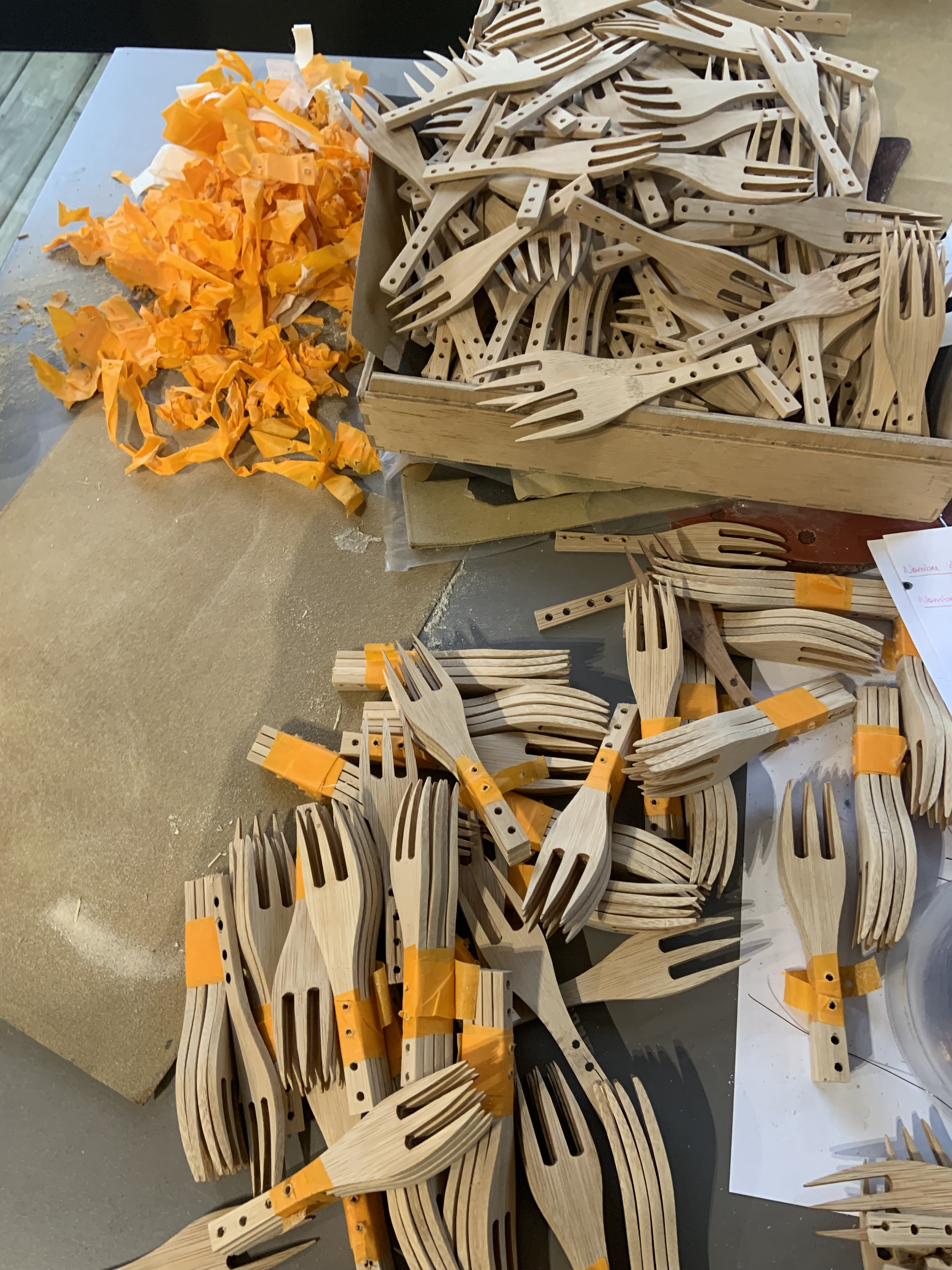
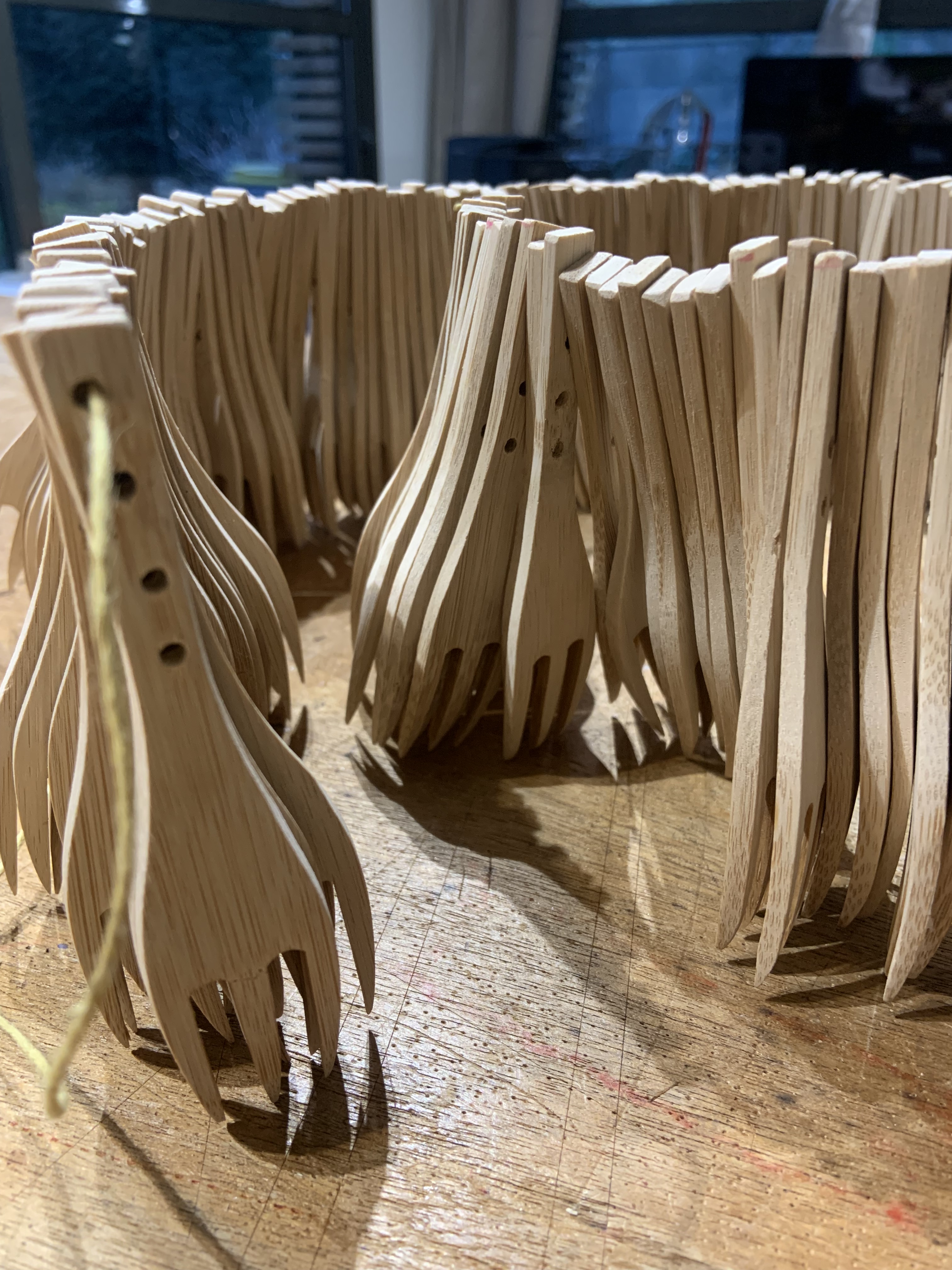
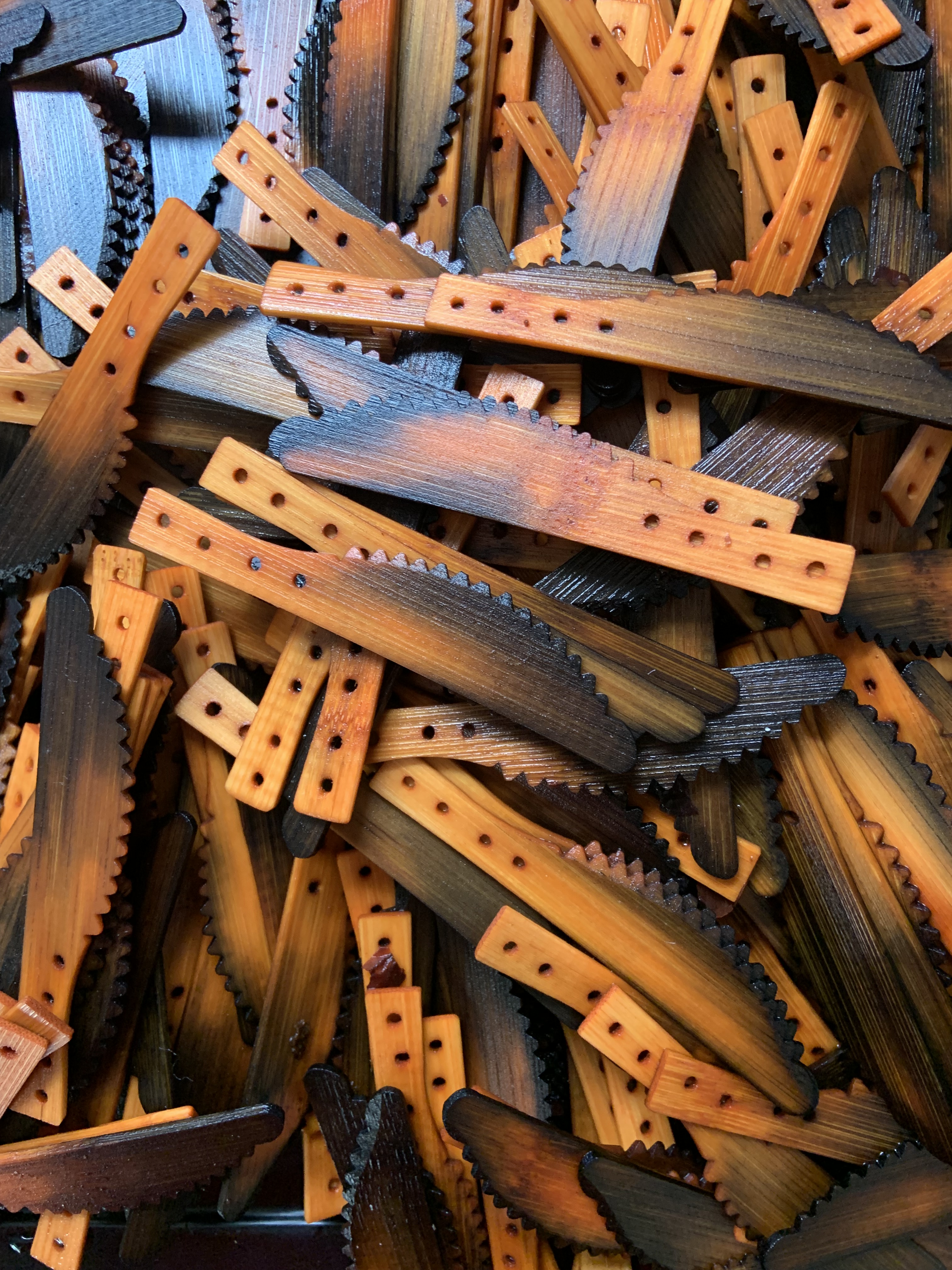
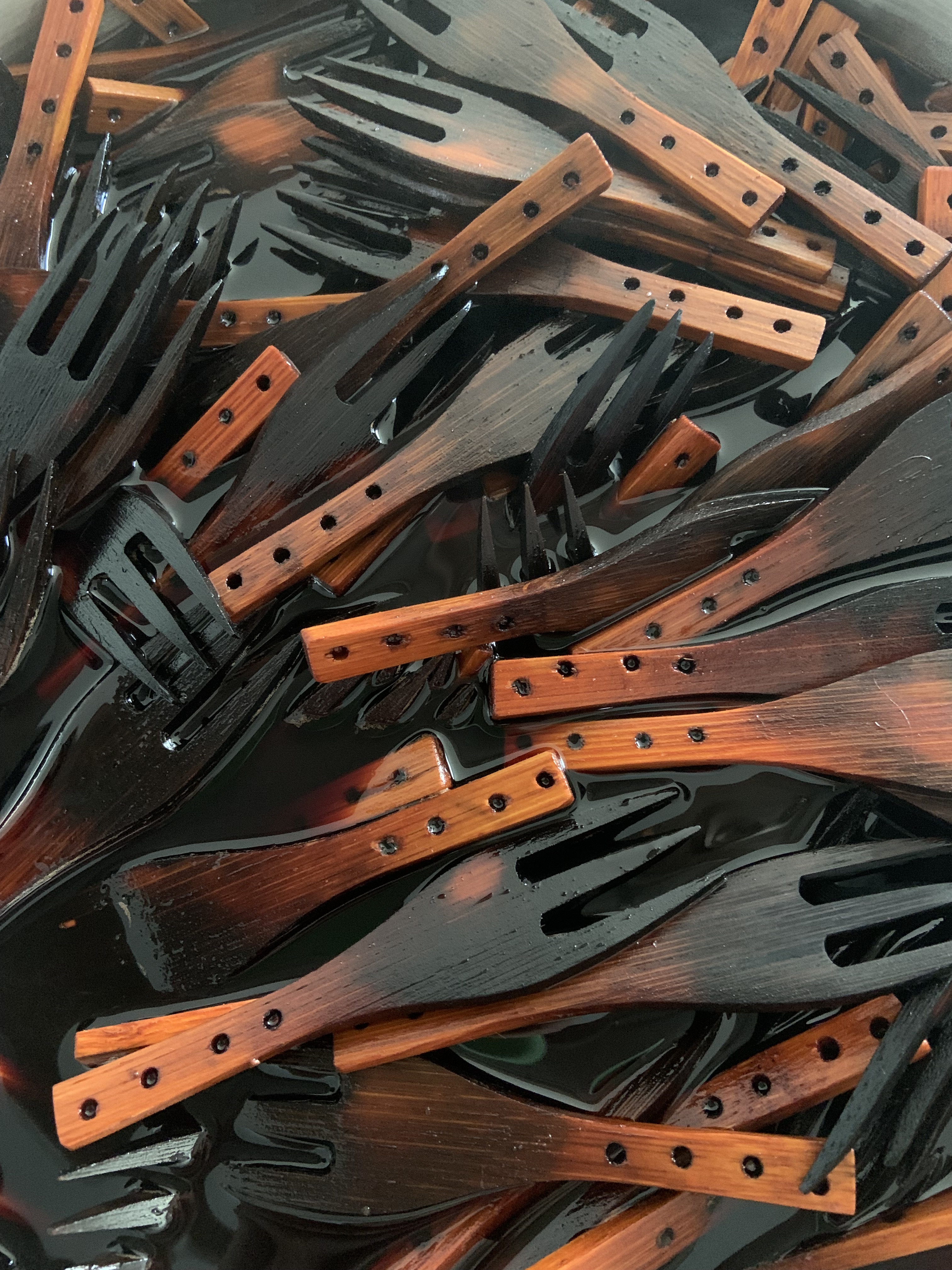
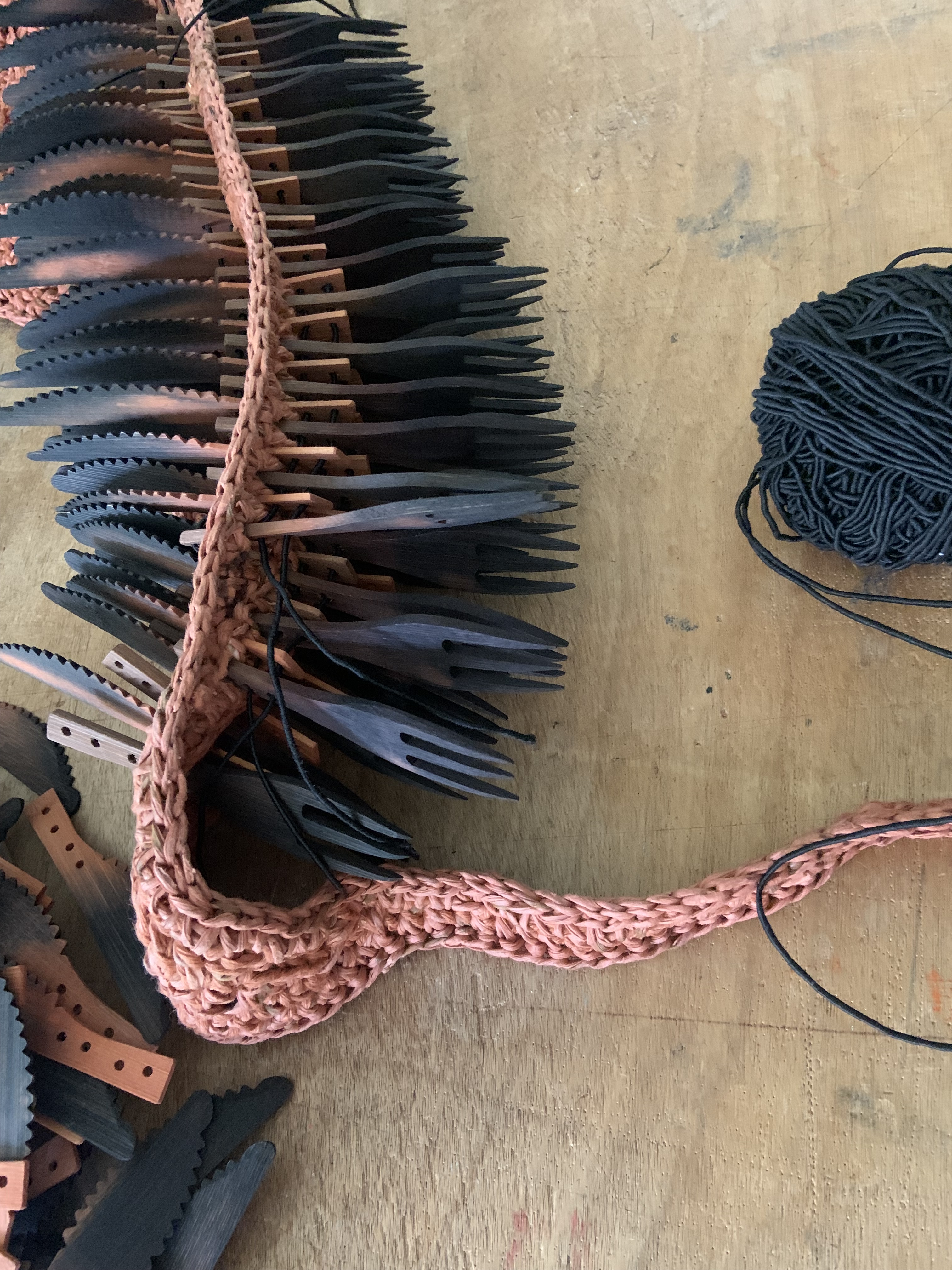
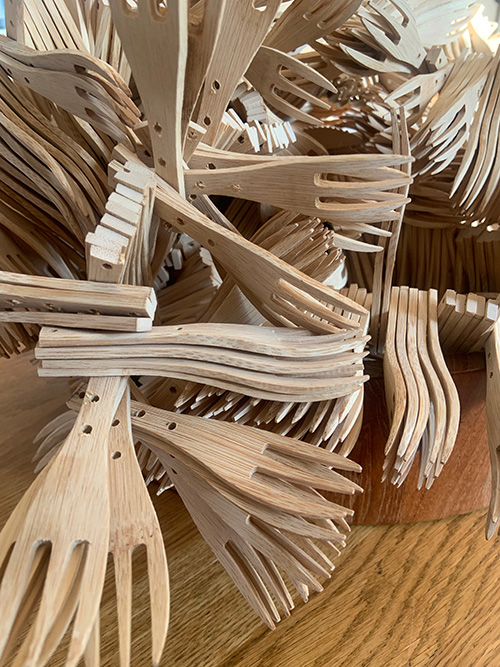
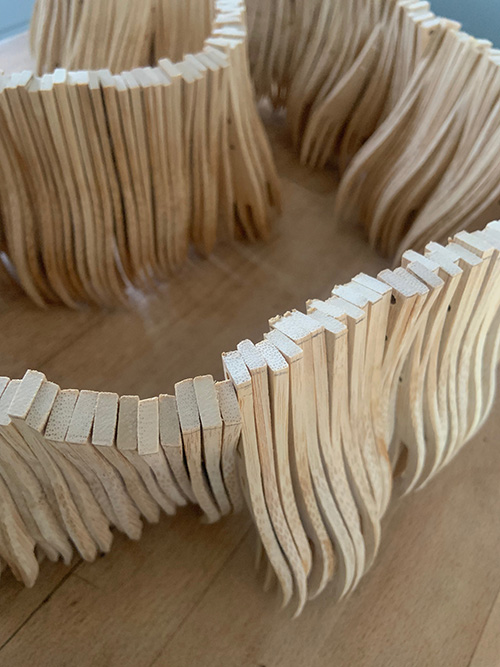
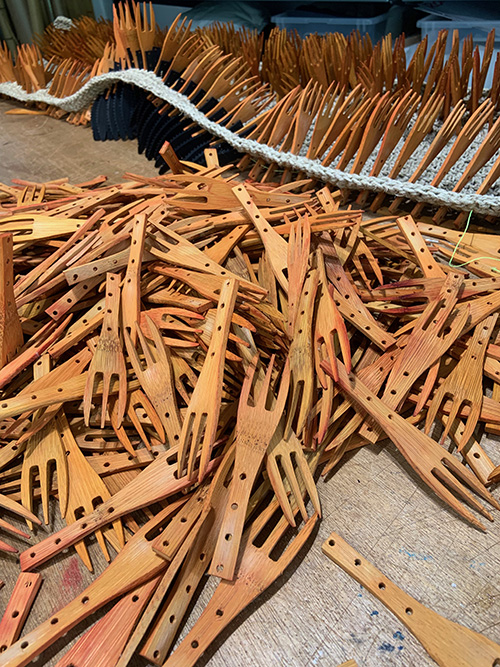
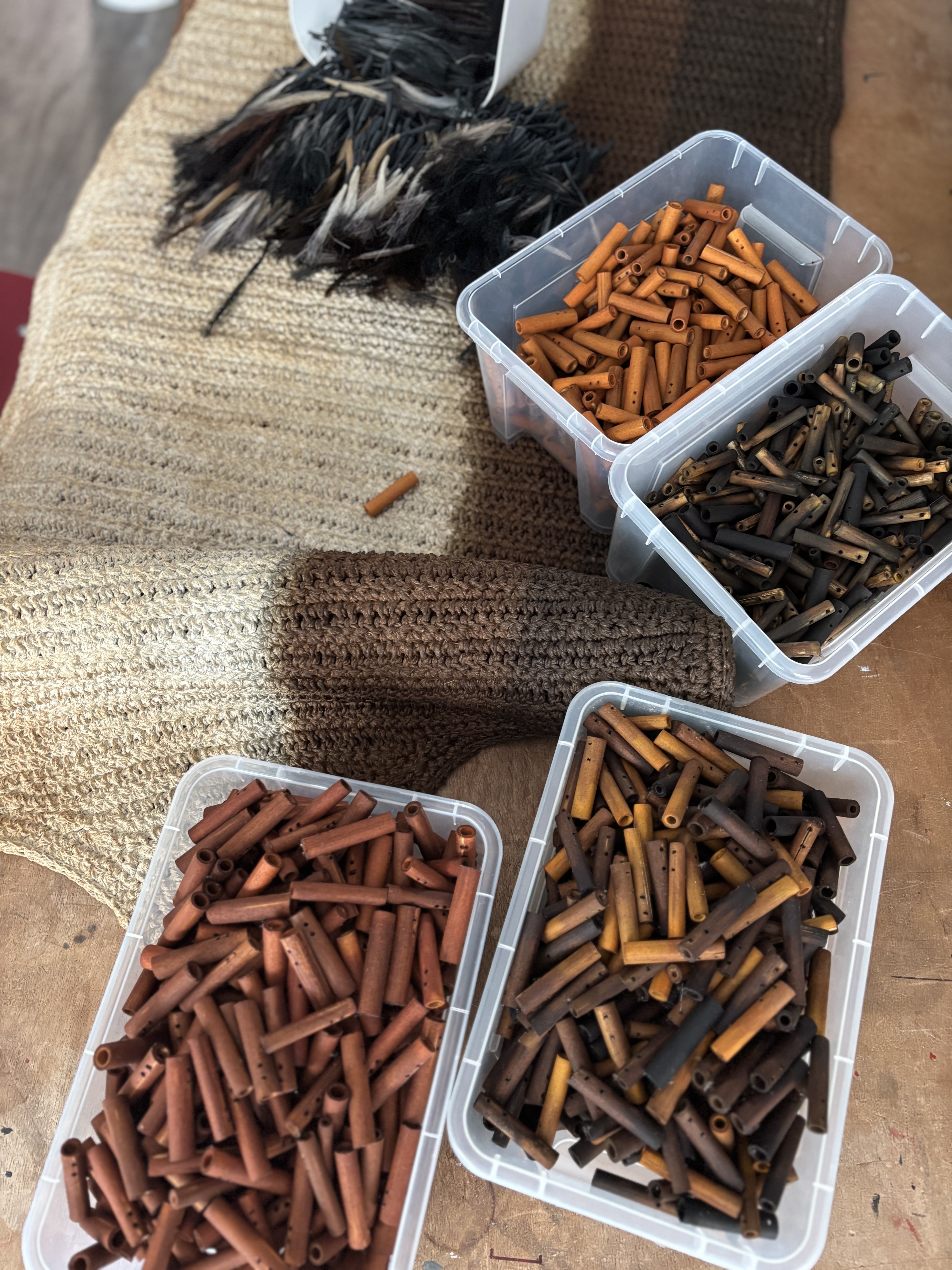
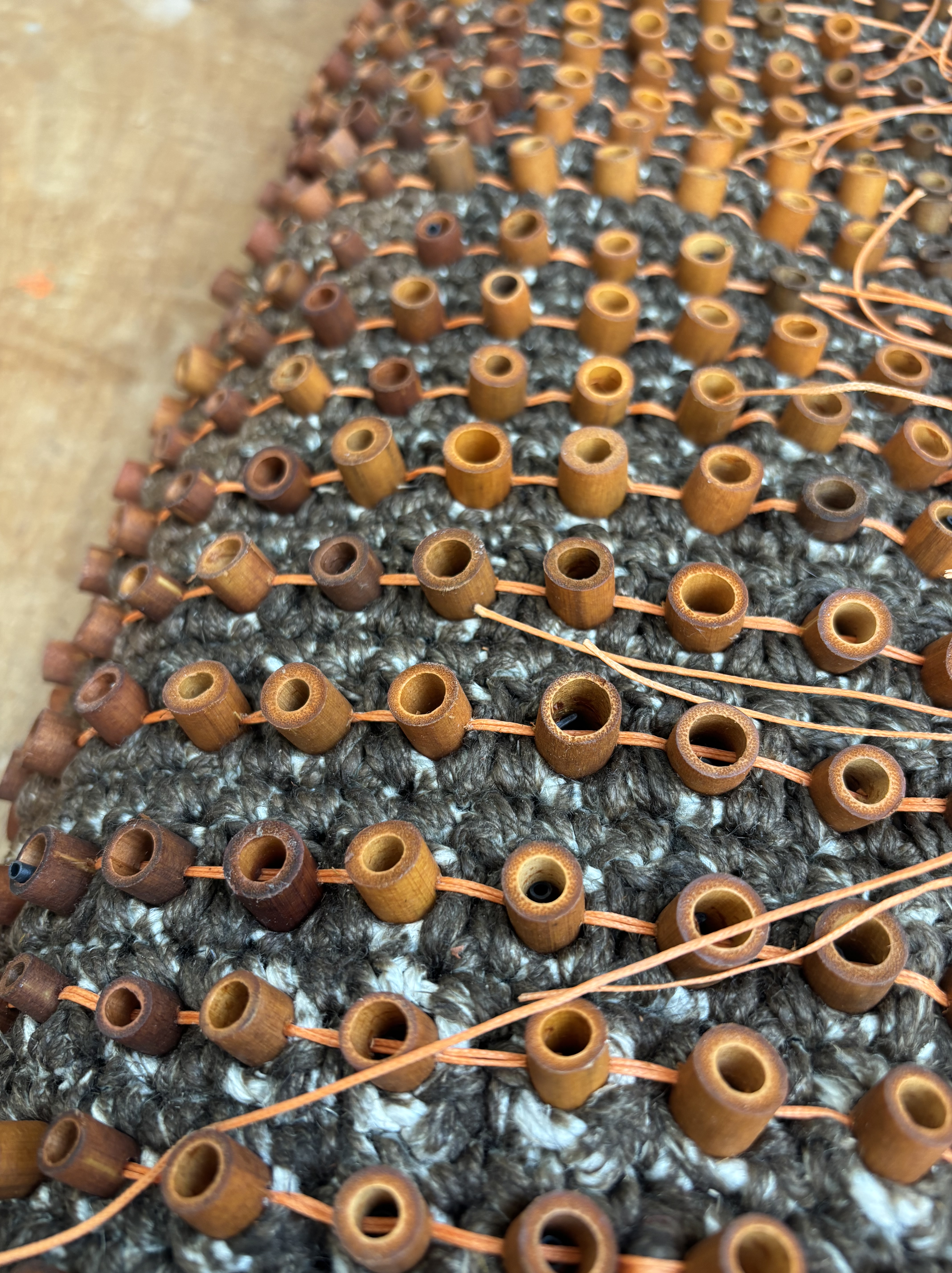
Vient ensuite la mise en forme des couverts. Suivant la taille de la pièce ils sont coupés et percés. La teinture se fait en plusieurs bains pour obtenir les dégradés. Le travail final est un jeu de patience pour insérer les pièces de bambou et créer un tissage de fils pour les maintenir dans les mailles.
En amont de ce long processus de réalisation avec son lot de réflexion, de repentirs et d’adaptation aux défis techniques, j’ai imaginé cette pièce comme toujours en la dessinant sur du papier pour trouver sa forme et ses proportions.

Crocheted bamboo, linen, and reinforced paper cutlery.
To begin with, it is always the crochet work that takes precedence.
This is what will determine the appearance of the piece by calculating the size of the stitches for the future placement of the cutlery.
The crocheted piece is then dyed in a basin.
Next comes the shaping of the cutlery. Depending on the size of the piece, they are cut and pierced. The dyeing is done in several baths to obtain the gradations. The final work is a game of patience to insert the bamboo pieces and create a weave of threads to hold them in the stitches.
Upstream of this long process of creation, with its share of reflection, second thoughts, and adaptation to technical challenges, I imagined this piece as always by drawing it on paper to find its shape and proportions.

photos Philippe Denis
red fox


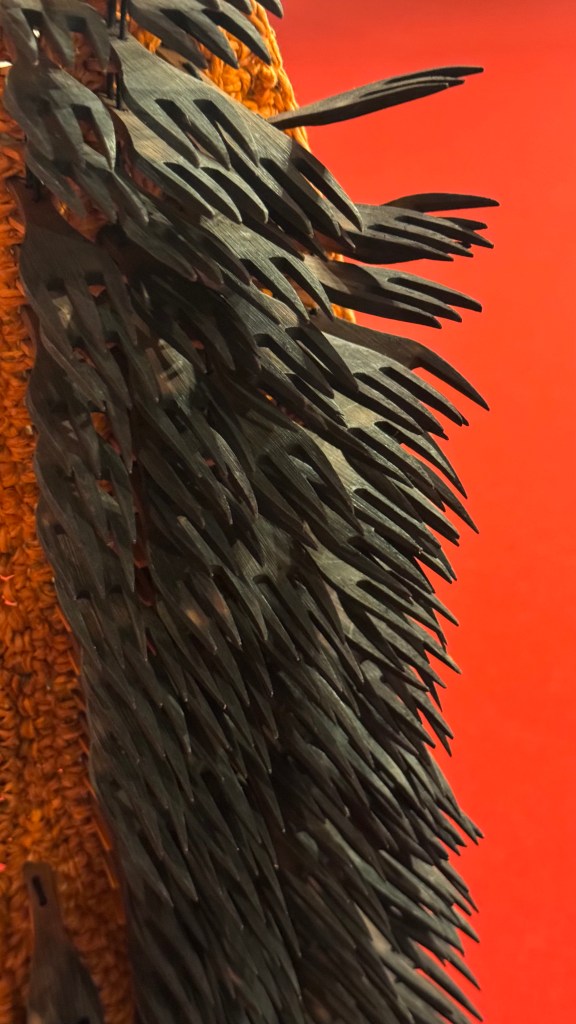
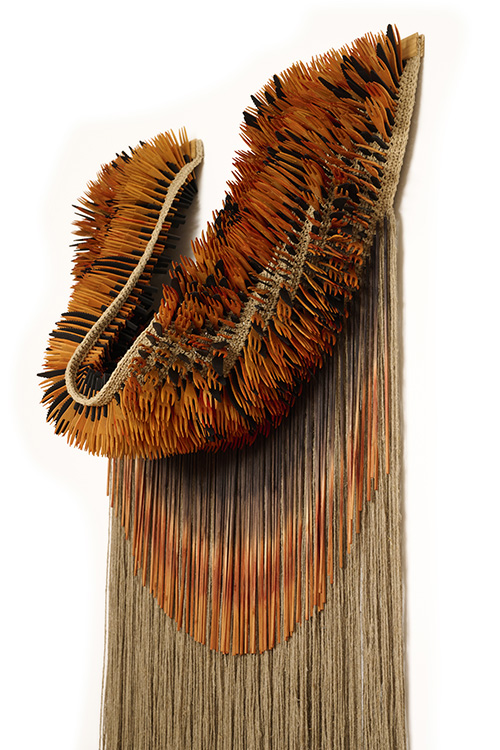
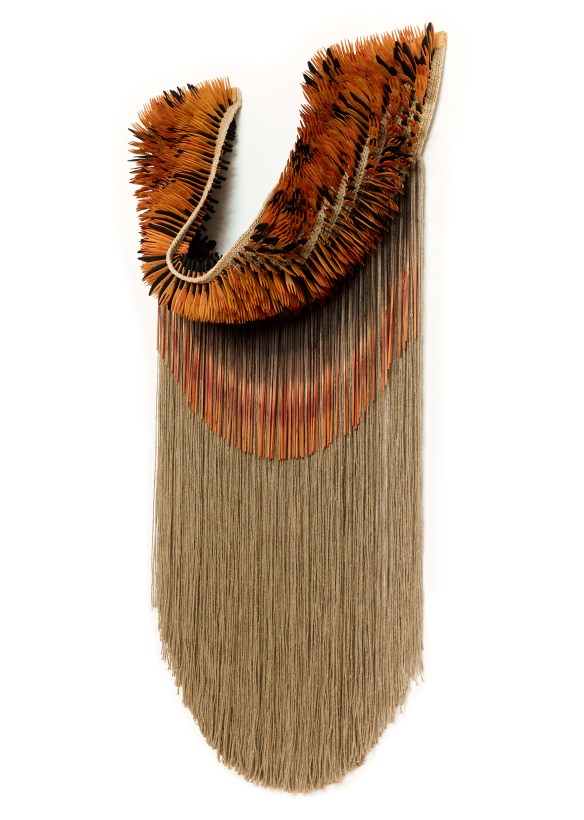
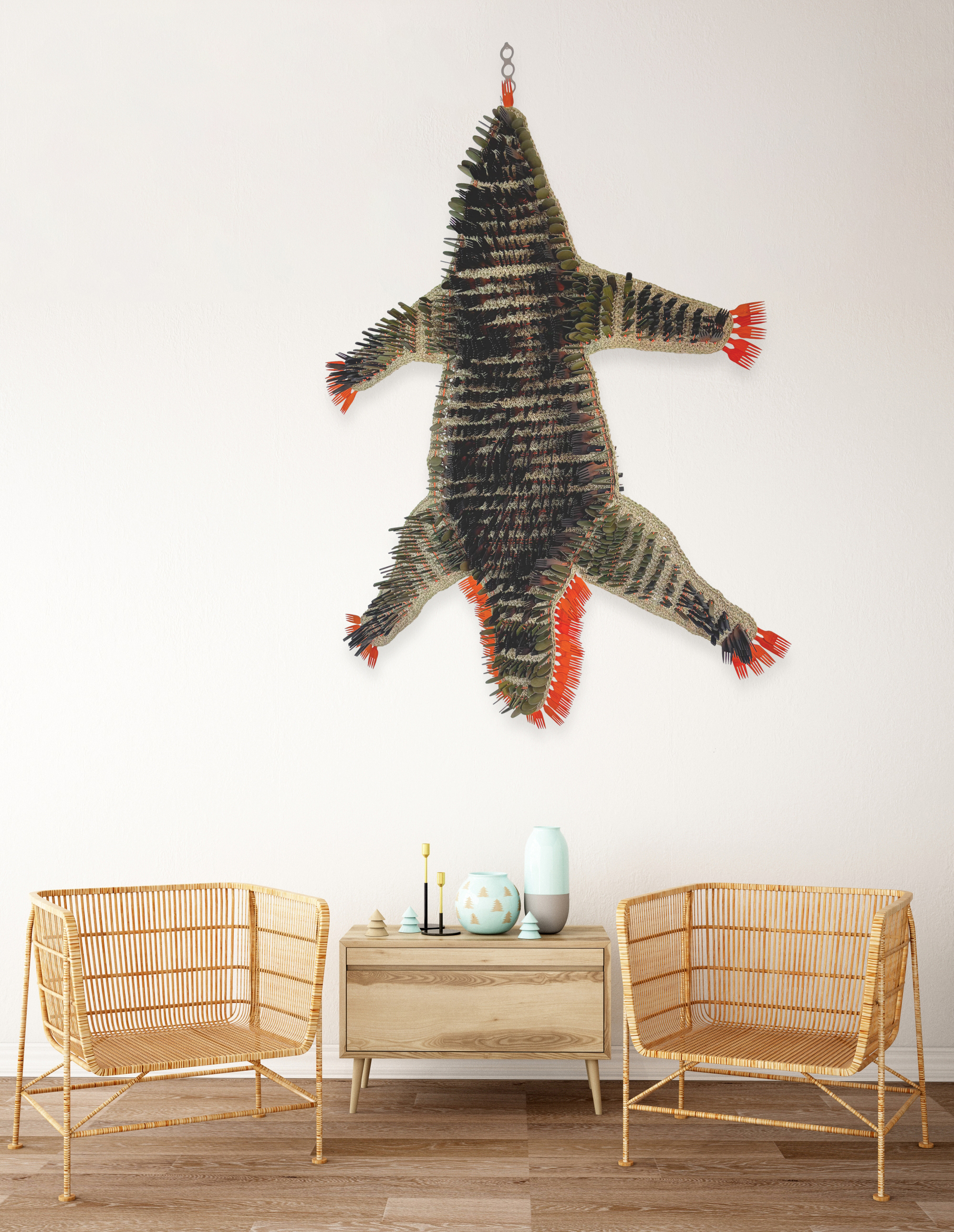
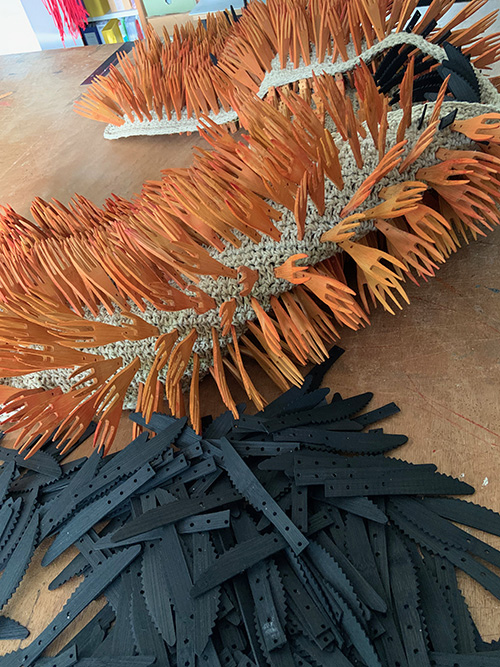
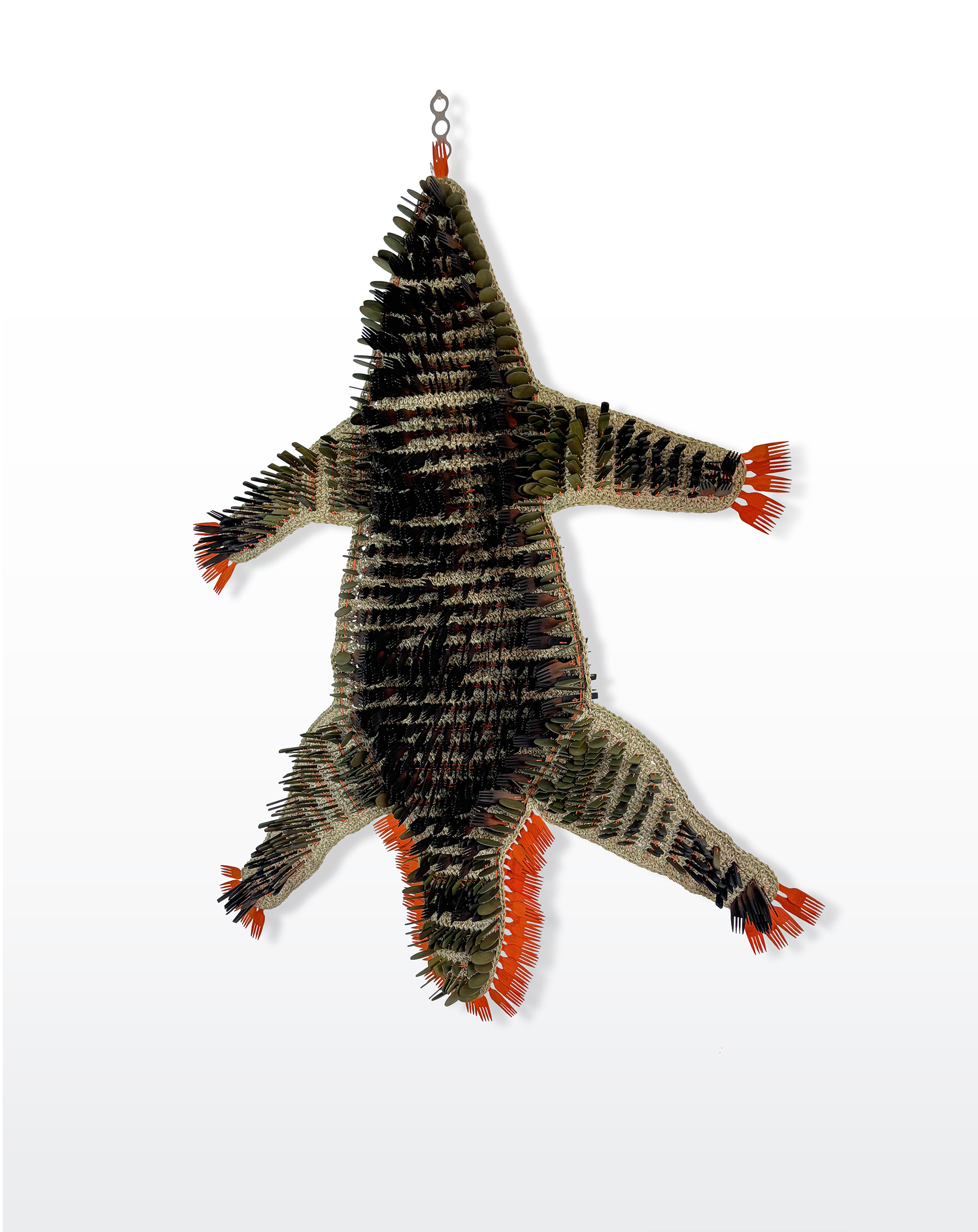
Cette pièce textile murale est inspirée du conte asiatique du Renard à neuf queue (esprit surnaturel sous forme de renard). C’est une représentation grand format d’une parure tribale évoquant une dépouille de renard.

Artiste de la matière, j’écris des histoires avec du fil et des matériaux naturels qui reflètent à la fois la fragilité et la force de la vie. De mes racines dans la mode et le textile, mon art s’épanouit en une exploration de la nature et des formes.
En utilisant de outils simples comme le crochet ou l’aiguille et des fils naturels tels le lin, le chanvre, le papier, mon travail reflète un savoir-faire en connexion émotionnelle avec la préservation de l’environnement et la recherche des formes organiques et naturelles.

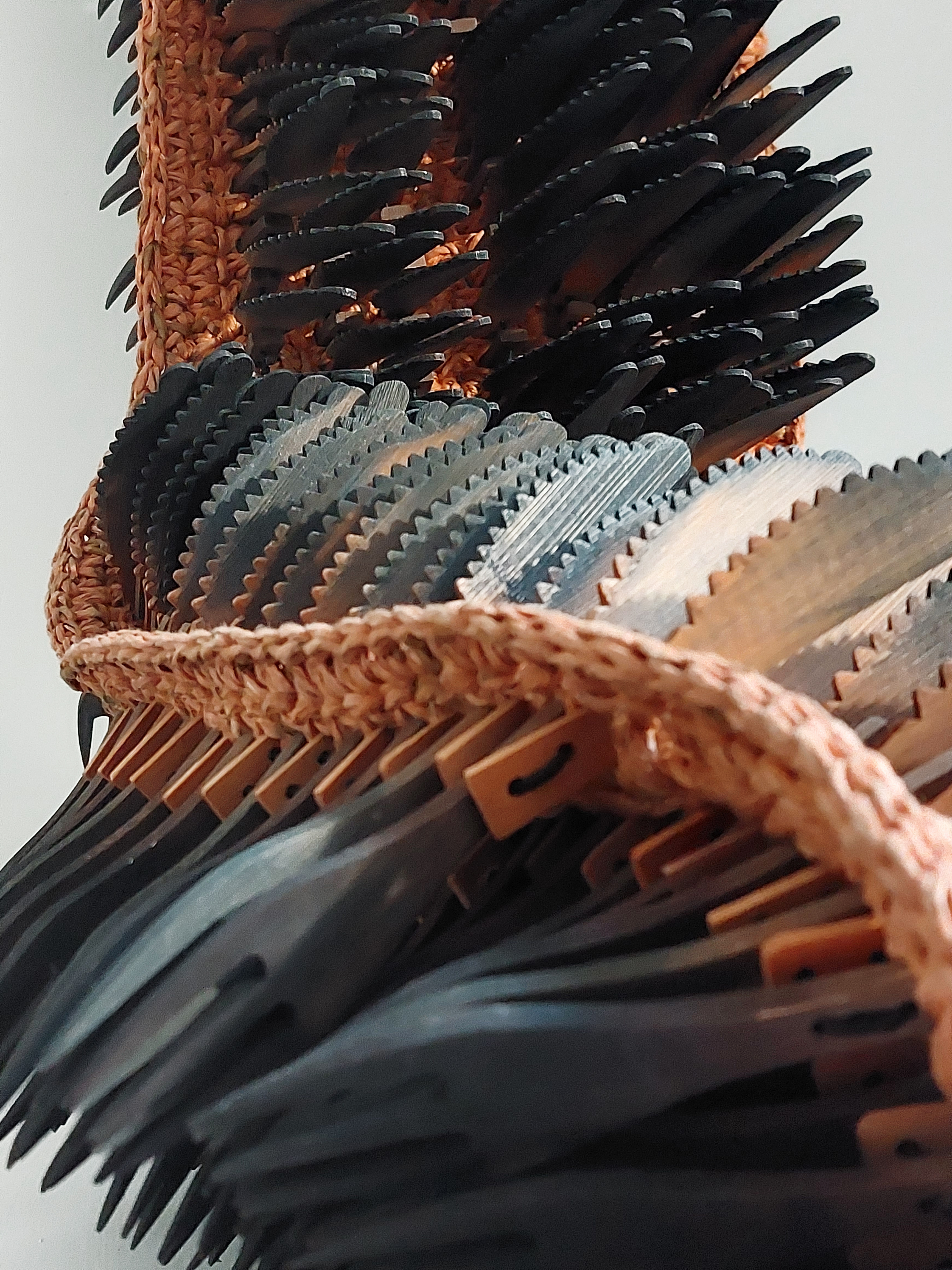
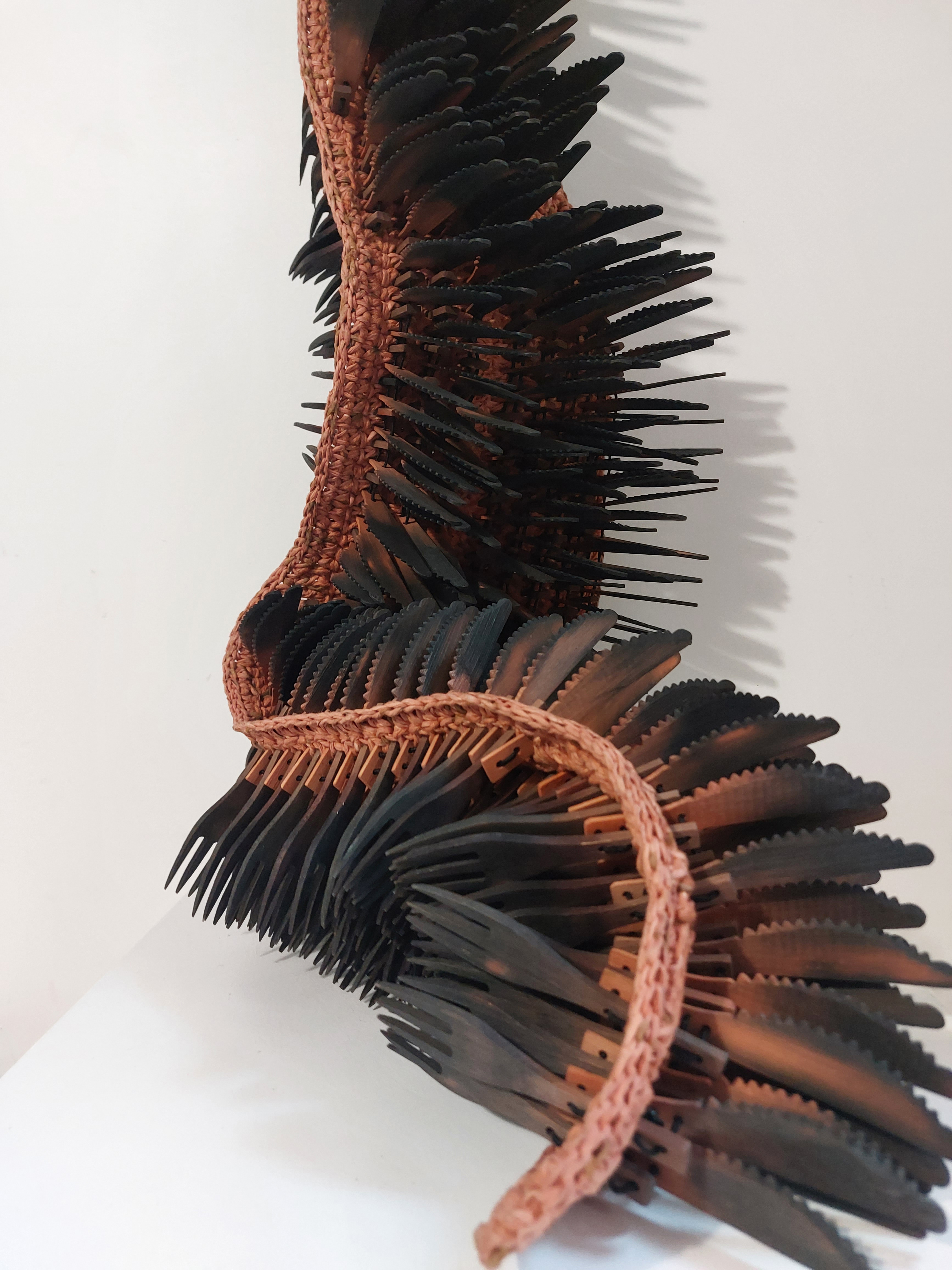
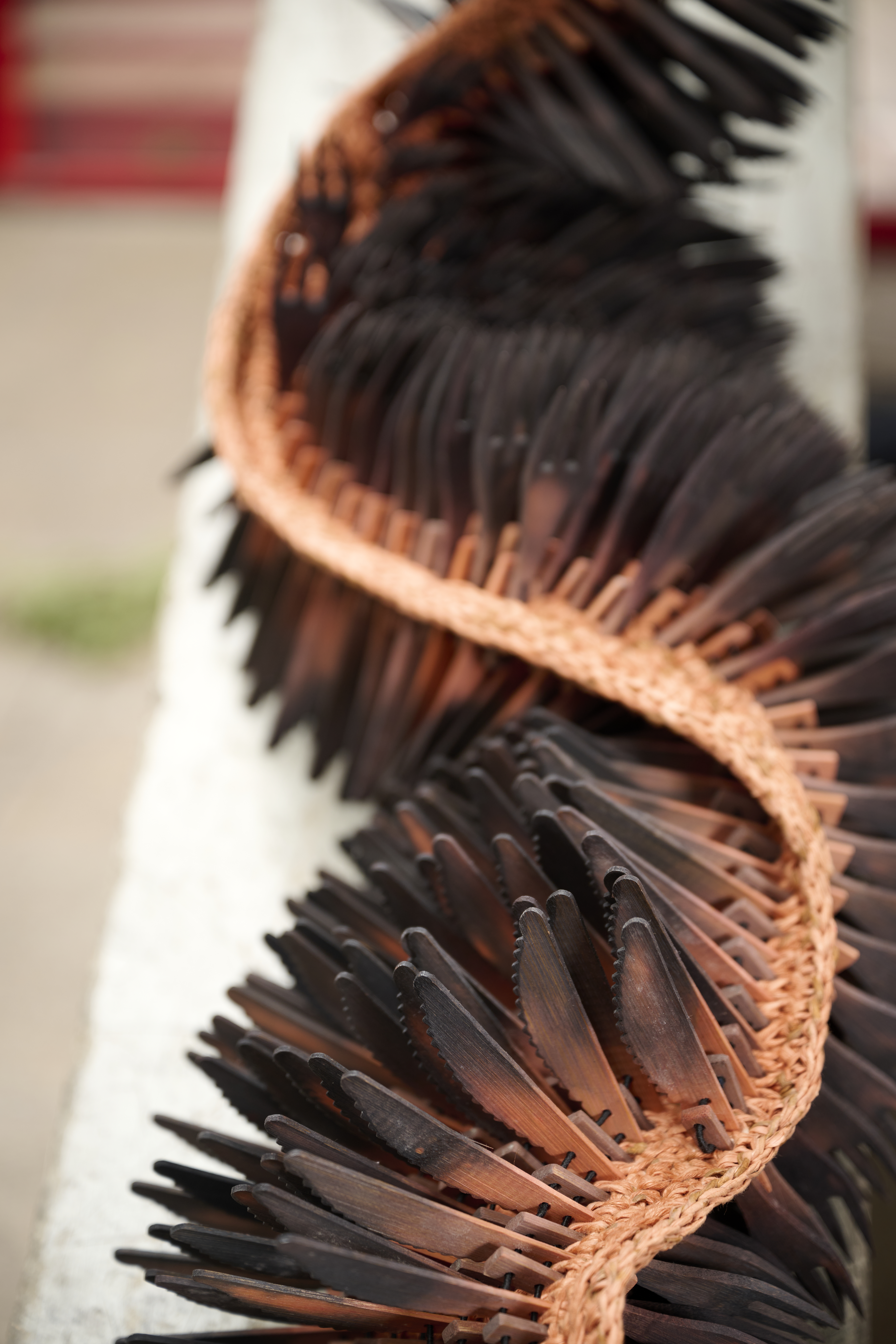
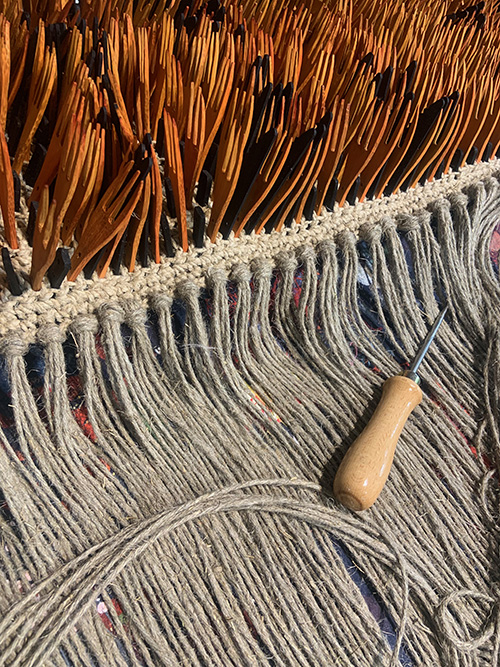
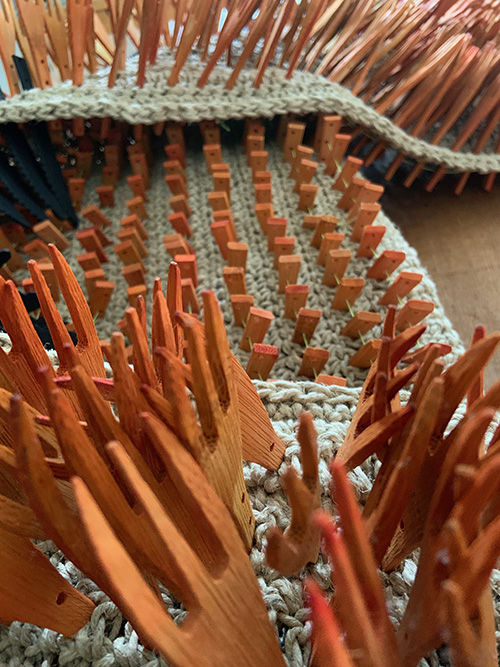
Fil de lin crocheté, couteaux, fourchettes et baguettes de bambou teints, fil de lin brut.

Hanging textile artwork inspired by the Nine-Tailed Fox tale, featuring a combination of vibrant materials and natural threads, evoking a tribal aesthetic.

This textile wall hanging is inspired by the Asian tale of the Nine-Tailed Fox (a supernatural spirit in the form of a fox). It is a large-scale representation of tribal jewellery evoking the remains of a fox.

As a textile artist, I write stories with thread and natural materials that reflect both the fragility and strength of life. From my roots in fashion and textiles, my art blossoms into an exploration of nature and form.

Using simple tools such as crochet hooks or needles and natural threads such as linen, hemp, and paper, my work reflects a craftsmanship that is emotionally connected to environmental preservation and the search for organic and natural forms.

Crocheted linen thread, knives, forks, and dyed bamboo chopsticks, raw linen thread.

trophée

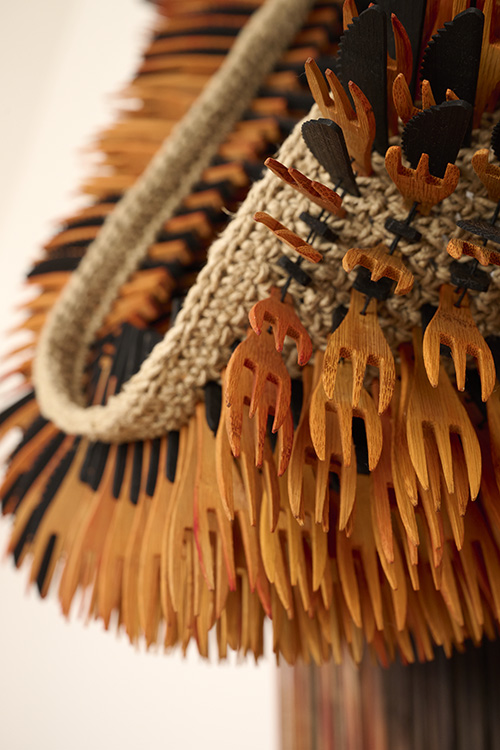
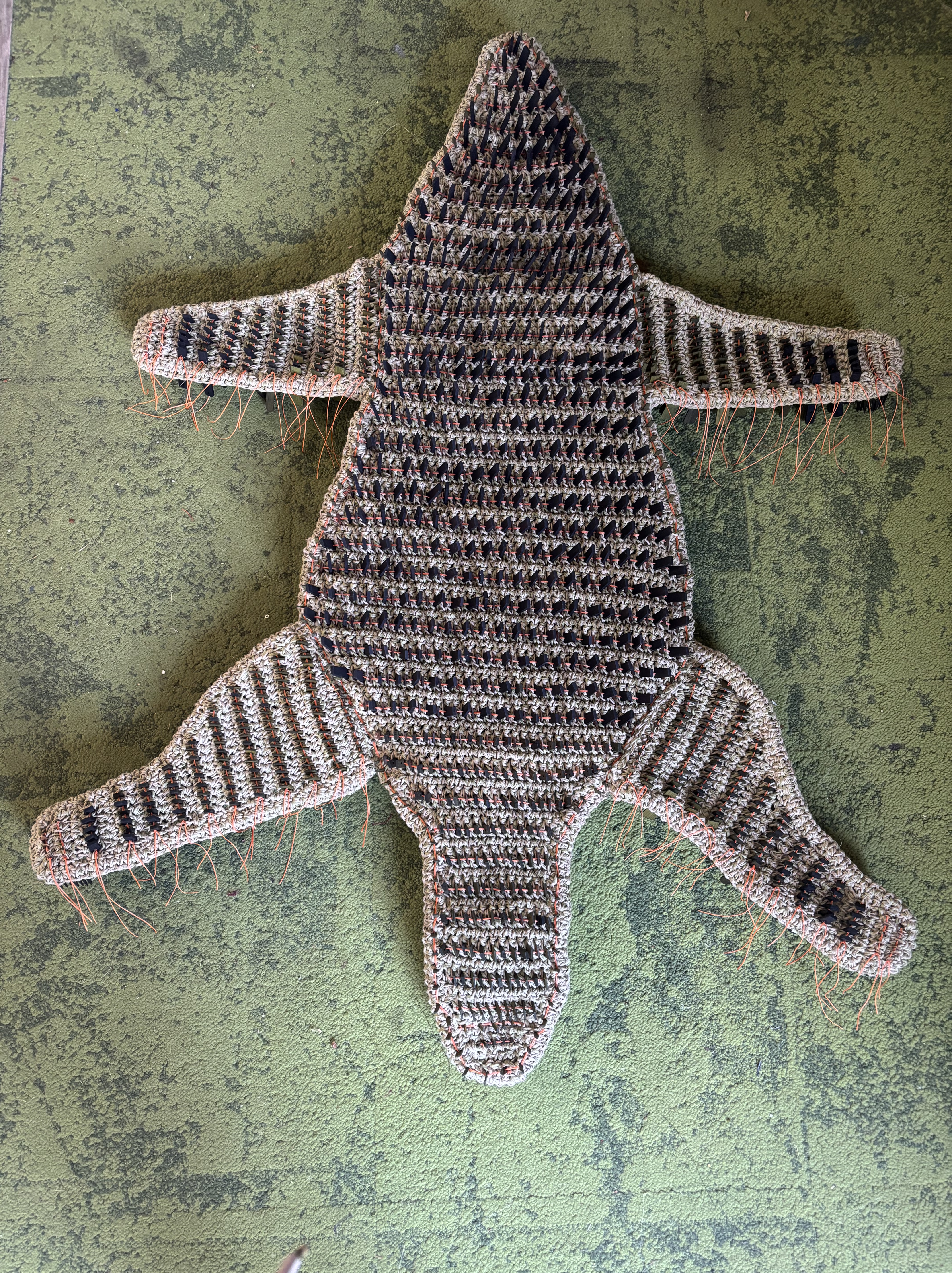
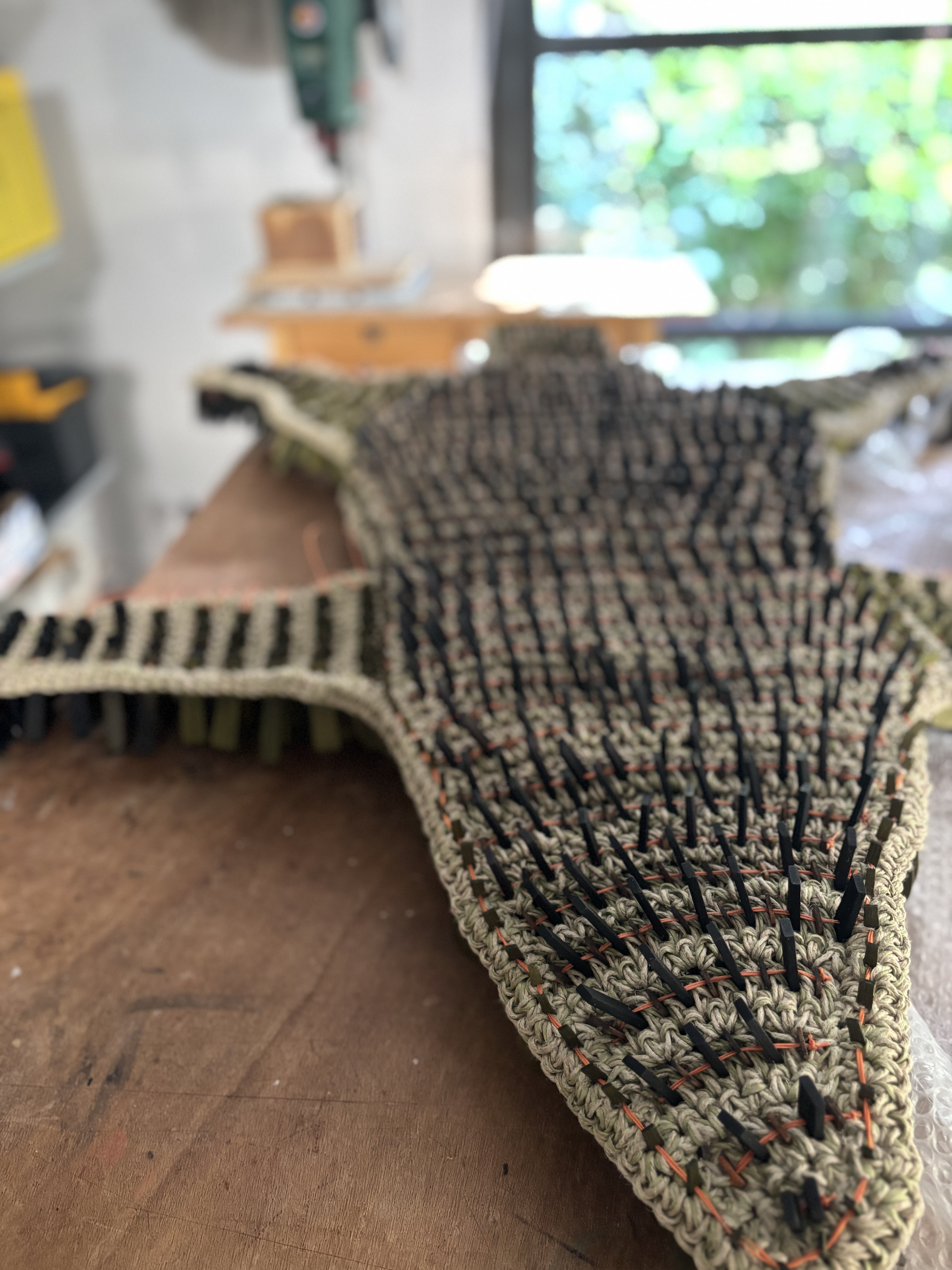
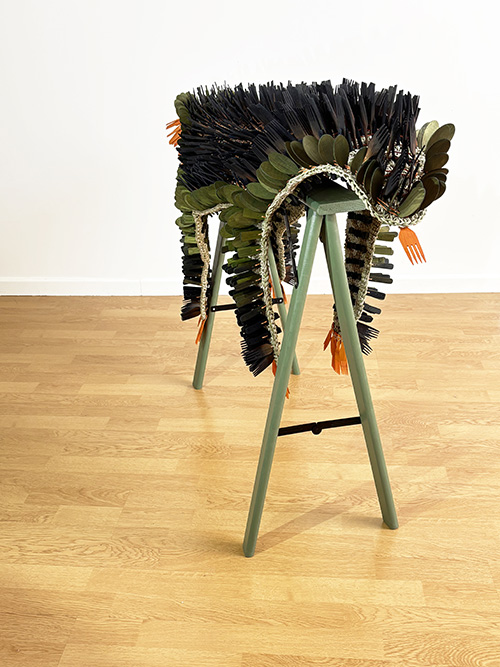
Couverts de bambou et fil de papier armé crocheté.

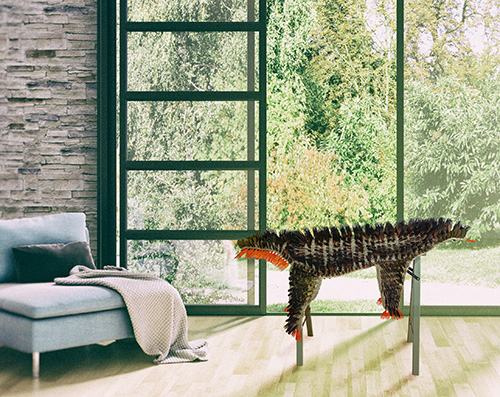
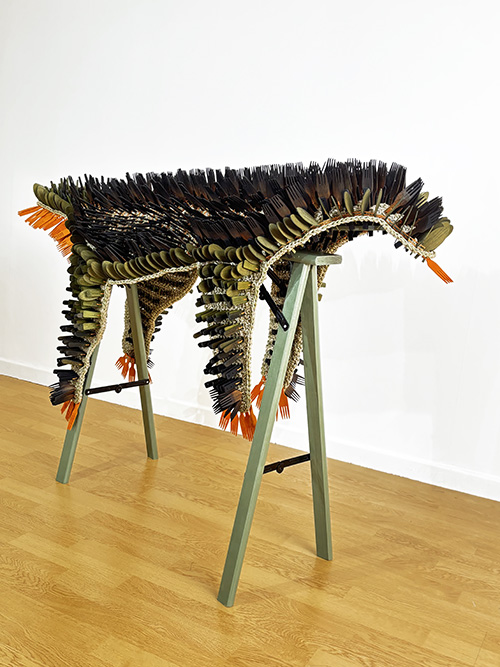
Un projet mis “sur pied” en poursuivant mon cheminement sur les dépouilles animales.
Mes formes sculpturales ne se limitent pas à l’esthétique ; elles questionnent notre rapport à l’environnement, aux ressources naturelles et au monde animal.
L’hybridation matière-forme crée un espace sensible, interrogeant notre place dans le monde. En privilégiant des matériaux naturels, récoltés ou recyclés, cette démarche pousse à repenser nos habitudes et notre consommation, ouvrant la voie à une cohabitation harmonieuse entre nature et humanité.

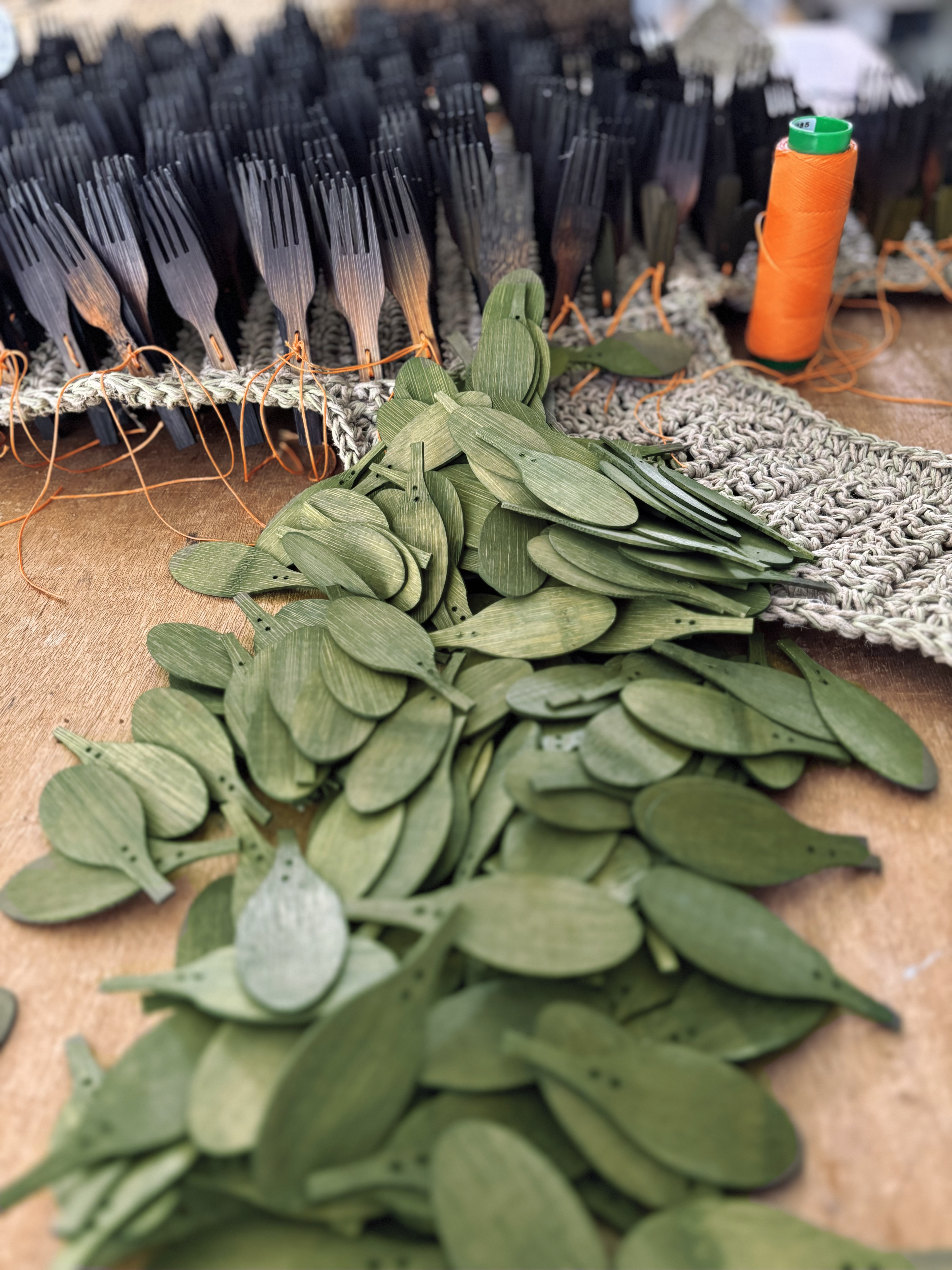
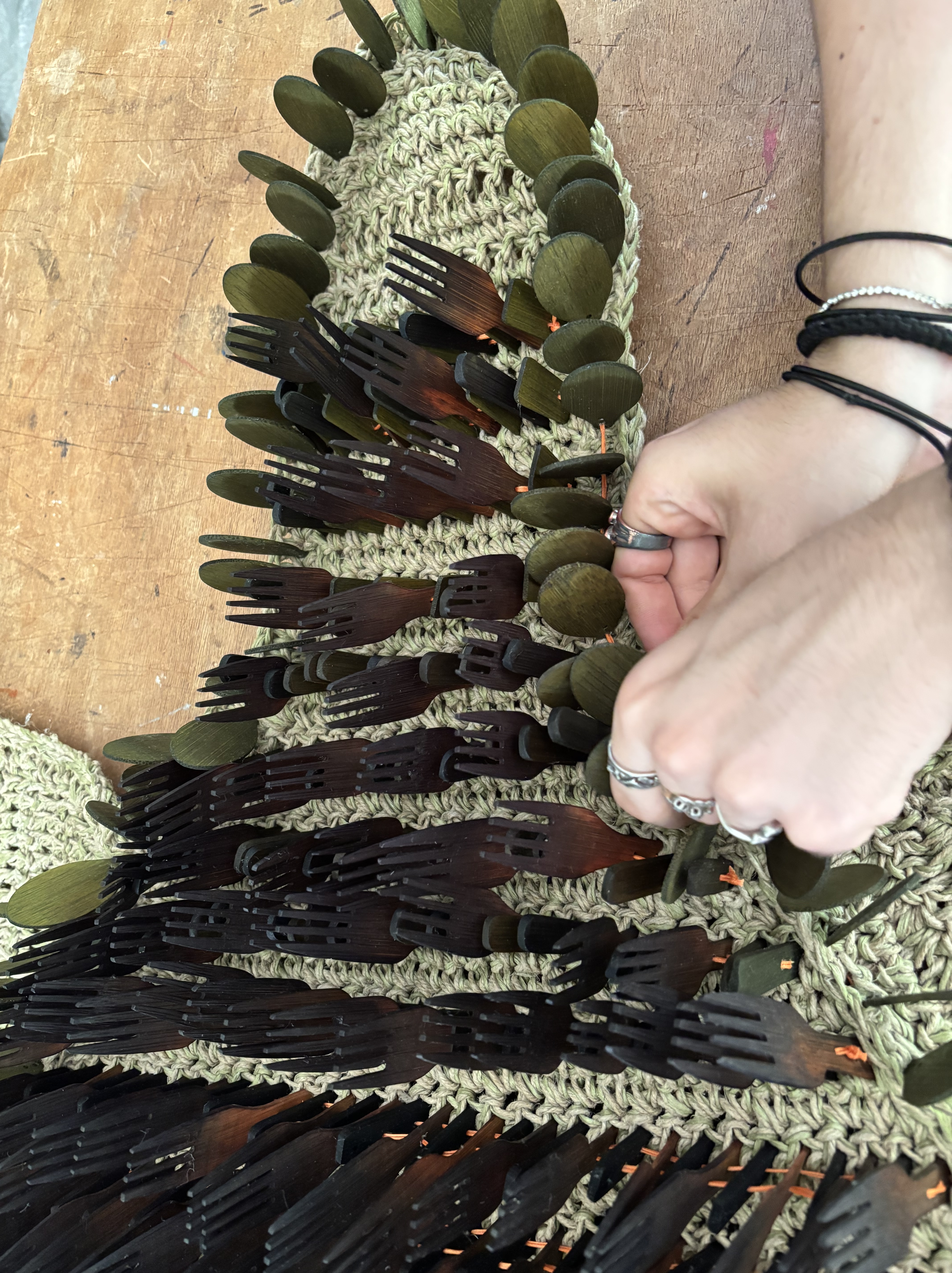
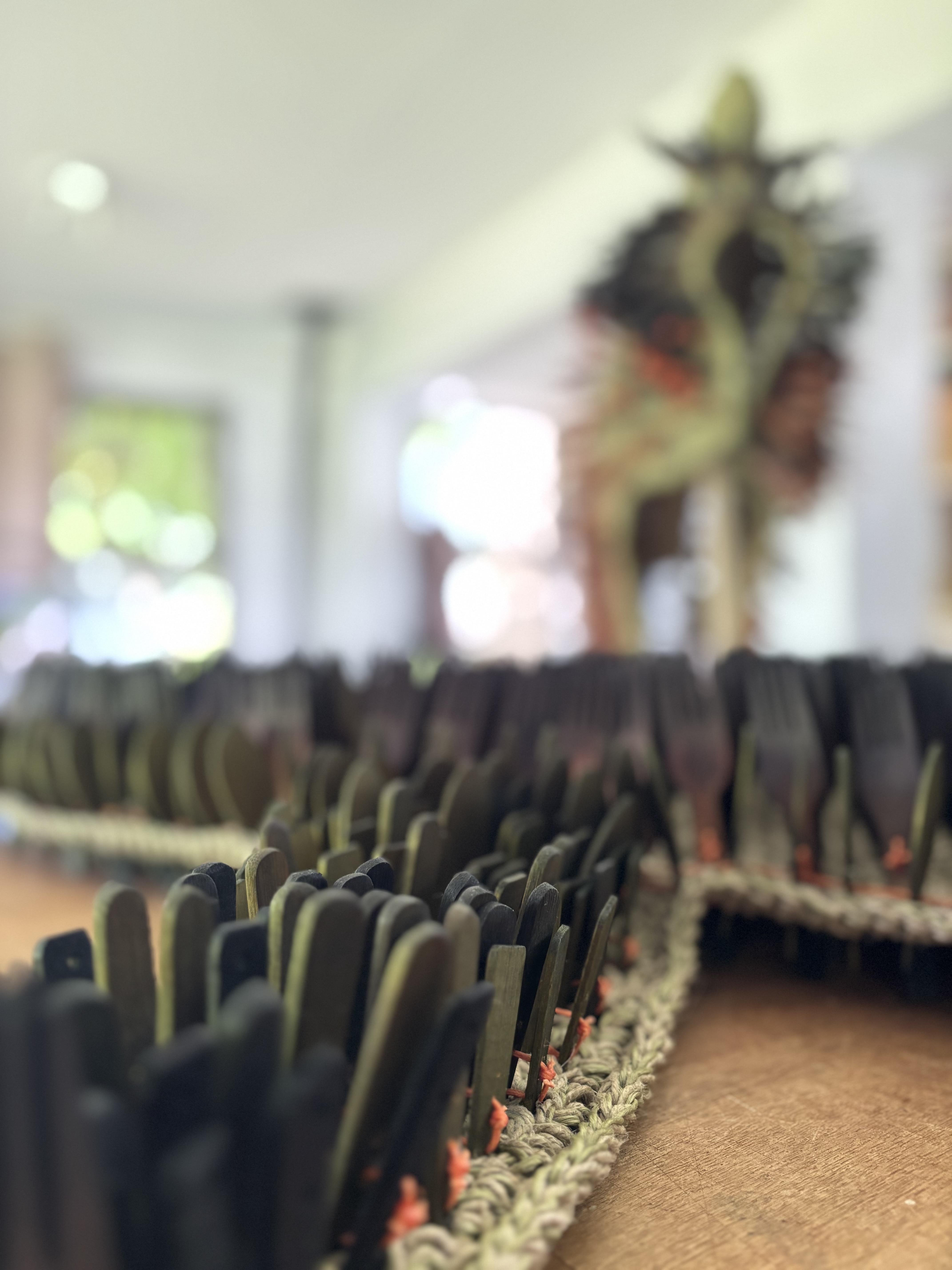
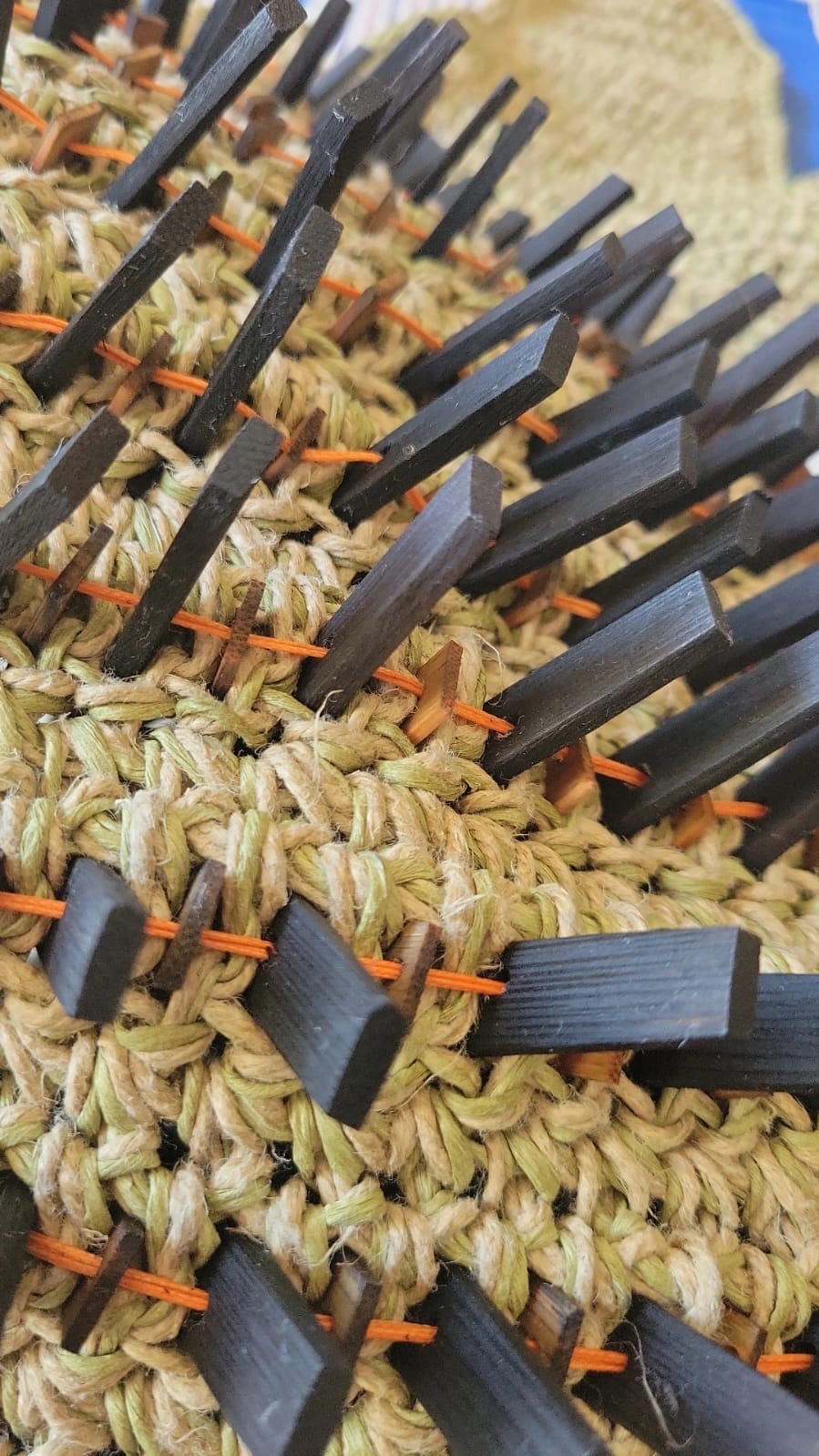
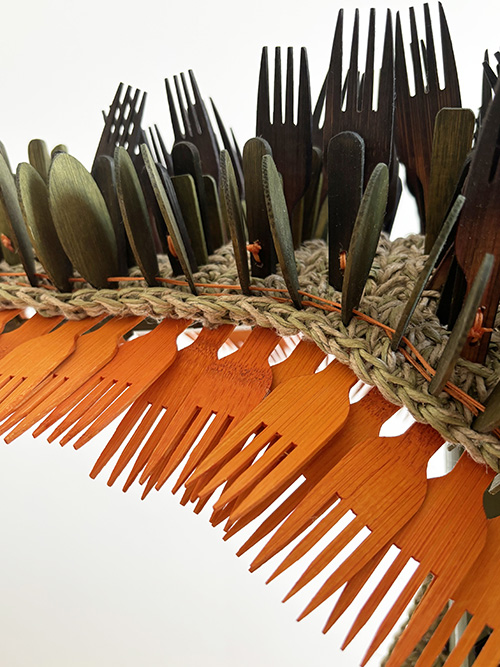
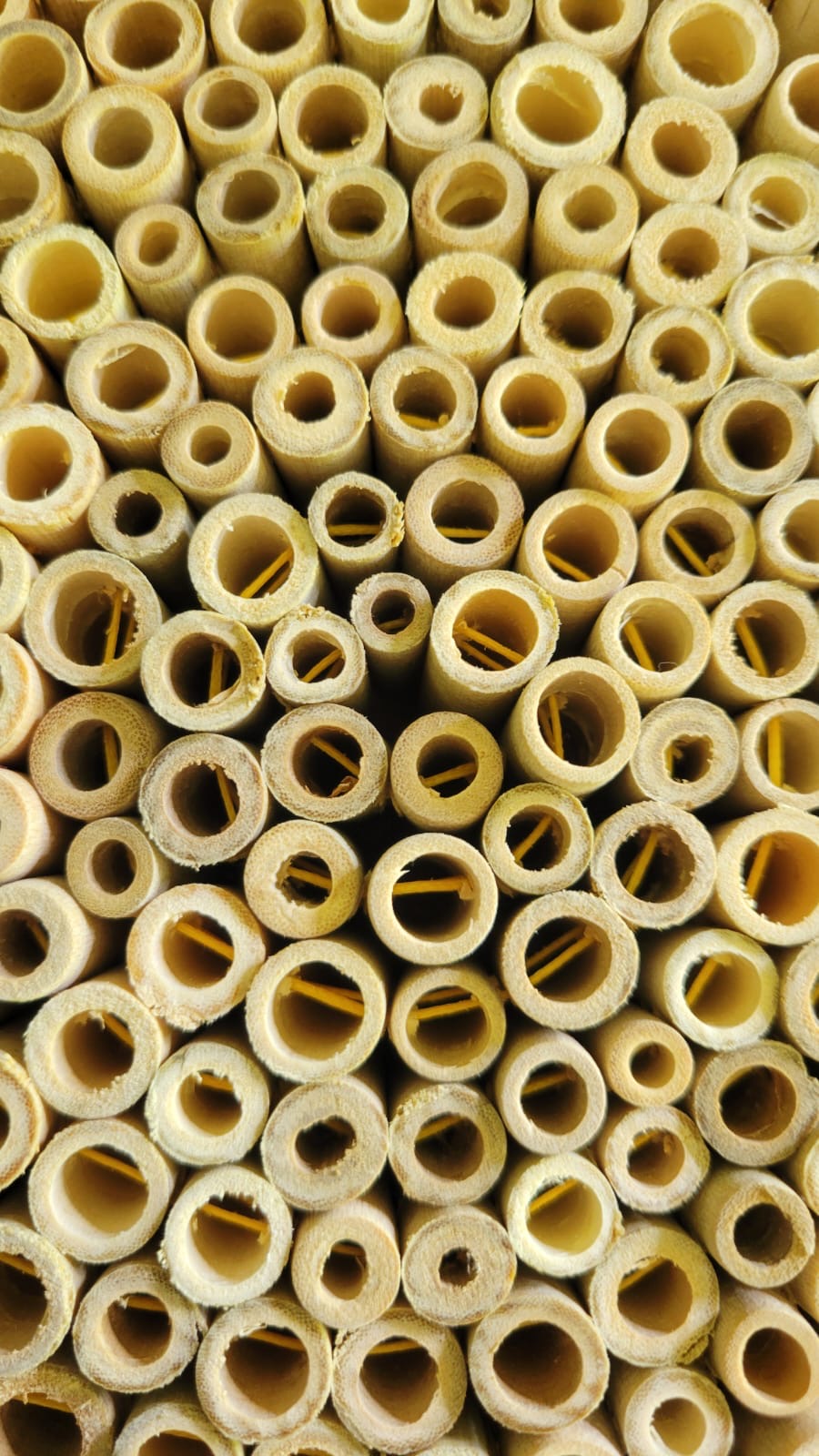
Des fourchettes et cuillères de bambou ainsi que leurs manches on été coupées, percées et teintes à la bassine pour obtenir l’harmonie désirée.
La forme du trophée a été crochetée avec du fil de papier armé avant de pouvoir insérer dans les mailles les pièces de bambou afin les coudre ensemble dans le support.

A project launched as I continued my exploration of animal hide.
My sculptural forms are not limited to aesthetics; they question our relationship with the environment, natural resources, and the animal world.
The hybridisation of material and form creates a sensitive space, questioning our place in the world. By favouring natural, harvested or recycled materials, this approach encourages us to rethink our habits and consumption, paving the way for a harmonious coexistence between nature and humanity.


Bamboo forks and spoons, along with their handles, were cut, pierced and dyed in a basin to achieve the desired harmony.
The shape of the trophy was crocheted with reinforced paper thread before the bamboo pieces could be inserted into the mesh and sewn together into the support.

equus

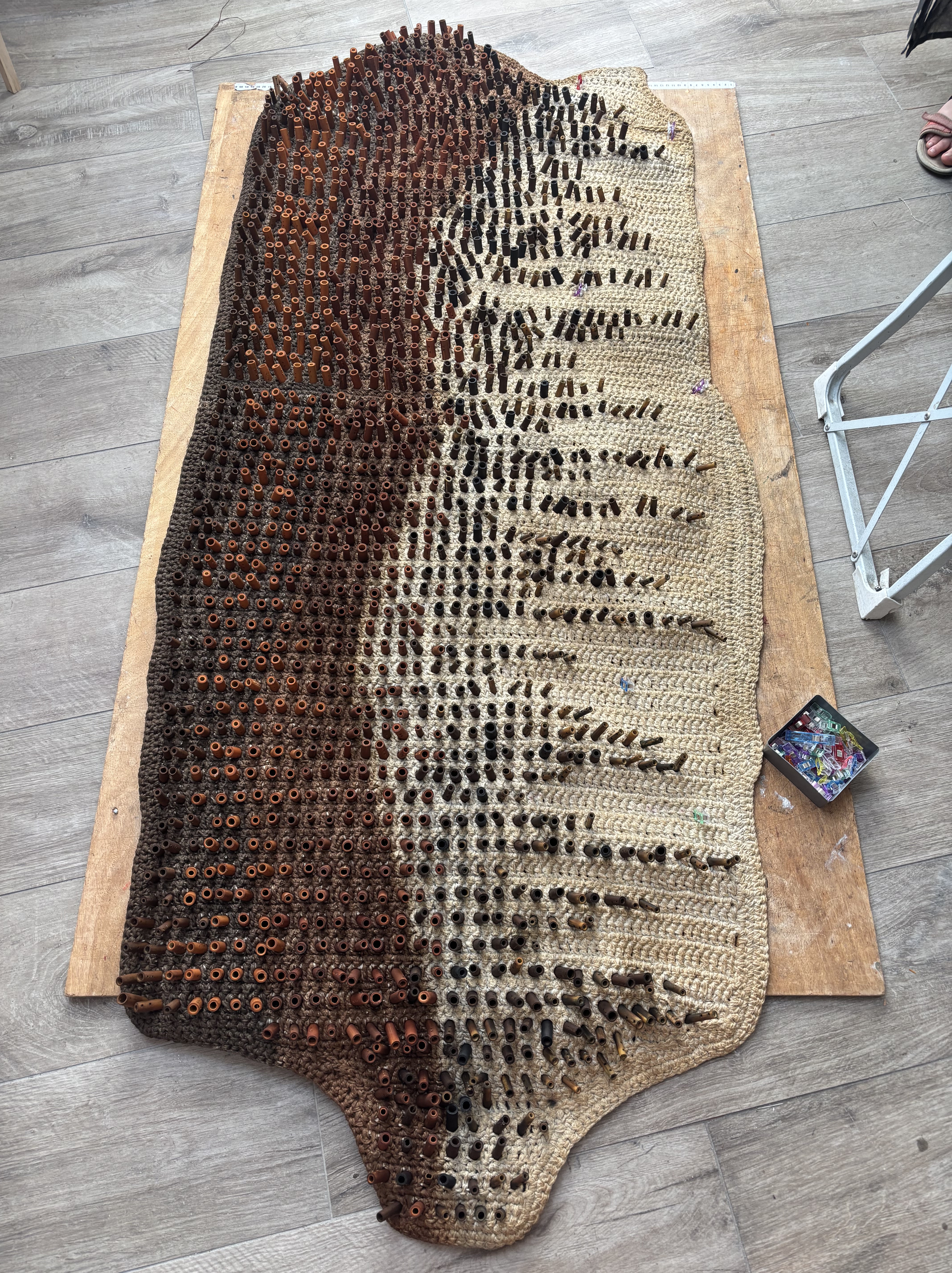
Crins de cheval, pailles de bambou et lin crocheté.

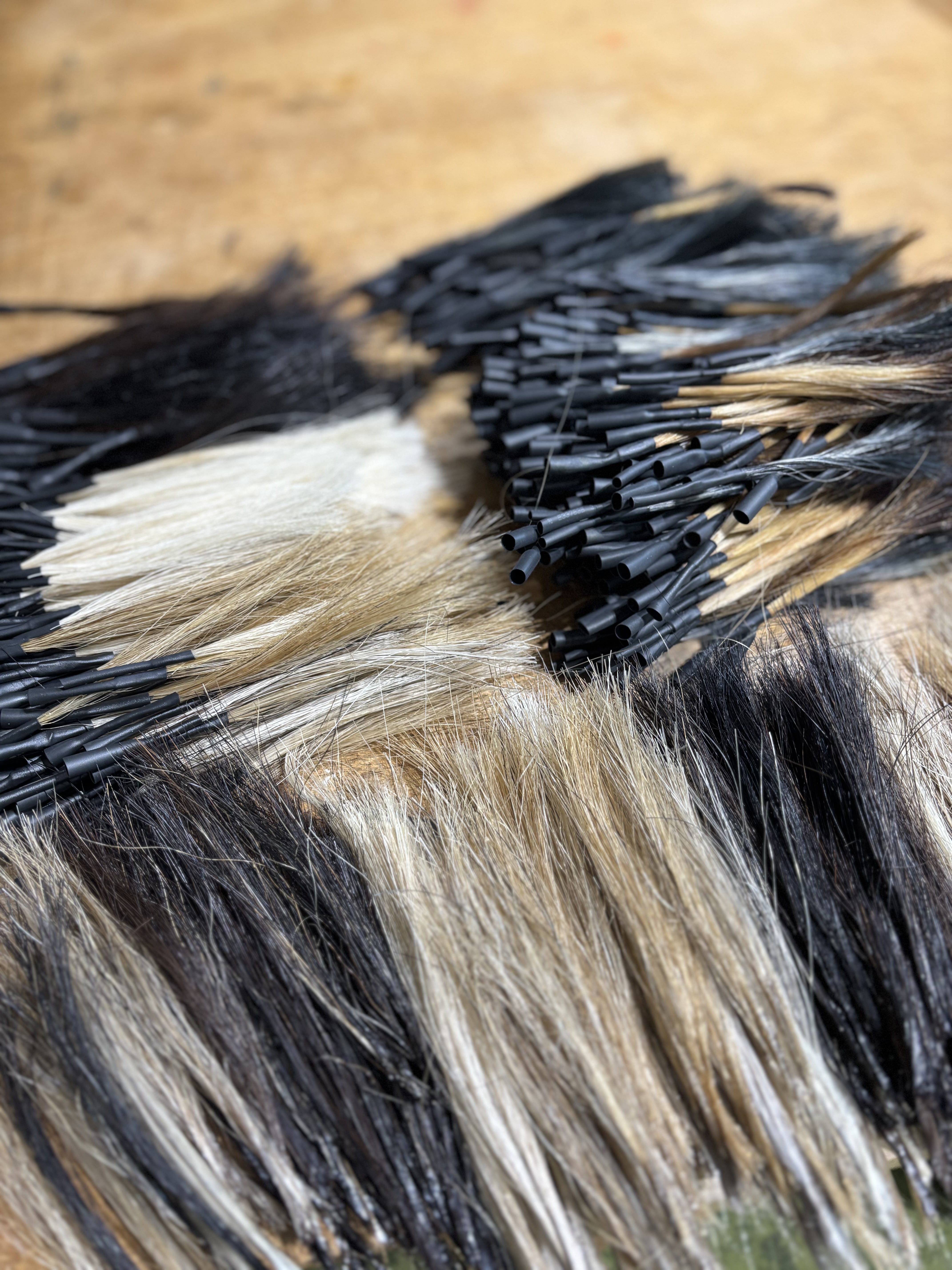
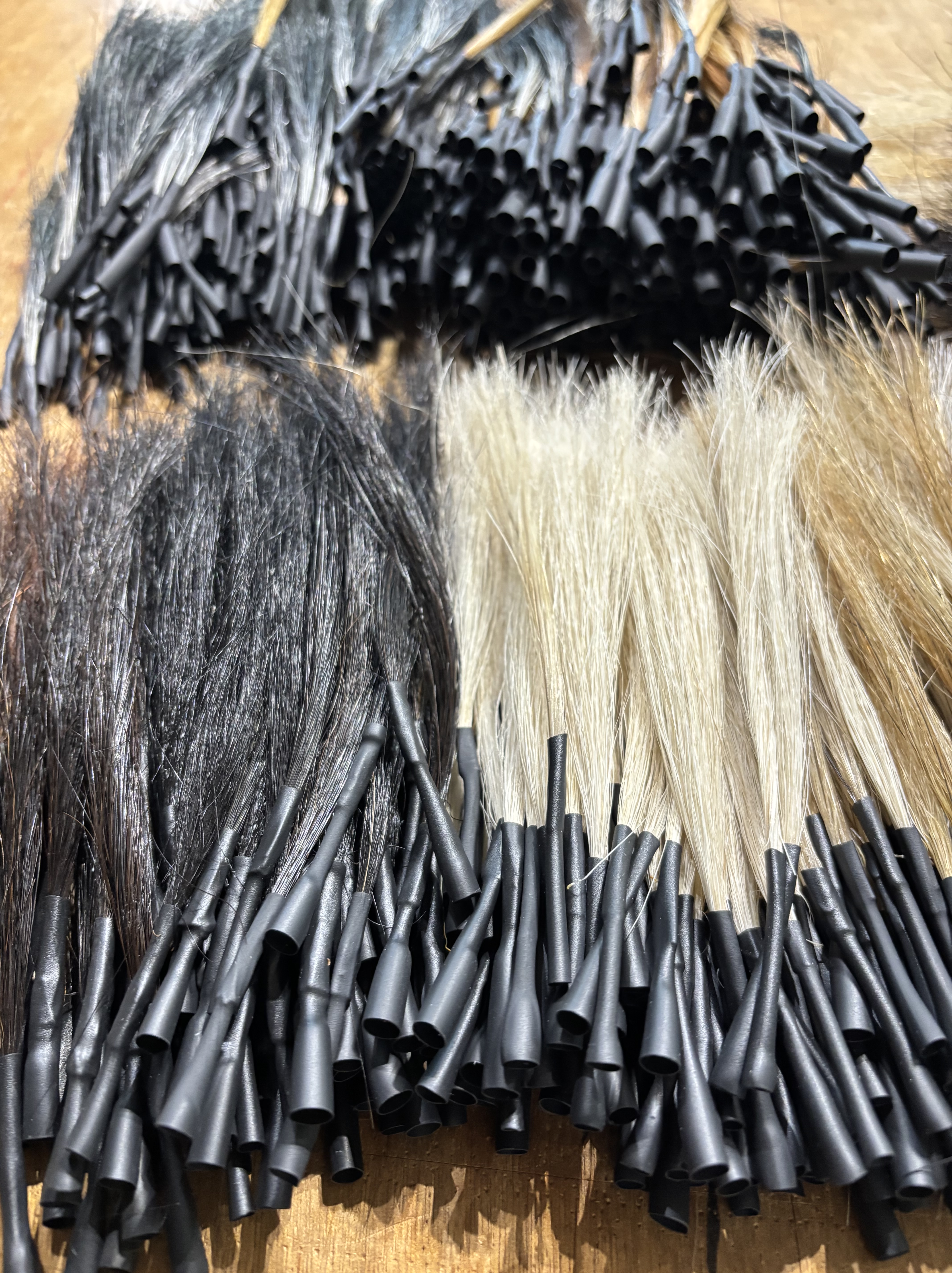
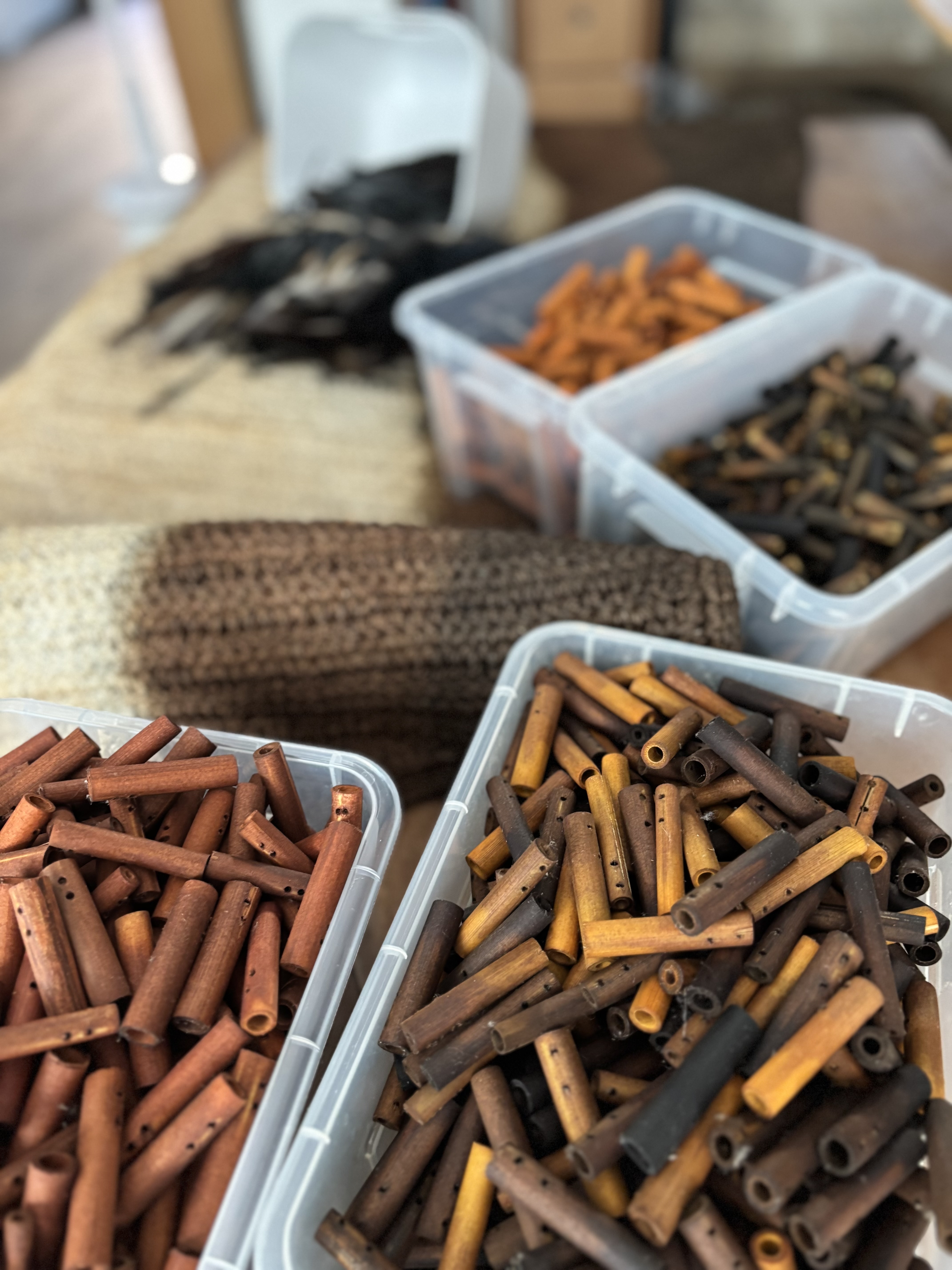
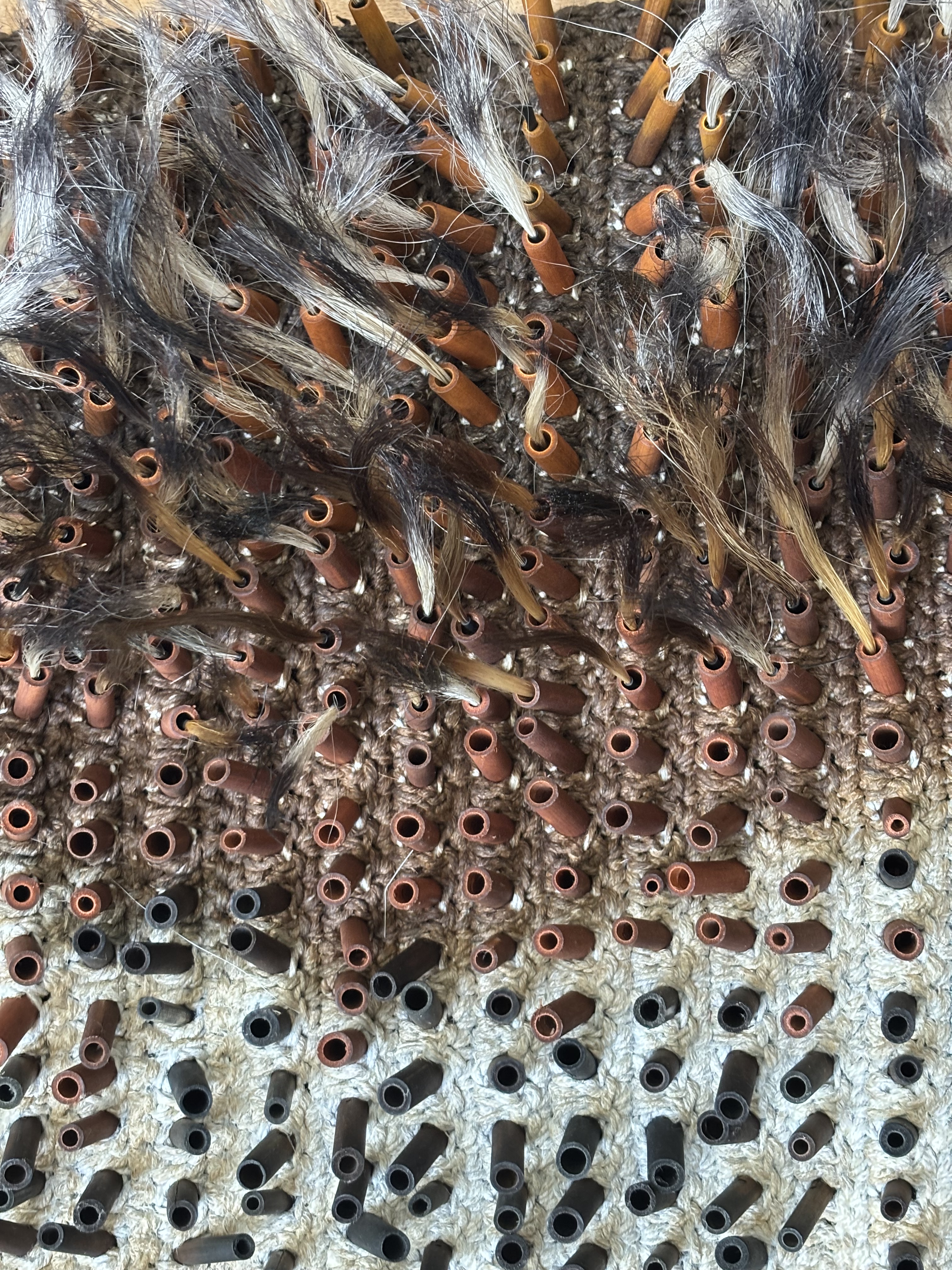
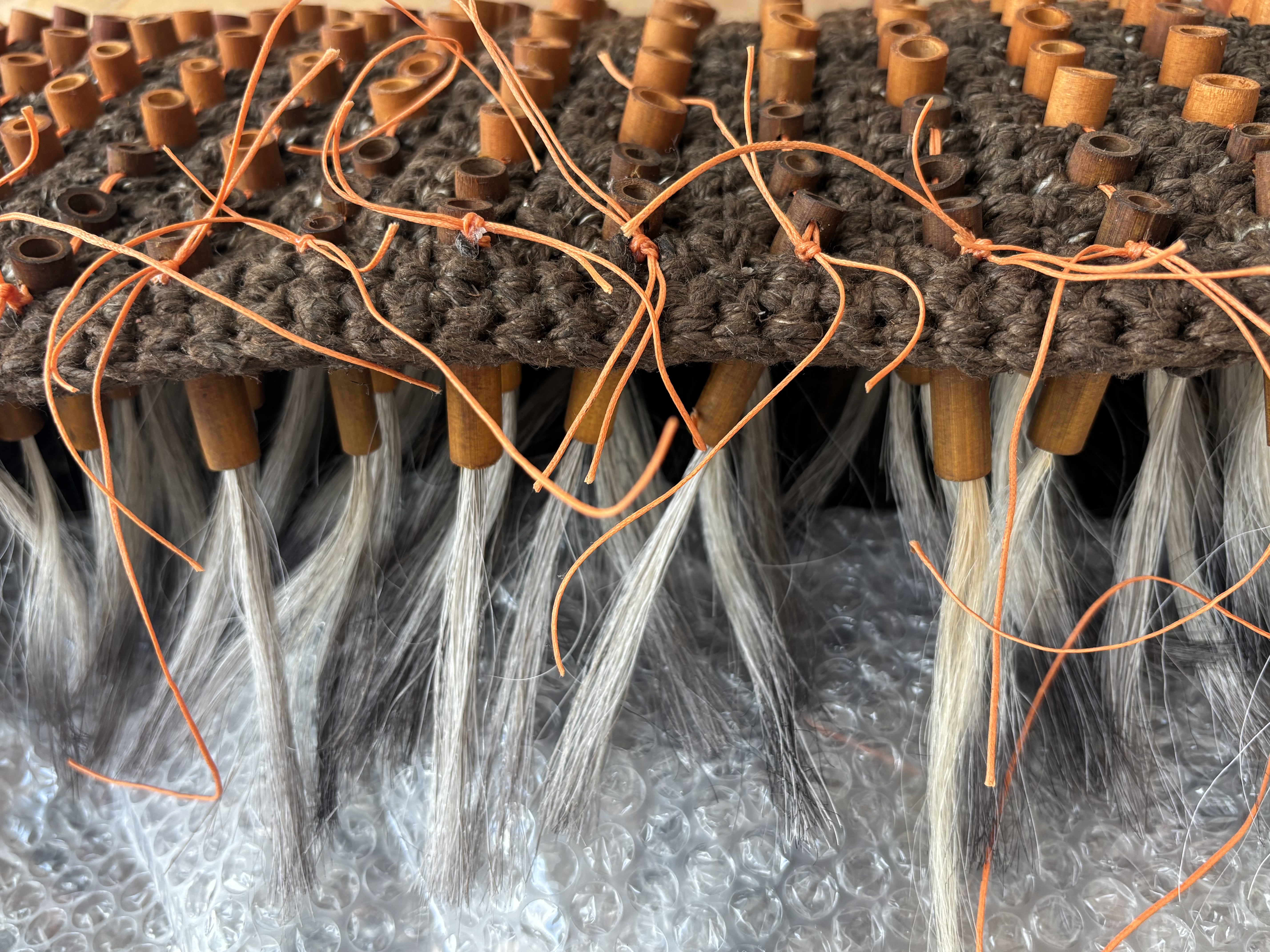
Un long travail de préparation nous attend : tous les crins de cheval (plus de 1 500) sont assemblés, lavés, séchés puis insérés brin par brin dans la gaine afin de les maintenir plus tard dans les pailles de bambou coupées et percées.
La pièce de lin est crocheté puis teinte à la bassine ainsi que les pailles et l’extrémité de brins de crin.

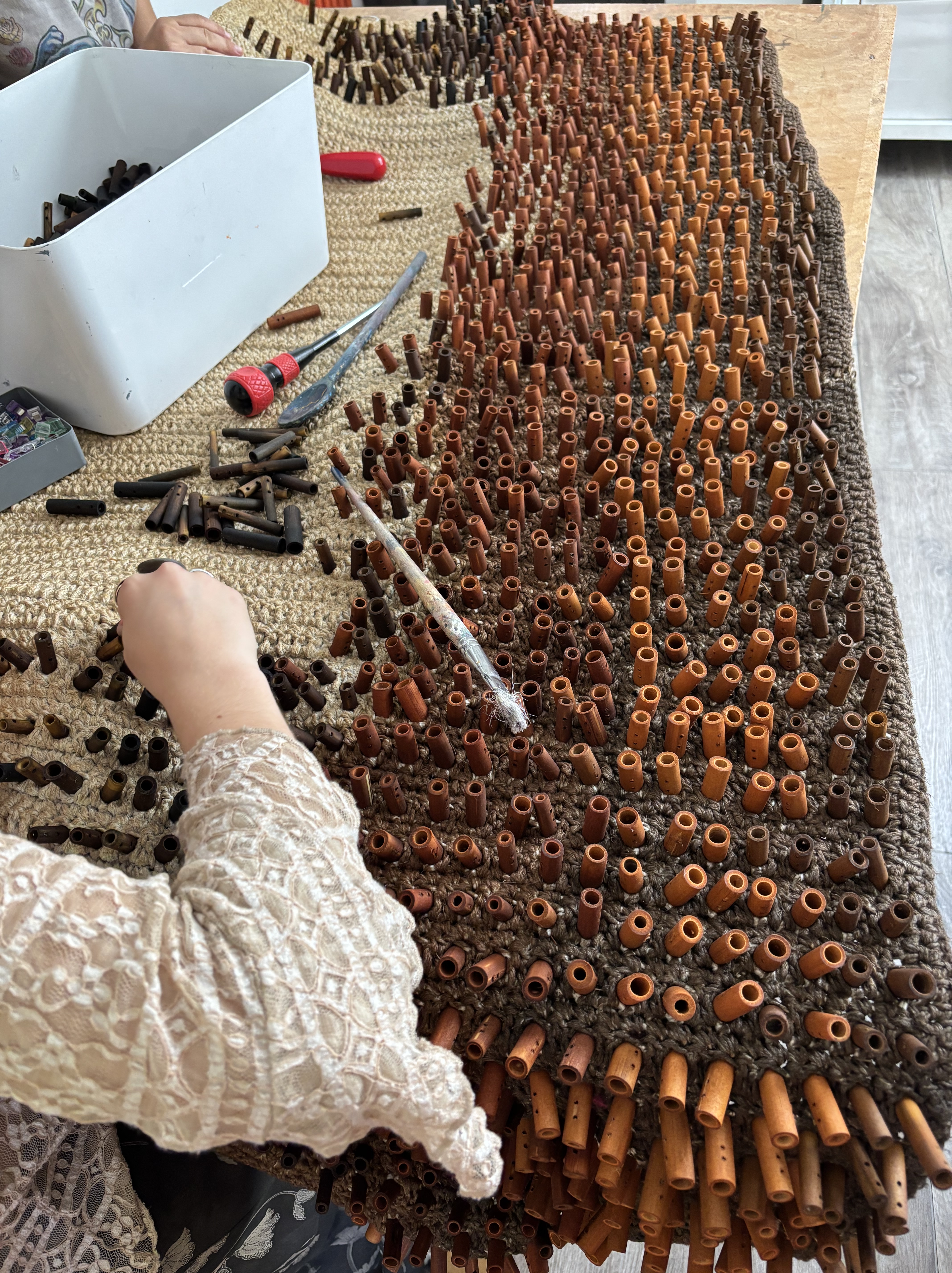
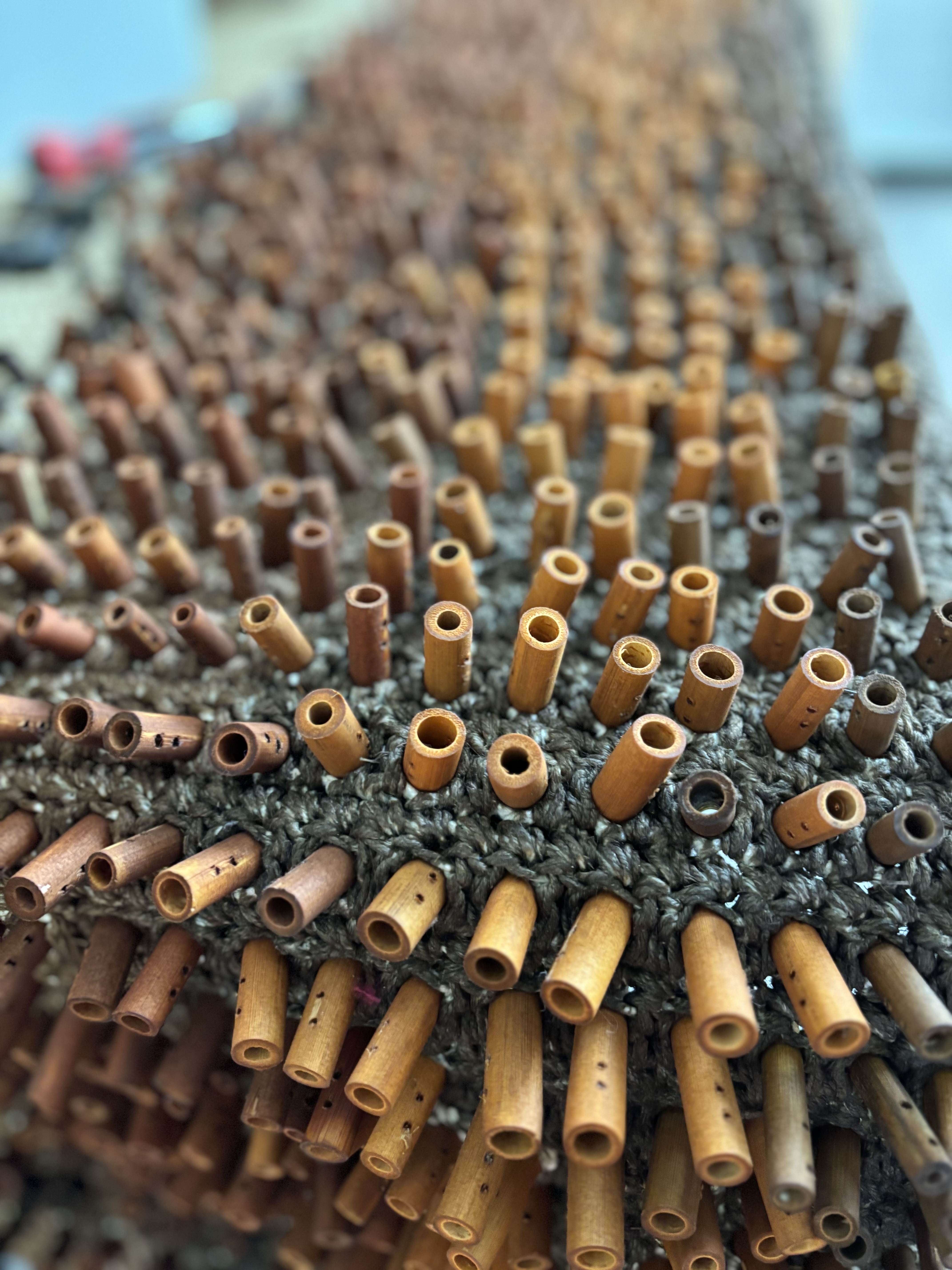
Vient ensuite l’assemblage : les pailles et brins de crin de cheval sont insérés un à un dans les mailles en trouvant un rythme dans les dégradés des couleurs de crin et de bambous et sont cousus dans les mailles et entre eux avec du fil de lin ciré.
En amont de ce long processus de réalisation avec son lot de réflexion, de repentirs et d’adaptation aux défis techniques, j’ai imaginé cette pièce comme toujours en dessinant sur un bout de papier avant de prendre la mesure des semaines qui ont été nécessaires pour la mener à terme.

Devant son ampleur j’ai dû faire appel aux contribution des ami(e)s pour le crin de cheval, merci encore à Catherine Redolfi pour son don magnifique.

A long preparation process awaits us: all the horsehair strands (more than 1,500) are assembled, washed, dried and then inserted strand by strand into the sheath so that they can later be held in place in the cut and pierced bamboo straws.
The piece of linen is crocheted and then dyed in a basin, along with the straws and the ends of the horsehair strands.

Next comes the assembly: the straws and strands of horsehair are inserted one by one into the mesh, finding a rhythm in the colour gradients of the horsehair and bamboo, and are sewn into the mesh and between each other with waxed linen thread.
Before embarking on this long process, which involved a great deal of thought, rethinking and adapting to technical challenges, I imagined this piece as I always do, by sketching it on a piece of paper before realising how many weeks it would take to complete.

Given its scale, I had to call on friends to help with the horsehair, so thank you again to Catherine Redolfi for her magnificent donation.